
TOFU content isn’t dead in the LLM era. Here’s the brand visibility test for deciding which top-of-funnel topics are still worth a budget in 2026.
The return of TOFU content starts with a shift in how AI models answer. In 2024, the consensus was that “what is” content no longer made sense. AI Overviews and LLM summaries answered the query directly, intercepting users before they reached a page and making traditional TOFU content marketing feel increasingly inefficient.
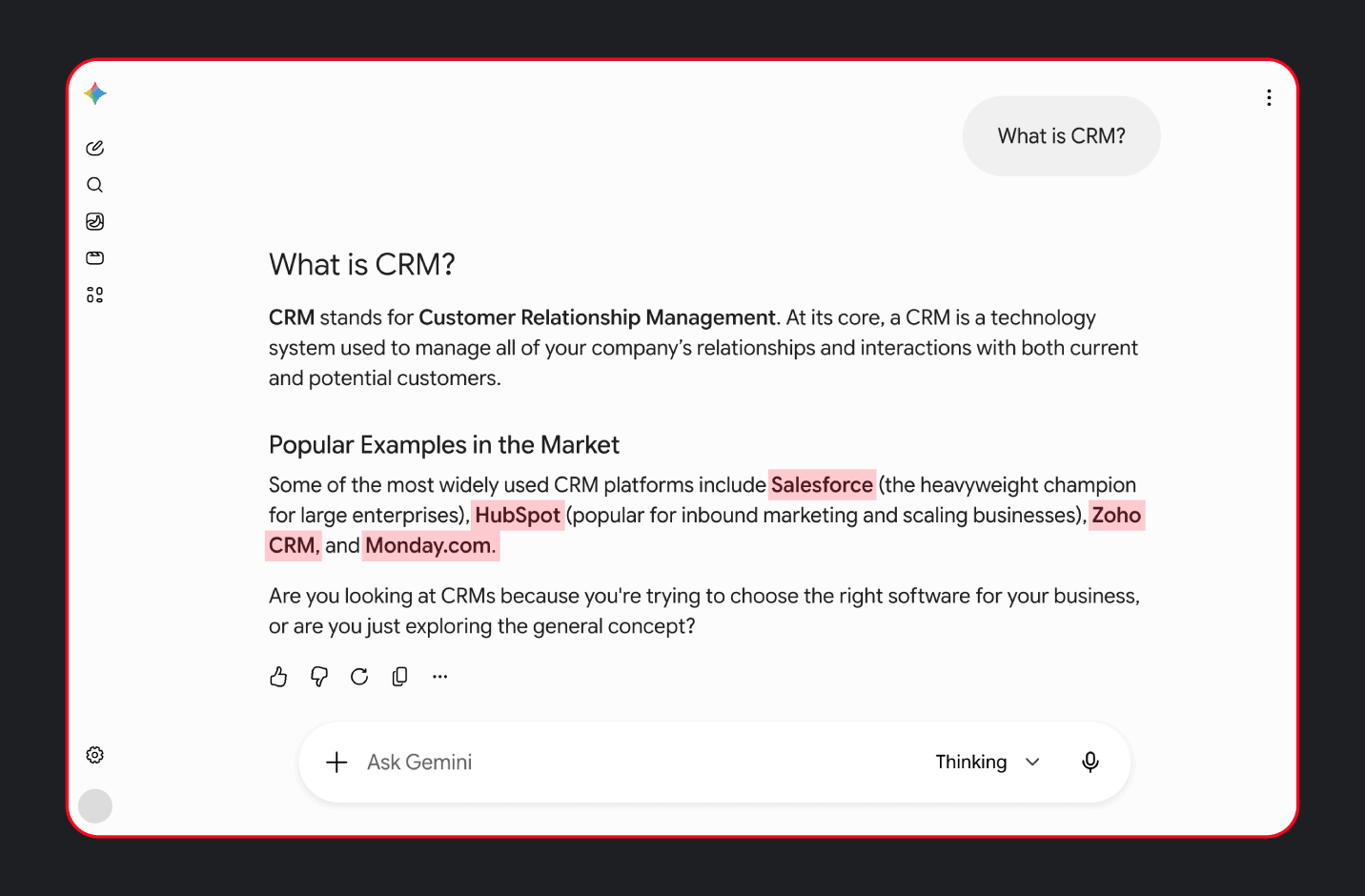
That was a fair read at the time, but what’s changed since is brand recommendation. In certain categories, LLMs don’t just summarize a concept —they name the vendors behind it. For example, ask your favorite AI tool, “what is CRM?” and you’ll get HubSpot, Salesforce, and Pipedrive alongside the definition.
This shift within AI responses changes what TOFU is for. Its value now depends on whether a topic can surface your brand inside the model’s response. Here’s how to tell which TOFU topics can still surface your brand, and which ones are no longer worth the budget.
- When TOFU Is Worth the Budget
- Topics That Qualify & Topics That Don’t
- Is It Just the Big Brands Winning?
- Seeing the Test in Action
- Build Content That Gets Recommended
- Why a GEO Agency Matters
Brand Visibility in LLMs
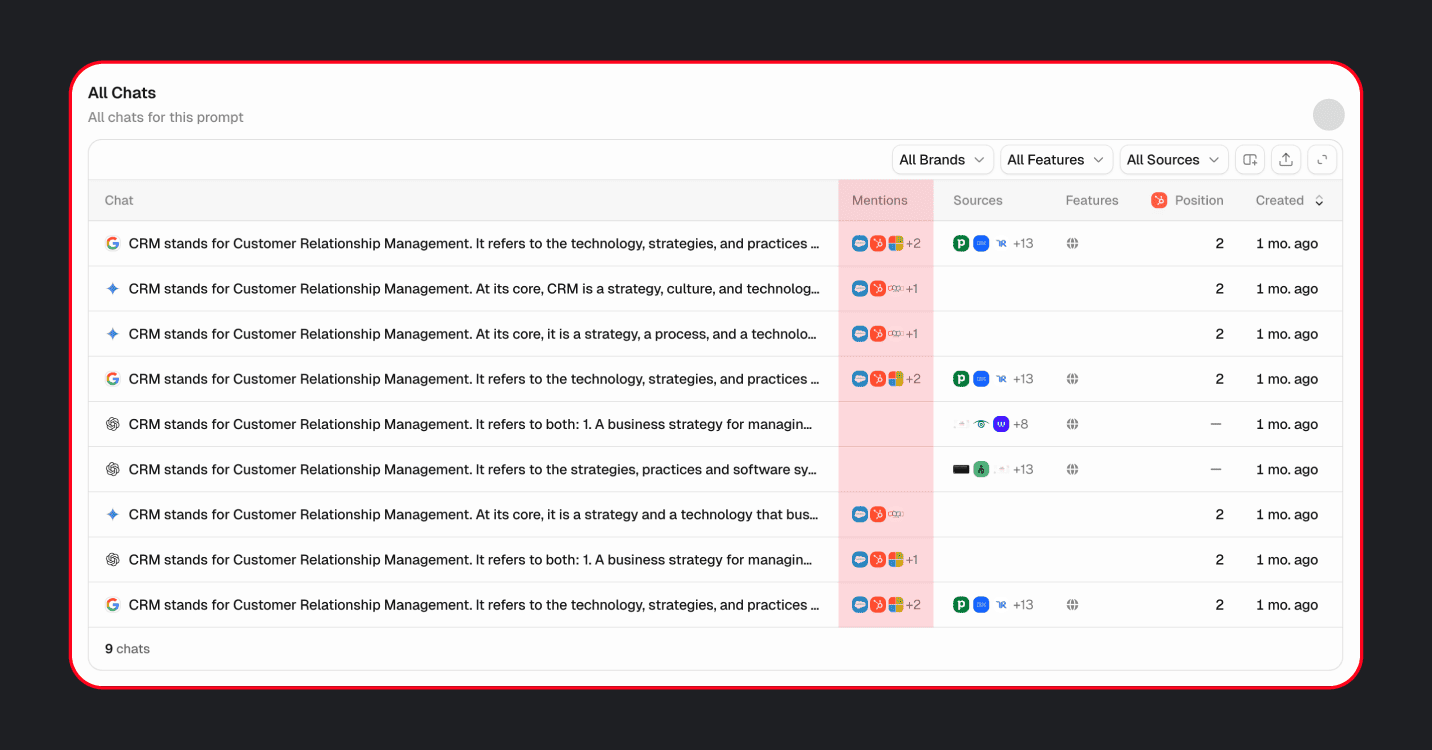
Brand visibility is a simple idea once you see it in action. It’s how often an AI model names your brand out loud when answering a question, instead of just describing the concept. Ask ChatGPT, Gemini, or Perplexity the same question enough times and a pattern emerges: some answers just define the term, and others name specific tools alongside the definition. The share of answers that name a given brand is its visibility score.
Take “what is CRM” as the anchor case. Ask it 100 times across models, and HubSpot gets named in 83 of those answers — an 83% visibility score. That’s high enough that the model has effectively made HubSpot part of the answer to the category itself, not just a vendor that sells into it.
Passing the 50% Test
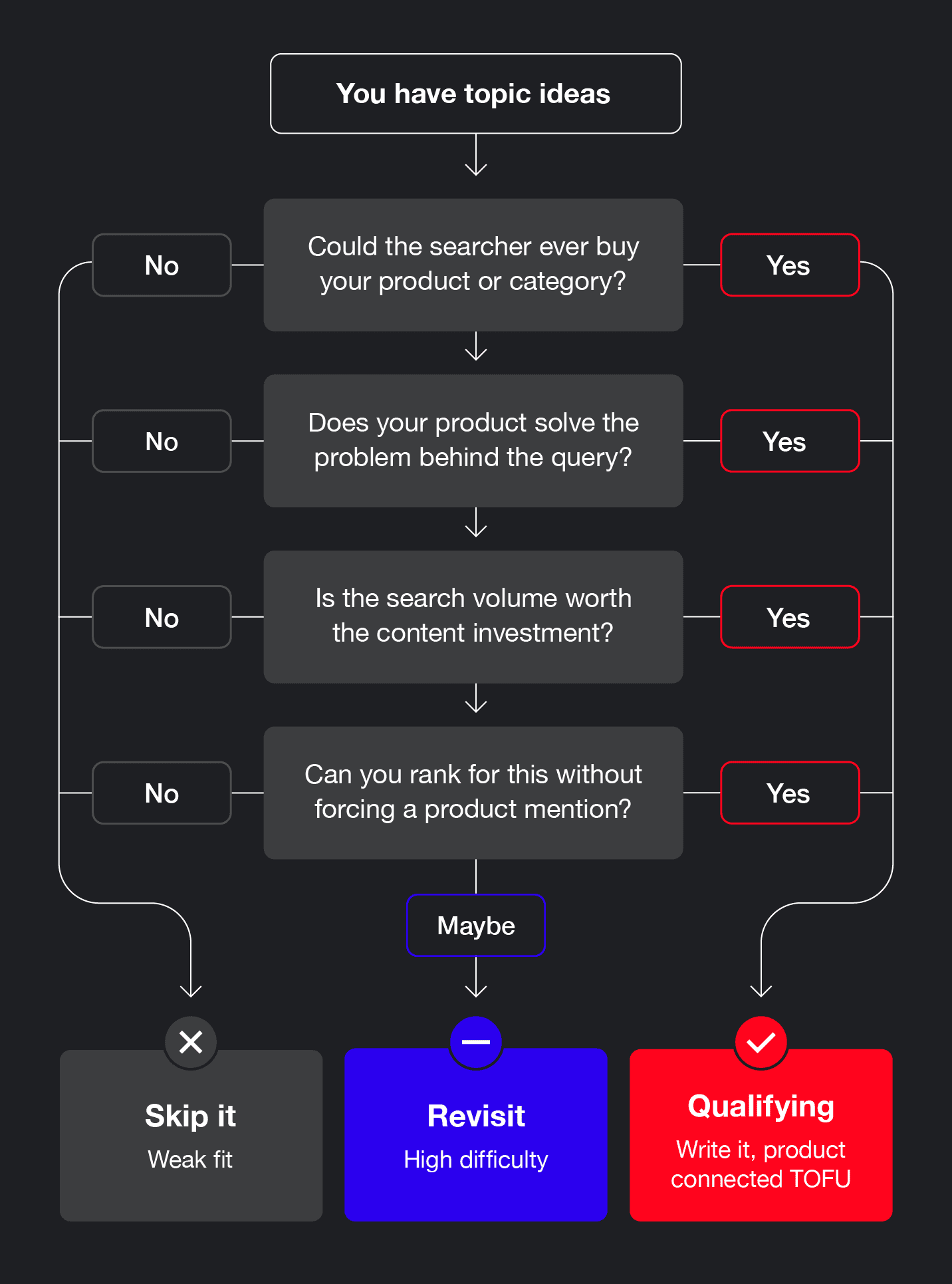
The 50% test is a generative engine optimization (GEO) method for deciding whether a TOFU topic still earns its budget: can the brand realistically get named in at least half of the model’s answers, and does the topic carry enough search volume to make that visibility worth chasing?
Answering that first question comes down to a distinction between citation and recommendation. A citation is the model referencing a source page, and a recommendation is the model naming your brand directly, which is exactly the behavior the visibility score measures.
A topic qualifies only if the brand can realistically achieve 50% visibility and the topic has meaningful search volume. High visibility on a low-volume topic is a vanity win that won’t compound, and high volume where the model never names you stays stuck at citation. TOFU content is most impactful when demand and recommendation overlap.
The re-index method turns this into a repeatable weekly process:
- Pull the existing TOFU topic set
- Sample each prompt across relevant models with multiple runs per prompt
- Measure brand mention rate and flag topics at or above 50% visibility
- Cross-reference flagged topics against search volume
- Prioritize what to invest in and what to deprioritize
Run it as a recurring pulse check, not a one-time audit. Visibility shifts as AI models and competitive authority evolve, so re-indexing has to stay live rather than freeze into a single score.
Qualifying vs. Disqualifying Topics
The 50% test raises an obvious question: which topics can realistically clear the bar?
Topics qualify when they’re product-connected or category-defining, meaning the question points to a class of tools or vendors. “What is CRM?” works because it refers to a software category that inherently includes vendors.
The opposite pattern is purely definitional or encyclopedic topics with no commercial layer. “What is photosynthesis”? is a clear example, since the model can fully answer it without referencing any product or brand. That produces traffic but not brand visibility.
Pro Tip: To sort topics faster, paste your list into an AI tool with this prompt: “For each topic, does an honest answer involve recommending a tool, platform, or vendor?” If the answer is yes, the topic is a candidate for the test.
Is It Just the Big Brands Winning?
It’s the right objection to raise. HubSpot shows high visibility partly as a category leader, which raises the question of whether this framework simply reflects incumbency. But visibility is earned prompt by prompt, not granted wholesale. Category leaders don’t own every prompt in their space, and that gap is where challengers compete.
LLMs recommend based on association and content authority, both of which challengers can influence. Challengers can win in three places:
- Sub-category and problem-framed prompts, where the category leader is no longer the default answer. “CRM for real estate teams” or “CRM for nonprofits” behaves differently from “what is CRM,” and the incumbent is less likely to dominate.
- Under-served topics, where category leaders rely on brand strength and leave gaps. “CRM with the best mobile app” or “CRM for managing a sales pipeline by text” are the kinds of specific, intent-rich queries incumbents often ignore. Challengers that build stronger supporting content can win recommendations in these spaces.
- Entity associations, which form over time as models connect brands to concepts. A challenger that consistently publishes on “CRM automation” or “CRM data hygiene” can become the brand the model links to that concept. These associations shift with the content a brand publishes and the authority it builds around a topic.
Visibility Shifts Across Platforms
The CRM and marketing automation examples above both came from Gemini. It’s a fair assumption that a brand’s visibility score looks roughly the same everywhere the question gets asked, but that assumption doesn’t hold up.
Some platforms, like Perplexity and AI Overviews, search the live web for every answer and lean on whatever ranks well right now. Others, like the default mode in ChatGPT or Gemini, draw more on what’s baked into training data unless a person explicitly asks the model to search. A brand that wins a live-search answer because its content ranks well on Google can lose that same query to a different set of names on a model that isn’t actively browsing.
HubSpot’s 83% visibility score came from Gemini, but HubSpot doesn’t show up at all in Google’s AI Overview answer to the same prompt. Microsoft Dynamics 365 and Oracle NetSuite take its place instead. This is why the re-index method samples across models instead of relying on just one. That gap between platforms is the opportunity itself, not something to average away into a single blended score.
Build Content That Gets Recommended
The job now is to become the answer that AI recommends. This is where product-led content marketing earns its keep, and a few levers move content toward that outcome.
- Own the category definition by providing the clearest, most complete explanation so AI platforms treat it as the reference point.
- Be the answer, not the ad beside it. Show your product solving the reader’s actual problem in practice, not a sales pitch stapled to generic advice. Readers and models both spot the difference.
- Make content easy for models to pull from, with clear definitions, clean headers, and direct answers.
- Build entity and brand association signals across the web, including the editorial roundups and creator content earned through affiliate partnerships, so the brand consistently appears alongside the category.
- Write with enough depth that the model treats the brand as the topic’s authority.
Becoming the Model’s Recommended Answer
TOFU content didn’t disappear, but the strategy behind it had to change. The teams winning in 2026 are the ones allocating budget only to topics where their brand can realistically become the recommended answer, not just the ranked one.
That takes structured prompt sampling, defensible visibility scoring, and content built to win the model’s recommendation. Siege’s GEO services are built to do exactly that.