Generative engine optimization is the practice of making your content easier for AI systems — like ChatGPT, Claude, Gemini, and Perplexity — to find, interpret, and surface in response to user queries.
Let’s be real: The online search experience has changed.
People aren’t just Googling anymore. They’re asking ChatGPT, Gemini, Claude, and even Siri for answers, and those AI agents are responding without ever sending users to your site.
That poses a problem if your content strategy is still solely built around ranking on Page One on Google.
In fact, 36.4% of content marketers reported a drop in traffic between 2024 and 2025 due to the rise of AI Overviews and AI search. Your content might be great, but if it’s not showing up in AI results, it’s reaching a much smaller audience.
That’s where generative engine optimization (GEO) comes in.
GEO is all about making sure your content gets found, quoted, and recommended inside AI platforms, not just search engines. In this post, we’ll break down how it works, why it matters, and what you can do to stay visible in an AI-first world.
- What Is Generative Engine Optimization?
- GEO vs. Traditional SEO
- What’s Driving the Shift Toward GEO?
- Core Principles of GEO
- How To Actually Do GEO
- Measuring Success: Key Metrics
- Common Mistakes With GEO (And How To Avoid Them)
- GEO in Action: A Real-World Example
- Ready To Make GEO Part of Your Strategy?
What Is Generative Engine Optimization?
It’s about making sure your content is seen and cited in AI-generated answers.
That requires more than just “better” writing. GEO involves specific, tactical changes that align your content with how large language models (LLMs) process, summarize, and trust information.
Here’s what that actually looks like:
- Give clear, direct answers to common questions: AI assistants prioritize content that gets to the point. Use brief, well-structured responses, ideally at the top of a section or right under a subheading.
- Use question-based subheadings: LLMs often segment content by H2s and H3s. Framing these as actual user questions (“What is X?,” “How does Y work?,” “Why does this matter?”) increases the odds your content gets selected.
- Include original stats, insights, or definitions: AI tools are more likely to cite or summarize content that adds net-new value. You can use your customer data to create industry-relevant studies that drive traffic.
- Make your formatting machine-readable: That means clear headers, bullet points, tables, and definition lists (not giant blocks of text). Structured content is easier for LLMs to parse and repurpose accurately.
- Cite high-authority sources when making claims: AI systems are more likely to trust and quote your content if it’s backed by verifiable data and linked to reputable sources.
In short, GEO is about designing content for how AI thinks, not just how people search.
GEO vs. Traditional SEO
Traditional SEO focuses on getting your page to rank higher on Google by targeting keywords, building links, optimizing meta tags, and more.
It’s about getting people to click on your link in a search results list.
GEO is about making sure your content gets noticed and quoted by AI-powered systems.
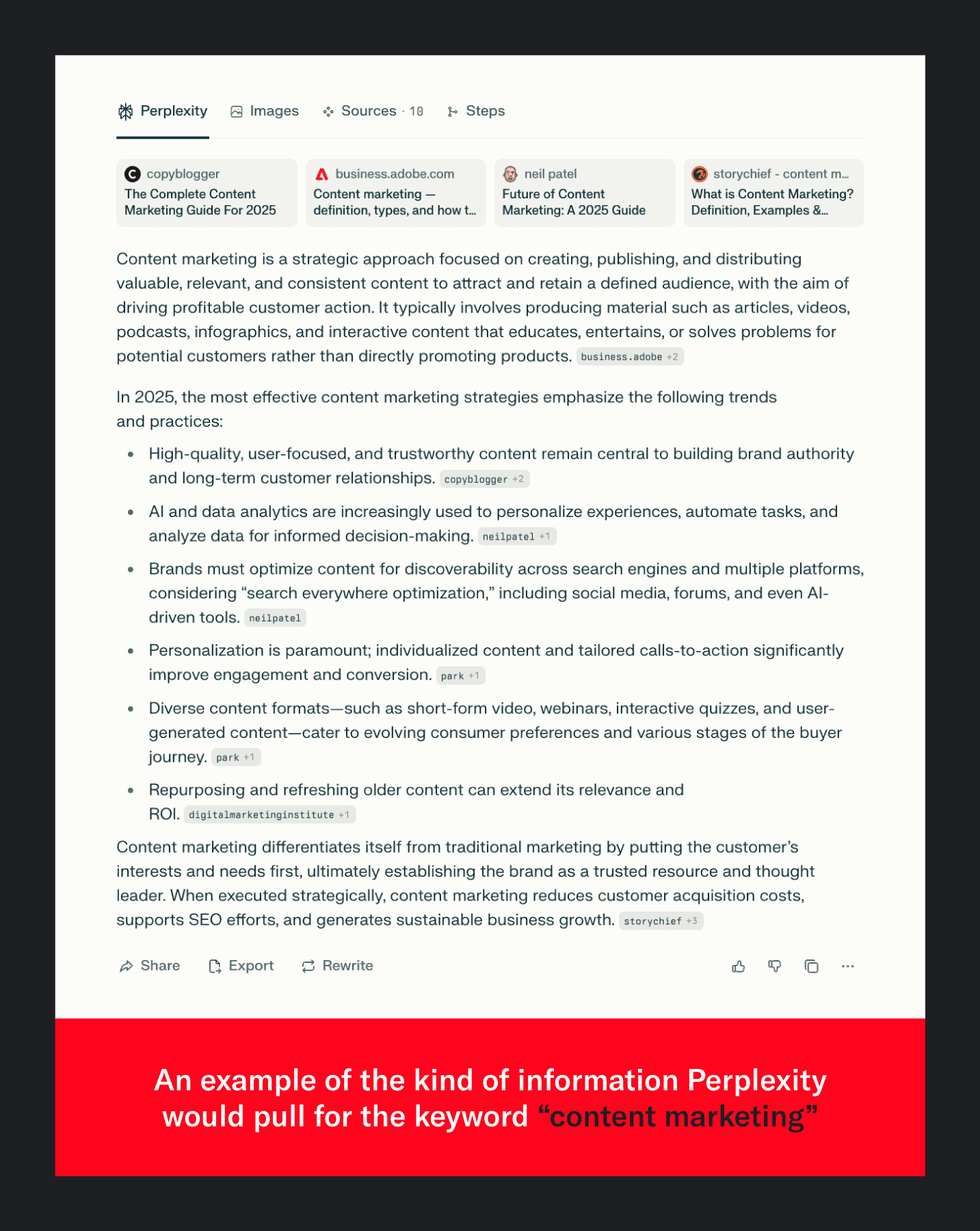
This include instances like ChatGPT pulling your info to answer user questions directly, Perplexity summarizing your blog in its response, or voice assistants like Siri and Alexa giving spoken answers based on your content.
These AI systems pull info, summarize it, and present direct answers or suggestions.
GEO means structuring and writing your content so AI understands it clearly, trusts it, and feels confident using it in responses or recommendations.
| GEO | SEO | |
|---|---|---|
| Primary goal | Citations in AI answers | High SERP rankings |
| Query style | Long-tail, conversational questions | Short, keyword-based |
| Optimization focus | Structure, clarity, freshness, brand signals | Keywords, backlinks, on-page SEO |
What’s Driving the Shift Toward GEO?
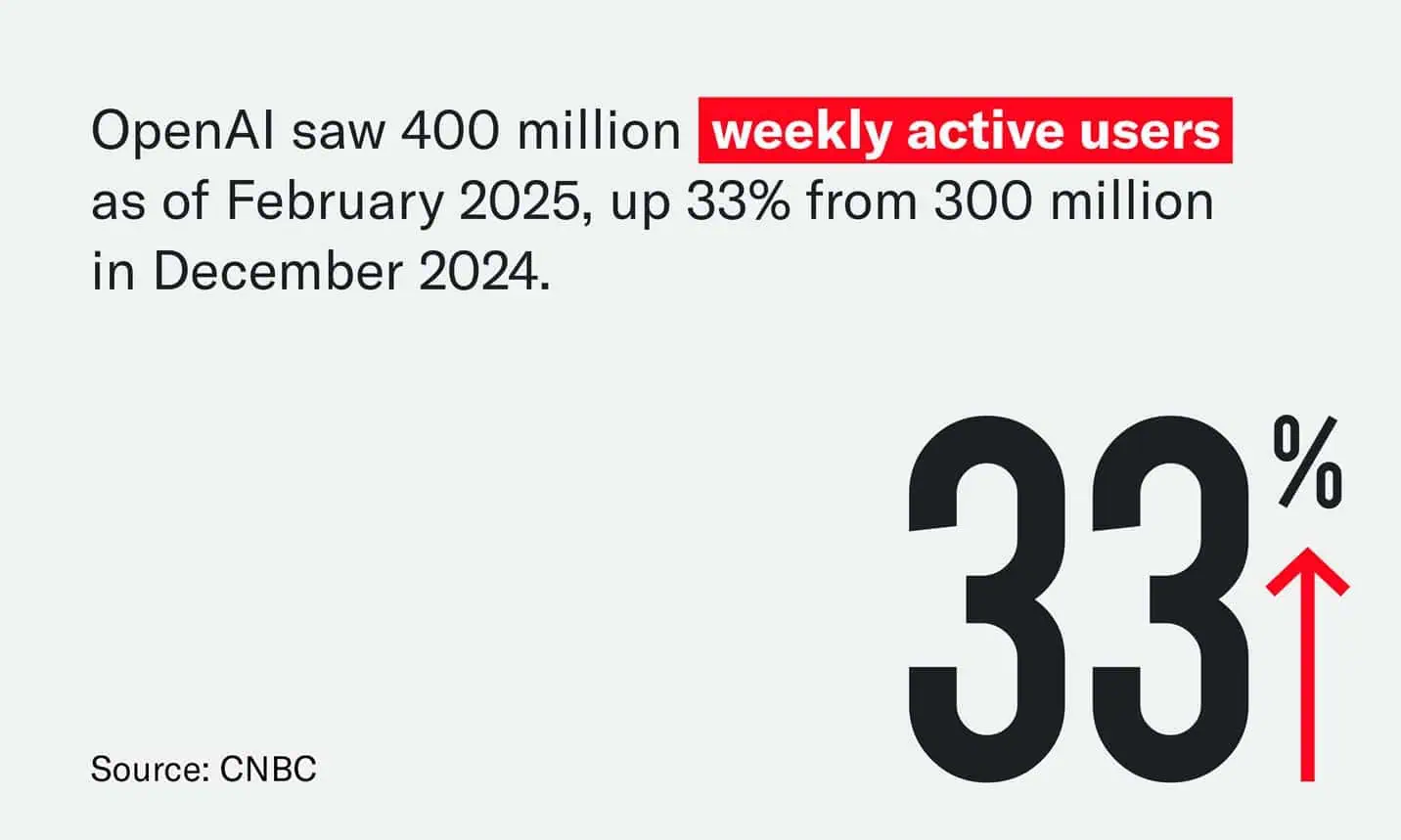
Many people are getting answers directly from AI tools, whether that’s a quick reply from ChatGPT, a summary from Perplexity, or a voice answer from Siri or Alexa.
Bottom line? AI-driven channels are changing how people discover content.
So if you’re still just thinking about ranking on Google’s first page, you’re missing the bigger picture. Your content needs to be ready to show up inside those AI answers, voice responses, chatbots, and more.
Generative search tools are reshaping homepage traffic, too, based on our recent 50‑site study. Brands saw an average 10.7% lift in homepage clicks, even as overall site visits declined. Top-performing homepages tended to be those already optimized for AI-generated overviews and LLM visibility.
“People are shifting to AI search engines and chatbots for faster, more personalized results, which enhance user experience (UX).
AI tools quickly synthesize information, offering concise and direct answers rather than requiring users to sift through webpages.
This instant information is becoming crucial for good UX.
Additionally, AI tools provide what feels like personalized results by hyper-focusing on the user’s query, unlike standard SERPs that offer the same 10 websites to everyone.”
– Andrew Craig, SEO Manager, Siege Media
Core Principles of GEO
Generative engine optimization relies on a few key tactics that help your content rank on AI systems:
- Intent-based content: Write to answer the exact questions users ask. For example, instead of a generic “What is SEO?” page, create a clear FAQ that answers, “How does AI affect SEO today?” AI assistants pull from precise answers like this.
- Continuous monitoring and testing: Go beyond headline A/B tests. Try different layouts, image placements, or summary styles, and track the content AI chatbots tend to quote or summarize more often.
- Use schema markups: Add structured data like FAQs, how-to steps, product details, and reviews. Schema makes it easier for AI models to parse and surface your content in direct answers or summaries.
- Prioritize AI-friendly content structure: Break content into short, scannable sections with clear headings, bullet points, and concise takeaways. AI systems prefer clean structures they can quickly interpret and quote.

How To Actually Do GEO
Use these GEO best practices to focus your energy on the moves that actually get content pulled, quoted, and surfaced in AI-powered systems.
Research Relevant Topics for Your Audience
Dive into tools like People Also Ask, long‑tail keyword research, and chatbots like ChatGPT to identify the implicit and explicit questions users are asking.
GEO thrives on content that speaks to both direct user intent (what people ask) and latent intent (related questions), so aim to build content that answers the full conversation.
Leverage Best “X” Roundups
Best “X” listicles are AI gold. Their structured format, summarization, and bullet-style clarity align perfectly with how AI prefers to surface information.
Create BOFU roundup content (e.g., “top call center tools”) that’s framed around what different user segments are trying to accomplish — not just what they’re searching for.
This goal-based approach doesn’t just attract traffic, it positions your company as the best solution in the category and funnels high-intent visitors straight to your homepage.
Prioritize Consistent Refreshes
Refreshing content is about making your content easier for AI systems to parse, summarize, and reuse.
Start by identifying your highest-impact pages: the ones that are already generating some traction through ChatGPT, Perplexity, or organic search.
These pages are prime real estate for refreshes. Focus on tightening intros, front-loading key takeaways, and adding TL;DR-style summary blocks.
Beyond structure, update examples, sources, and language to reflect the latest user behavior or product changes. Run tests on different layouts, headings, and answer formats to see what gets picked up by AI tools.
At Siege, we’ve created the DataFlywheel system to keep content fresh, authoritative, and competitive, particularly in the age of generative AI. To drive LLM-proof differentiation and continuous updates, this proprietary technology combines:
- First-party data studies
- Digital PR
- AI-powered content refreshes
The process begins with BlueprintIQ, our internal AI engine that audits content freshness against current search result positioning and competitor rankings. This assessment surfaces the highest-impact actions, resulting in a data-driven roadmap that guides the DataFlywheel refreshes.
Research Long-Tail Keywords
Long-tail keywords are how you tap into the exact queries AI tools like ChatGPT and Perplexity are answering.
Start by identifying specific, question-based searches your audience might ask, such as “what are the best invoicing tools for freelancers?” vs. just “invoicing tools.”
Use content marketing tools like Ahrefs, AlsoAsked, AnswerThePublic, or Perplexity’s follow-up prompts to spot patterns in phrasing and intent.
Then, build content that clearly answers those niche questions with structured sections, bulleted lists, or bolded summaries that are easy for AI to extract. Include conversational subheadings, question-led H2s, and schema markup where it makes sense.
Measuring Success: Key Metrics
Success in GEO is less about traditional keyword rankings and more about how your content shows up and performs across AI platforms. To measure impact, shift your focus to these four metrics:
- Engagement on AI-generated experiences: Use AI SEO tools to track how often your content is cited. Set up custom tracking links to measure click-throughs from AI tools.
- Content optimization wins: Monitor key engagement signals (like scroll depth or CTA clicks) before and after changes. Use heatmaps or session replays to spot where users drop off and adjust layouts or summaries accordingly.
- Bounce rate by audience segment: Segment traffic in GA4 or your analytics platform by referral source (e.g., OpenAI, Perplexity, Google) to see which audiences stay and which bounce, then personalize or restructure those entry pages.
- Speed of iteration: Set a cadence (e.g., monthly) for testing updates. Track time from insight to implementation using project management tools like Asana or Notion to see how fast you’re reacting to what’s working.
All of these metrics work together to show how well you’re adapting. GEO success comes down to speed, relevance, and responsiveness in a world where static content just doesn’t cut it anymore.
Common Mistakes With GEO (And How To Avoid Them)
Generative engine optimization is great, but it’s easy to slip up if you don’t balance AI capabilities with a smart strategy. These common pitfalls can tank your efforts fast — here’s what to watch for and how to fix them.
Letting AI Take Over
AI can be a powerful assistant, helping writers research faster, identify gaps, and personalize at scale. But using it to generate full content without oversight can lead to off-brand messaging, factual errors, or bland writing that doesn’t resonate.
Pro tip: Use AI to accelerate the thinking part of content creation, such as outlining or summarizing sources. But keep humans in the driver’s seat for writing, editing, and final decisions to ensure content feels intentional and on-brand.
Ignoring UX Friction Just Because Content Ranks
If your on-page user experience (UX) is slow or hard to navigate, users won’t stick around — even if AI initially drives traffic. Poor UX signals can hurt future AI visibility and search engine rankings, as these systems prioritize content that keeps users engaged.
Pro tip: Regularly audit your site’s Core Web Vitals using tools like PageSpeed Insights. Fix issues like slow loading times or intrusive pop-ups, and simplify navigation to reduce friction and boost engagement.
Check out our guide on on-page SEO to learn more.
Abandoning Traditional SEO
While generative engine optimization is the new frontier, it isn’t replacing traditional SEO. Instead, it amplifies it. Because LLMs utilize retrieval augmented generation (RAG) to pull information from the live web, your visibility in AI responses is directly tied to your authority on the SERP.
In other words, if you aren’t ranking in the top positions for a specific query, the chances of an AI agent “reading” and citing your brand are slim. Think of traditional SEO as the ticket that gets you into the stadium; GEO is what ensures you’re the star of the show once the AI starts commentating.
GEO in Action: A Real-World Example
Siege Media partnered with Mentimeter, a leading interactive presentation tool, to enhance its presence in AI-driven search platforms.
By developing bottom-funnel content focused on software comparisons, Siege Media effectively targeted Mentimeter’s dual audience: educators seeking interactive presentation solutions and industry professionals aiming to deliver dynamic learning experiences.
The result? Mentimeter’s content showed up in over 124,000 ChatGPT sessions and brought in more than 3,000 conversions.
Plus, their overall impressions jumped by nearly 5 million, proving that smart, targeted content still moves the needle in the AI era.
Ready To Make GEO Part of Your Strategy?
Generative engine optimization reflects how users interact with content today through AI-driven search engines, chatbots, and voice assistants.
Adapting your content strategy to this reality means better visibility, engagement, and conversion in the evolving digital landscape.
If you want to build scalable, performance-focused content that stands out in AI-powered channels, Siege Media can help. Contact us today.