
Most content teams have the potential to scale and, with the right system, can do so without sacrificing quality or brand voice.
You’re already doing the work of creating valuable content. But you’re feeling the pressure to do more, faster, all while proving that your efforts are actually moving the needle. It’s a tough spot.
The question isn’t how to create more content — it’s how to scale content marketing sustainably without sacrificing quality or brand voice. The biggest mistake is trying to scale without the right foundation.
Without a strategic system and clear processes, consistency breaks down. Build your content engine the right way to drive long-term business impact, not just short-term noise.
- The Strategic Foundation of Scaling
- Streamline Your Creation Process
- Optimize Your Content Infrastructure
- Measure, Iterate, and Scale
- Scale Your Content With Siege Media
1. The Strategic Foundation of Scaling
Scaling content marketing isn’t a race — it’s a build. Before chasing volume, you need a framework that ensures every piece is high-quality, on-brand, and measurable.
Ramp Up Your Content Efforts Intelligently
Jumping from zero to 60 articles a month is a recipe for burnout and weak content. Your team already knows the difference between noise and value, so don’t rush. Without the right infrastructure, content scaling leads to inconsistent messaging, a diluted brand voice, and content that fails to resonate — all of which make ROI harder to prove.
The key is pacing. Balance quality and volume by refining processes at every stage, from ideation and research to production and distribution. A phased approach ensures your output grows without sacrificing quality or efficiency.
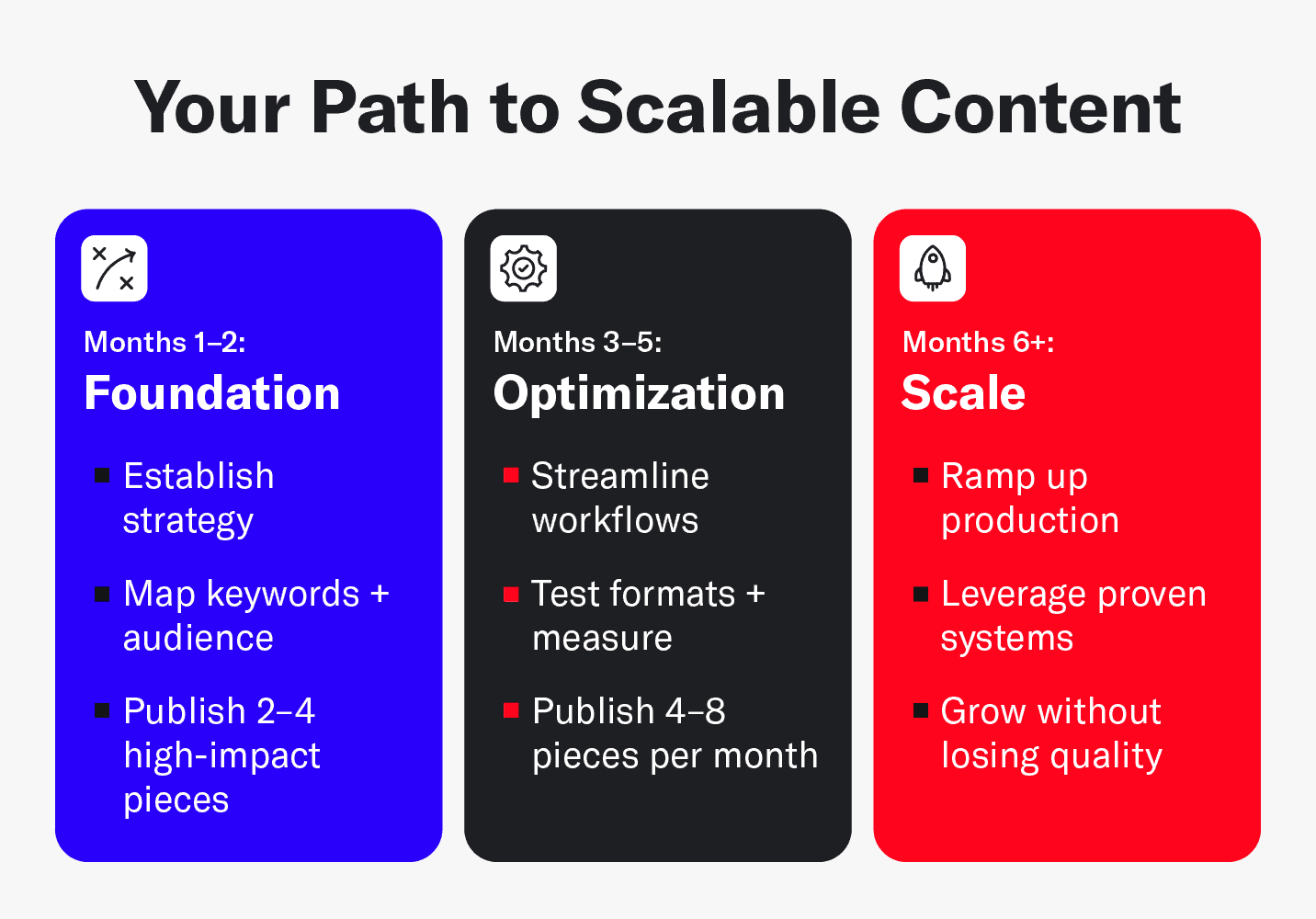
Sample Ramp-Up Timeline
Here’s an example of how a content ramp-up could unfold over six months:
Months 1-2: Foundation. Finalize your content strategy, including keyword research, audience mapping, and a clear content calendar. Start small with two to four high-impact pieces per month.
Months 3-5: Optimization. Increase to four to eight articles per month while streamlining workflows. Test formats, measure performance, and create templates and playbooks for efficiency.
Month 6+: Scale. With proven processes in place, safely ramp up. By now, you’ll know what drives results and have the systems to grow production without sacrificing quality or strategic focus.
Consider Agencies To Accelerate Early Growth
Scaling a content operation requires speed and expertise. Trying to build an internal team from scratch can be a major roadblock, but working with an agency can get you moving right away.
Here’s why a strategic agency partnership can be a game-changer:
- Instant expertise: Bypass the long hiring process. An agency gives you immediate access to experienced writers, strategists, and SEO professionals who know how to build a content engine.
- Accelerated momentum: Agencies provide the initial push to produce high-quality, high-volume content, helping you hit business goals faster and prove ROI sooner.
- Optimized testing and risk mitigation: Rapidly experiment with formats, channels, and messaging without overburdening internal resources.
This doesn’t have to be a permanent solution. An agency can act as a bridge to a fully in-house operation:
- A phased approach: Use the agency’s expertise to establish a strong, proven content strategy and workflow.
- Internalize best practices: As your team grows, they can learn from the agency’s successful processes and gradually take over key functions.
- Seamless transition: This ensures a sustainable, long-term content operation built on what works.
Diversify Content Types
Putting all your eggs in one basket, or all your resources into one format, is a risky strategy that limits growth. Blog posts can anchor your strategy, but relying on them alone risks content fatigue and hides your brand from audiences who prefer other formats.
Diversification expands your reach, fuels more creative content, and reduces the risk of platform or algorithm changes. By spreading your efforts across multiple formats, you meet audiences where they are and capture attention in different ways. Examples include:
- Blog posts for in-depth insights and SEO
- Videos for storytelling and quick engagement
- Interactive content (quizzes, tools, polls) for deeper audience participation
- Infographics for visual learners and shareability
- Case studies or product demos for BOFU conversions
Mixing formats keeps your content fresh and engaging while safeguarding your strategy against sudden platform or algorithm shifts. In short, diversifying mitigates risk and maximizes impact.
2. Streamline Your Content Creation Process
Once your strategy is set, the next challenge is building a process that can handle the volume you want to produce. A scalable content engine relies on efficiency, consistency, and quality control to maximize ROI.
Establish Clear Editorial Guidelines
Without clear rules, scaling content leads to inconsistency. Writers interpret brand voice and style differently, which can dilute your brand, weaken audience trust, and create extra work. A single source of truth keeps every piece aligned with your core identity.
Editorial guidelines serve as your content playbook, ensuring consistency and supporting content editing so reviewers can catch issues before publication. Key elements include:
- Tone and voice: How your brand communicates across channels
- Style conventions: AP, Chicago, or other preferred style guides, grammar, and capitalization rules
- Visual standards: Image usage, graphics, charts, and logo placement
- Formatting rules: Headings, lists, internal links, and web-friendly layouts
A dedicated content reviewer ensures every piece meets your standards before publication, allowing your team to scale without compromising quality.
Use AI To Scale Edge Tasks
AI isn’t a magic bullet, but it’s a powerful assistant for marketers looking to scale. In fact, 90% of content marketers plan to use AI in 2025 to support their efforts.
In AI content marketing, the key isn’t to rely on AI for drafting full articles, which often produces generic content, but to use it to accelerate repetitive or time-consuming “edge tasks” like:
- Keyword ideation: Generate seed lists of topics and phrases to jump-start your research.
- Outlines: Turn raw notes or meeting transcripts into structured draft frameworks.
- Summaries: Condense research, reports, or transcripts into digestible takeaways.
- Draft refinement: Rework early drafts for flow, clarity, or grammar before layering in brand voice.
- SME collaboration: Turn an expert’s interview or notes into a clear, organized outline.
Let AI handle the repetitive tasks while your team adds the insights, data, and brand voice only humans can provide. By combining the speed of AI SEO tools with your expertise, you can create standout, scalable content.
Don’t rely on AI for thought leadership. Without human insight and brand voice, content blends into the noise. Use AI to enhance efficiency while your team adds expertise to create scalable, differentiated content.
Batch Research Topics
Researching topics in batches helps your team avoid duplicating effort and speeds up the production process. Instead of looking up sources for every single article from scratch, group related topics and tackle the research in one session.
For example, if you’re creating content on “best CRM software,” you can collect stats, comparisons, and industry trends that apply to multiple pieces. This way, your writers start with a shared knowledge base, cutting down time spent hunting for sources and freeing them to focus on analysis and storytelling.
Repurpose Existing Content
A big part of scaling isn’t just creating new content; it’s getting more mileage out of what you already have. Content repurposing is an efficient tactic that stretches the value of your best assets without starting from scratch.
One strong piece can fuel multiple formats and reach new audiences. For example:
- Updating evergreen pieces with fresh data and insights
- Breaking a long guide into bite-sized social content
- Converting a webinar or podcast into a blog post or downloadable resource
By reimagining existing ideas, you can fill your content calendar and expand your reach without the heavy lift of constant new creation.
Leverage Design Templates
Design doesn’t have to slow your content pipeline. A library of templates for recurring elements saves hours of work while ensuring visual consistency, including pre-approved designs for:
- Pull quotes and call-to-action blocks
- Stock photo treatments and image sizing
- Charts and infographics
- CSS formatting for webpages
Templates allow your design team to spend less time re-creating the basics and more time on high-value creative work that differentiates your brand. This speeds up production and reinforces the professional, consistent look and feel your audience expects.
3. Optimize Your Content Infrastructure
Scaling isn’t just about output; it’s about building a robust foundation. To support high-volume, high-quality content, your technology and systems must be as agile as your strategy.
Evaluate Your Content Management System
As content grows, your CMS can become a bottleneck. A clunky or outdated content management system wastes time and frustrates your team. Before ramping up production, make sure your CMS can scale.
A strong CMS should be intuitive and seamless, supporting every stage of content creation, including drafting, publishing, A/B testing, and SEO. Key features to prioritize include:
- Easy collaboration for writers, editors, and designers
- Smooth integration with other marketing tools
- Support for multiple content formats
- Fast, reliable performance with minimal technical issues
If your team struggles with slow pages, basic tasks, or constant troubleshooting, your CMS isn’t built for high-velocity content. Investing in an agile, user-friendly system removes bottlenecks and enables efficient scaling.
Build a Scalable Content Hub
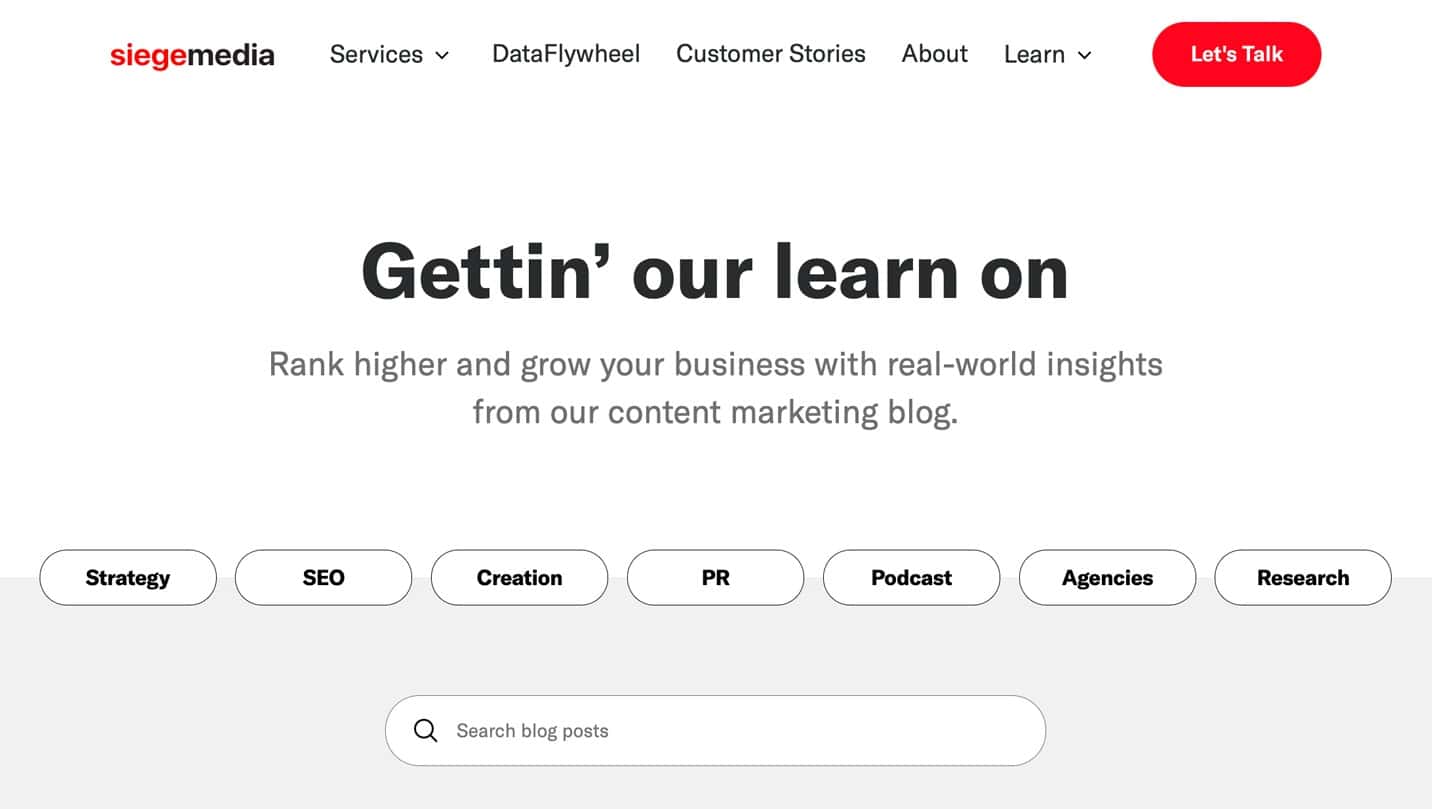
As you’re scaling content production, a simple chronological blog can quickly become a graveyard of buried articles. A strategic content hub keeps your most valuable assets organized and easy to discover.
Unlike a basic blog, a content hub structures content around topics, industries, and pain points. This improves user experience and signals to search engines that your brand is an authority in your space.
Key elements of a content hub include:
- Topic clusters linking related articles, guides, and case studies
- Clear hierarchical structure for categories and subcategories
- Consistent internal linking to surface relevant older content
With this scalable framework, every piece contributes to your business goals while supporting high-volume, high-quality content production.
4. Measure, Iterate, and Scale
Scaling content is about driving results just as much as output. Continuous measurement and refinement turn your content engine into a growth driver.
Track Your Performance and Adjust
Without clear metrics, scaling is guesswork. Track key KPIs like:
- Website traffic
- Engagement (dwell time, bounce rate)
- Conversions and lead generation
- AI Overviews visibility
Use this data to guide your next strategic move. Identify top-performing content clusters and double down on those topics. Analyze underperforming content to optimize it or sunset it entirely.
Treat every piece of content as an experiment. Test formats, headlines, and CTAs, then iterate based on results. Small adjustments can compound into significant improvements in ROI over time.
Evolve Your Team Structure
Scaling isn’t just about processes and tools. As output grows, roles need to specialize. A small team might share responsibilities, but producing 20+ pieces a month requires clearer divisions.
As your output grows, consider these key shifts:
- Separate writers and editors to improve both speed and quality.
- Designate strategists and managers to handle planning, freeing up creators to focus on execution.
- Introduce specialized roles like designers and marketers to ensure content is promoted effectively.
By defining responsibilities and allowing team members to focus on what they do best, you can build a more efficient and resilient content engine.
Scale Your Content With Siege Media
By understanding how to scale content marketing strategically, you can expand your reach, engage your audience across multiple formats, and measure success at every stage.
If you’re ready to build a reliable growth engine, we can help. Learn how our content marketing services can help you scale with speed and efficiency.