
When traffic dips, leadership starts questioning results and SEO teams scramble to justify every dollar, even though most drops are signals to dig deeper, not signs of failure.
Justifying an SEO budget to leadership can be tough, even when traffic looks good. When numbers dip, it can feel impossible to ask for more investment in content and search. Knowing how to argue for SEO budget when traffic’s down can help you turn a stressful conversation into an opportunity that supports the business at every stage.
Traffic isn’t a straight line. It ebbs and flows with algorithms, competition, and shifting user behavior. The key is showing that SEO remains one of the most reliable and cost-effective marketing channels.
In this post, we’ll cover how to find the real cause behind dips, use data to tell your story, and build an SEO budget plan that earns long-term support. By the time you’re done reading, you’ll have enough talking points to survive your next budget meeting without breaking a sweat.
- Find the Root Cause of the Traffic Drop
- Show Why Traffic Drops Don’t Necessarily Mean Failure
- Reframe the Conversation Around Business Impact
- Use Data To Tell a Story
- Discuss How SEO Compounds Over Time
- Bring a Solid SEO Strategy to the Table
1. Find the Root Cause of the Traffic Drop
Before you even think about asking for an SEO budget when traffic’s down, you need to understand why traffic is down in the first place. A dip without context can look like failure, but with the right data, it becomes a story.
Algorithm updates, content decay, search volume, and new search engine results page (SERP) features can all impact visibility. Knowing which ones are affecting your content makes your pitch grounded, rather than guesswork.
All investments are risky, but the people making financial decisions respect clarity. The best way to justify SEO is to diagnose the problems like an analyst. If you go in asking to simply throw money at the problem, chances are it won’t go too well.
Show that you understand the moving parts before asking for more budget. Some ways you can analyze a traffic drop include:
- Review your biggest traffic drops: Use tools like Google Search Console (GSC) to analyze top pages and see which ones are losing the most traffic. This can help you see where to focus your efforts.
- Check for SERP changes: More and more search engines, like Google, are emphasizing AI Overviews (AIOs). So there’s a possibility that your most popular keywords now have AIOs or featured snippet sections, decreasing traffic.
- Analyze site health: Various site health auditing tools, like Screaming Frog, will tell you if your site needs improvements to rank better. Some factors include crawlability, site load speed, indexing, and more.
- Assess clicks and impressions: Traffic drops mean your clicks are down, but how are your impressions? With the shift toward AIOs, some pages that initially received a lot of clicks now have high impressions because people get their answers right on the SERP.
2. Show Why Traffic Drops Don’t Necessarily Mean Failure
Even the strongest websites see traffic fluctuations, but that doesn’t mean your SEO strategy isn’t working. Oftentimes, it simply means that Google’s priorities shifted, competitors ramped up their content, or search behavior changed.
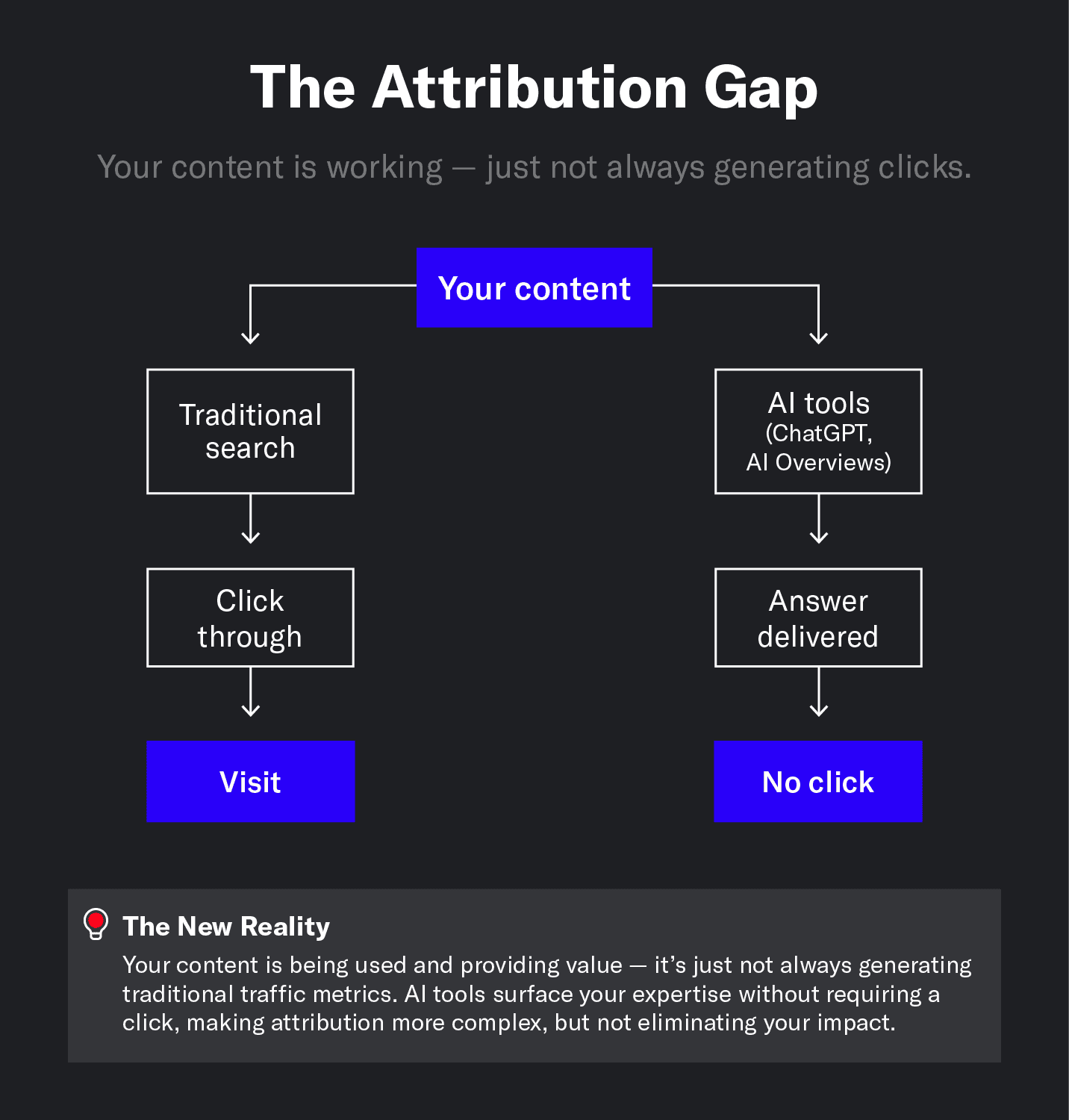
Here at Siege Media, we’ve been monitoring AI trends closely. We found that traffic from ChatGPT had an average engagement rate of 63.42%, slightly higher than organic search at 61.64%. This means some of your most engaged users might be finding you in new places, but that doesn’t always translate to traffic.
For example, whether it’s Google’s AI Overviews or a ChatGPT result, your site might provide the source of the answer. Once readers get what they need, they may not click through, even though your content did its job.
The takeaway? SEO is more about interpreting trends and tying them to business outcomes, not chasing perfect numbers. Once you can explain why the dip happened, you can turn a defensive conversation into a confident, data-backed discussion about future growth.
3. Reframe the Conversation Around Business Impact
Leadership can sometimes zoom in on the wrong metrics when analyzing SEO performance. Instead of defending clicks, focus on what really matters: business outcomes. At the end of the day, your budget isn’t about page views; it’s about driving qualified leads, sales, and brand visibility.
Would you rather get 10,000 page views with five conversions or 100 page views with 20 conversions? Once the conversation centers on value, not vanity, your argument gains a much stronger foundation.
Here are some additional ways SEO drives measurable business impact:
- Brand authority: Consistent visibility in AI Overviews and large language models (LLMs) keeps your brand top of mind, even without a click.
- Conversions: SEO attracts intent-driven visitors who are closer to making decisions than most paid audiences.
- Lower acquisition costs: Once your content ranks, it brings in leads long after paid campaigns stop.
- Brand awareness: Showing up in AI summaries and SERPs reinforces trust and signals credibility to both users and algorithms.
It’s important to drive home the value of brand awareness as we see a rise in zero-click search. Recent content marketing trends show that nearly 58.5% of Google searches now end without a click.
That doesn’t mean your content failed. It means users found what they needed directly from a trusted source (often yours) through AI Overviews, featured snippets, or LLM summaries.
4. Use Data To Tell a Story
When traffic dips, numbers can feel like ammo for criticism, but the right context turns them into proof of strategy. Use visuals, comparisons, and clear metrics to connect SEO performance to business outcomes, not spreadsheets.
Focus on Year-Over-Year Growth
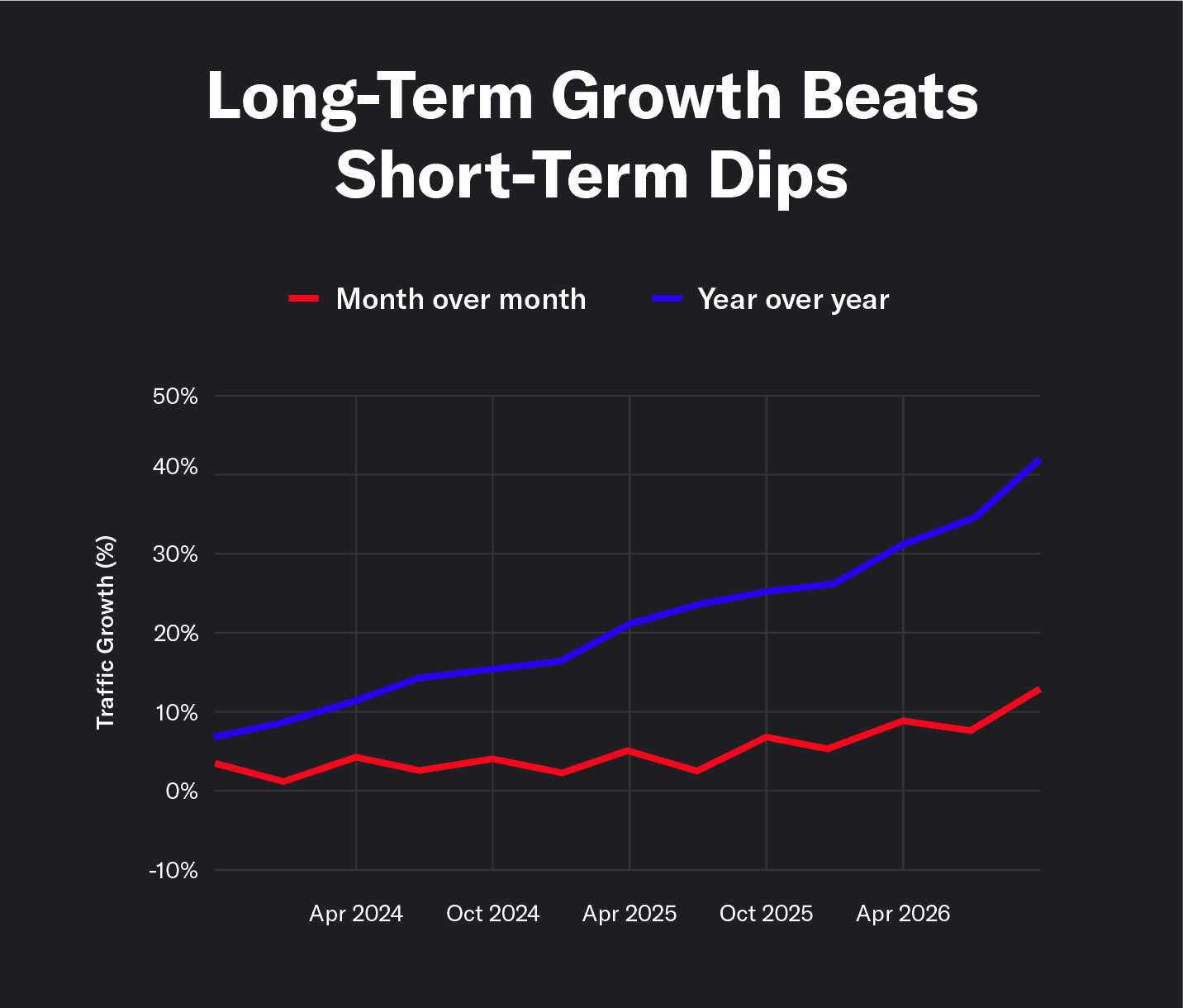
A lot can happen month to month, which is why year-over-year data is often a better metric. Month-to-month swings are normal, but steady yearly growth shows consistency.
Highlight how rankings, conversions, or branded traffic improved compared to last year to remind stakeholders that SEO is a compounding investment.
Example: While you may have a 10% decrease between months, traffic may be up 200% from the prior year, showing the value of SEO. Use a period-over-period chart, with one line dedicated to each, to create the visual.
Compare Organic vs. Paid Acquisition Costs
Paid traffic stops when the budget runs out, and that’s why quality SEO on a budget is a better investment. SEO continues to deliver value long after the work is done.
Showing the decision-makers the difference between cost per lead or acquisition between organic and paid channels is all the evidence you need. They’ll see that SEO is one of the most efficient ways to drive qualified users at scale.
Example: Create a side-by-side bar chart showing paid traffic at $45 per lead and organic traffic at $9 per lead. This clearly shows how SEO pays for itself, letting the numbers make your case.
Highlight Conversion-Focused Metrics
Remember, traffic is often nothing more than a vanity metric. Stakeholders care about outcomes more than they care about rankings. A great strategy emphasizes how SEO traffic converts to real results, like demo requests, sales, and leads.
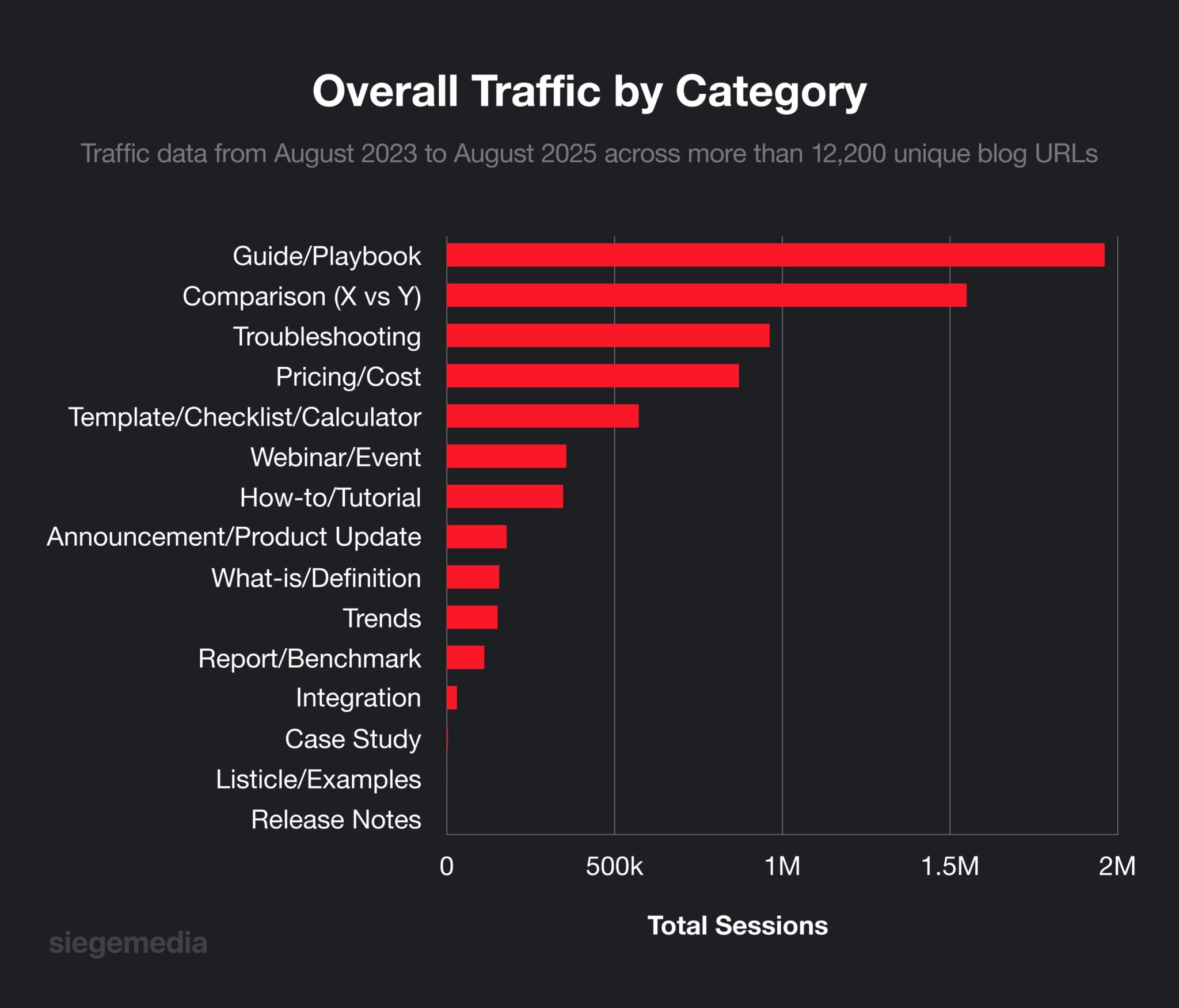
Highlighting conversions shows true value, and a great place to start is bottom-funnel (BOFU) content. We recently conducted a large-scale data study of more than 12,000 unique client URLs and found that guide, comparison, and pricing posts drive a lot of traffic and engagement.
Example: Set up Google Analytics to track conversions from your SEO content. It can show a direct path from someone clicking on your post to going to a sign-up or contact form.
Showcase Upward Trends Beyond Traffic
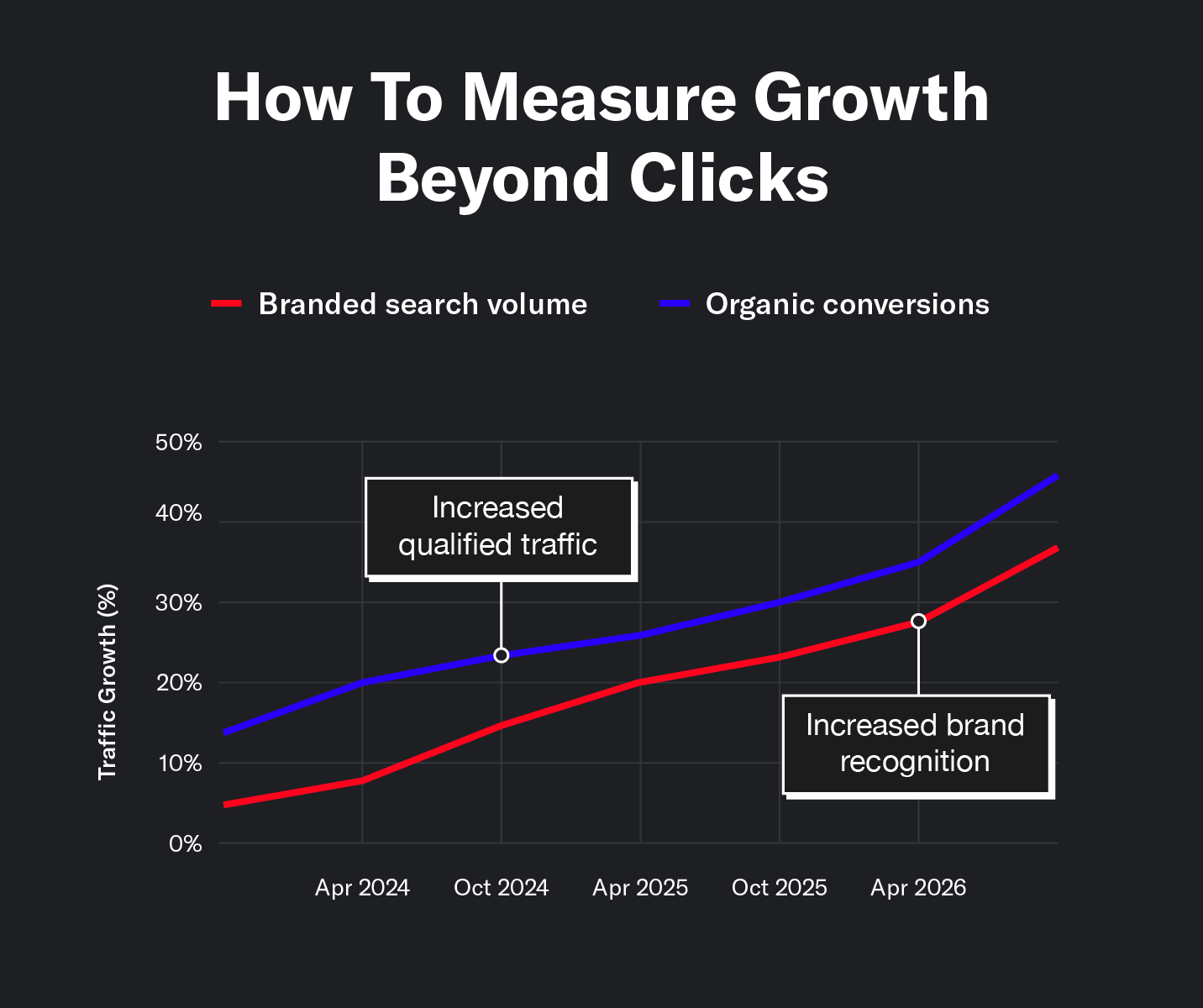
Traffic alone doesn’t capture the full story. Highlight other key metrics, including:
- Branded search volume: More people searching for your brand indicates growing awareness and visibility.
- AI visibility: New tools like Surfer show how often your content appears in LLM results or AI search answers.
- Conversions: Define what counts for your business — leads, sign-ups, sales — and track progress over time.
- Impressions: Rising impressions show that your content is being seen, even if clicks fluctuate.
- Average keyword positions: Strong rankings with lower traffic can signal seasonal or temporary search volume drops.
- Links: New referring domains increase authority and reinforce your site’s E-E-A-T signals to Google.
We keep mentioning AI visibility because our research continues to show that it’s a critical signal of reach and authority. We found that homepage traffic increased 10.7% from AI Overviews and LLMs, proving that search visibility now extends beyond Google’s blue links.
Example: Create a chart showing upward trends in metrics like branded search volume and conversions. Add callouts such as “More people recognize the brand” or “Brings in more qualified traffic.”
This turns raw data into a story about authority and how SEO impacts the company’s bottom line.
5. Discuss How SEO Compounds Over Time
SEO is one of the few marketing channels that pays dividends. Unlike pay-per-click campaigns or social media ads, SEO helps brands build momentum. Every post, link, and optimization effort creates a snowball effect that strengthens authority over time.
When presenting a budget plan, explain that consistent effort turns short-term gains into long-term authority. Posting regularly, refreshing old content, and improving internal links show search engines that your site is reliable.
That trust compounds, helping new pages rank faster and old ones hold their position longer.
6. Bring a Solid SEO Strategy to the Table
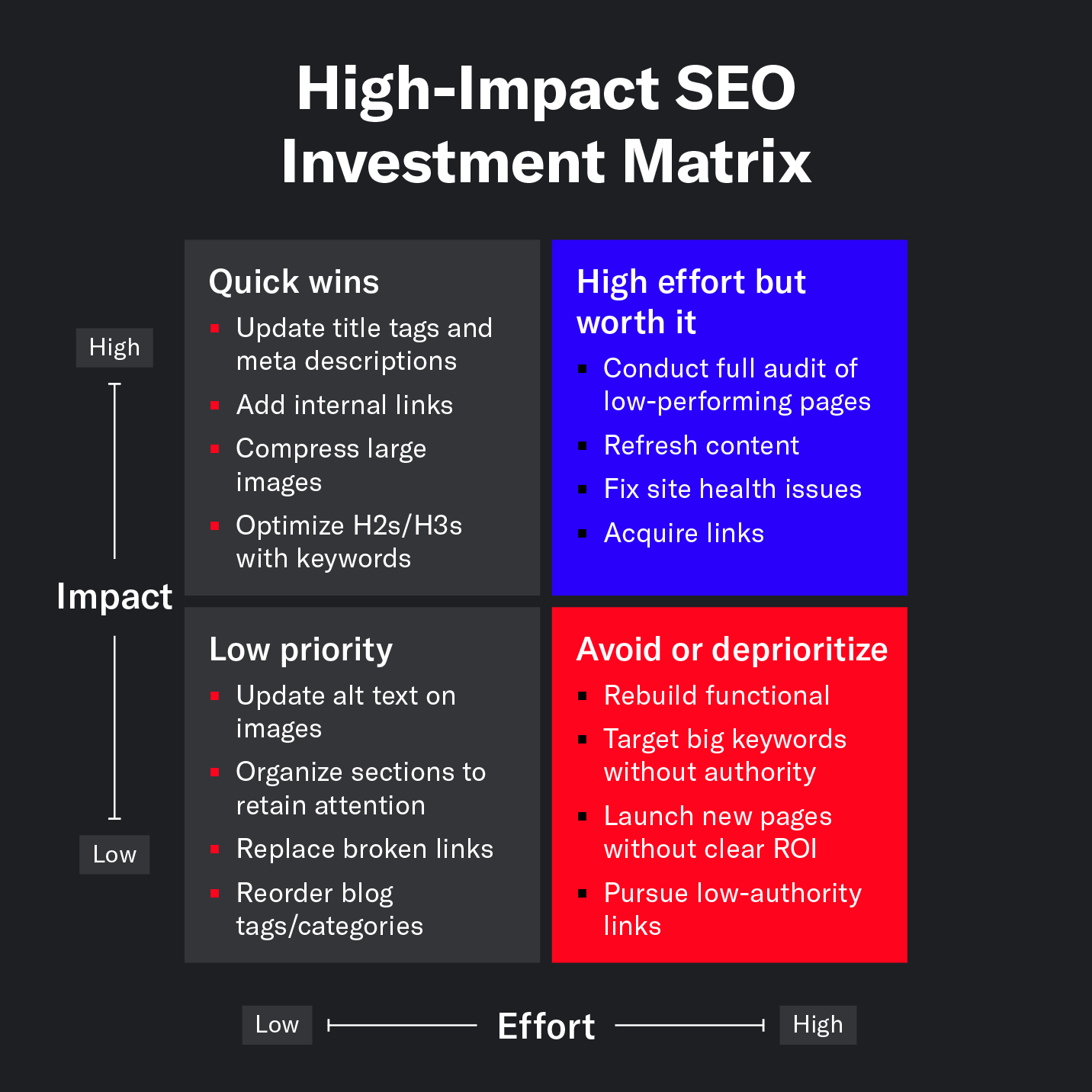
Having a clear plan is the difference between asking for budget and earning it. When you walk into a meeting with a defined SEO roadmap, you replace uncertainty with confidence. It shows leadership that you’re not guessing; you’re executing.
The following approaches show leadership that you know how to budget for SEO using proven strategies.
Put Effort Into High-Impact Strategies
Not every SEO tactic moves the needle equally. Focus your time and budget on initiatives that directly impact visibility and conversions. This can include:
- Content refreshes
- Technical fixes
- Link acquisition
- More clickable meta titles
- Call-to-action buttons
These efforts show measurable results that decision-makers care about.
Pro tip: Prioritize the 20% of SEO tasks that drive 80% of results. If a tactic doesn’t clearly tie to visibility, conversions, or authority, it’s probably not worth the spend.
Focus on Conversions
Traffic spikes are nice, but conversions keep the lights on. Align your SEO goals with business goals by tracking actions that generate revenue, such as demo requests, sales, or sign-ups.
When leadership sees SEO as a source of qualified leads, the conversation shifts from cost to investment.
Pro tip: BOFU content like “best of” roundup posts, versus posts comparing products, and pricing posts are designed to generate conversions.
Measure Engagement Metrics
Not every win appears as a traffic increase. Engagement metrics like average session duration, scroll depth, and return visits reveal how well your content resonates. Website engagement shows that SEO connects with your audience even when traffic fluctuates.
Pro tip: Pair engagement data with conversions to tell a complete story. A smaller, more engaged audience is often worth more than a large, disengaged one.
Identify Seasonal or Event-Based Trends
Traffic patterns often follow predictable cycles. Use historical data to identify when your audience peaks or slows. Showing leadership that you understand these rhythms helps you budget smarter and set realistic expectations.
Pro tip: Compare performance year over year during the same season. If traffic dips slightly every year at the same time, try to find content that may work better during that period.
Work With an Experienced SEO Agency
Sometimes the smartest move is bringing in outside expertise. A skilled agency offers proven frameworks, data-backed strategies, and fresh perspectives that internal teams might miss. They can also help validate your SEO budget plan with real performance benchmarks.
Pro tip: Rather than choosing the first agency that pops up, do your research to find the best SEO content writing services.
Turn Your Traffic Dip Into a Growth Story
Traffic declines happen to everyone, but how you respond defines the outcome. When you dig into the data, reframe results around business impact, and build a strong SEO budget plan, dips become proof of long-term strategy, not failure. Knowing how to argue for SEO budget when traffic’s down helps you keep growing while others pause.
If you’re ready to turn insights into measurable growth, Siege Media can help. Our team specializes in content strategy to improve traffic, product-led digital PR that builds brand recognition and authority, and creative design that builds authority and drives conversions.
Reach out today to learn how we can strengthen your SEO foundation and grow your brand through data-backed content marketing.