
Agentic browsers could mean that users stop visiting websites. But AI agents search, and unlike users, they don’t click on ads. SEO could be what gets you included in the future of browsing.
Is the future of the internet just bots interacting with each other? Will users stop landing on your website altogether?
Maybe. But that doesn’t mean websites are dead. Siege Media’s CEO, Ross Hudgens, laid out why he thinks agentic browsers are bullish for SEO in a LinkedIn post discussing ChatGPT’s Atlas browser release.
AI agents look for easy paths to deliver results to their users, and at Siege Media, we’re helping our clients achieve those results. The core? SEO practices modified for modern search journeys. In fact, we’re seeing that SEO and content marketing trends remain positive despite the impact of AI disruption.
Here’s a dive into why we think SEO is more relevant than ever.
- Meet ChatGPT’s Atlas Browser: How AI Agents Interact with SERPs
- Downside for SEO: Less User Traffic to Websites
- Upside for SEO: Agents Click Websites, Not Ads
- How Agentic Browsers Redefine “Above the Fold”
- Agentic Browsers Vs. Google: How Much Traffic Is at Stake?
- How to Win in Agentic Search with SEO
- Siege Media Is Reinventing SEO for the Era of AI Search
Meet ChatGPT’s Atlas Browser: How AI Agents Interact With SERPs
Open AI’s new browser, ChatGPT Atlas, currently available for macOS, provides users with access to ChatGPT wherever they browse on the internet. It integrates ChatGPT’s chat and agent features directly into the core internet experience and can:
- Search the internet and make purchases on a user’s behalf.
- Summarize the webpages users visit.
- Create custom product comparisons.
- Perform complex autonomous actions.
Here are a couple of example use cases that could make it easier for users but much more difficult for website owners:
1. ChatGPT Sidebars On Product Pages
While they’re shopping, users can ask ChatGPT for context, reviews, or alternatives.
If they’re on your product page for a coat, they could ask ChatGPT whether it’s the best coat for snowy weather, and receive recommendations for other products in the chat window.
Why this could be bad for businesses: You can lose control of the narrative on your own product page. If ChatGPT suggests your competitors’ products while users shop, they may bounce to explore other options.
2. Full-Task Completion With Agents
Users can ask ChatGPT to complete tasks end-to-end, including research and shopping. If they’re going on a trip, they could tell it to buy what they need, and it will do it autonomously from comparison to purchase.
Why this could be bad for businesses: Customers don’t even visit websites, and agents make decisions on their behalf.
Are websites dead? We think not, but we’re laying out both cases.
Downside for SEO: Less User Traffic to Websites
The bearish case for SEO is that as AI-based interfaces get more advanced and numerous (AI Mode, agentic browsers), users will stop clicking.
There’s a possible future of the browser: Instead of visiting websites directly, users may send AI agents to grab information and products for them, and make decisions based on the recommendations they receive (or they outsource the purchase completely).
And when someone does check out your landing page, it’s paired with a side window playing devil’s advocate that gives them reasons not to buy.
This moves user behaviour and purchasing decisions further into the black box of AI algorithms. Traffic from people plummets, engagement metrics stop making sense, and your funnels break. This can make it harder to argue your case for SEO budget.
At that point, why even bother competing for search results at all?
Upside for SEO: Agents May Skip Ads
Siege’s CEO Ross Hudgens asked ChatGPT directly how it interacts with search engines, and it said, “I avoid clicking on ads. I focus on organic results and official sources for reliability and safety.”
This is one reason among four that we’re predicting a bullish outcome for SEO with agentic browsers:
- AI agents tend to extract information from organic results and web pages rather than ads, making SEO crucial for discovery in AI-driven user experiences.
- Google still dominates in terms of speed, user trust, and breadth of information. For now, AI agents are supplements to, not replacements for, user search journeys.
- A multi-channel narrative has never been more necessary. Clarity, confusion, positivity, negativity, reviews, and competitors all get repeated in AI experiences as agents crawl the web.
- Your technical execution of product pages, especially temporary promotions and stock updates, impacts whether users will see them in their chat windows.
SEO is about getting discovered where users search, and LLM chatbots look for signals of organic value and trust when users trigger searches.
In a blog post announcing shopping research in ChatGPT, OpenAI said, “Your chats are never shared with retailers. Results are organic and based on publicly available retail sites—reading product pages directly, citing sources, and avoiding low-quality or spammy sites.”
But why does that matter if AI-assisted journeys are increasingly causing research, consideration, and even purchasing to happen away from your website?
Well, let’s not throw the proverbial baby out with the bathwater. AI agents also need many of the same things that users do:
- Fast, technically competent pages.
- Well-organized information with clear, high-quality writing and visuals.
- Comparisons, social proof, and reviews to anchor summaries and recommendations.
Think about it like this: The bots do their best to interpret the intentions and needs of users. They’re looking for the information that users need, and they need to gather, parse, and retrieve it. SEO at its core enables this process.
Optimizing for AI agents might look different, with new tactics and strategies, but the fundamental knowledge of SEO and how to build a user-first internet still underpins organic discovery.
How Agentic Browsers Redefine “Above the Fold”
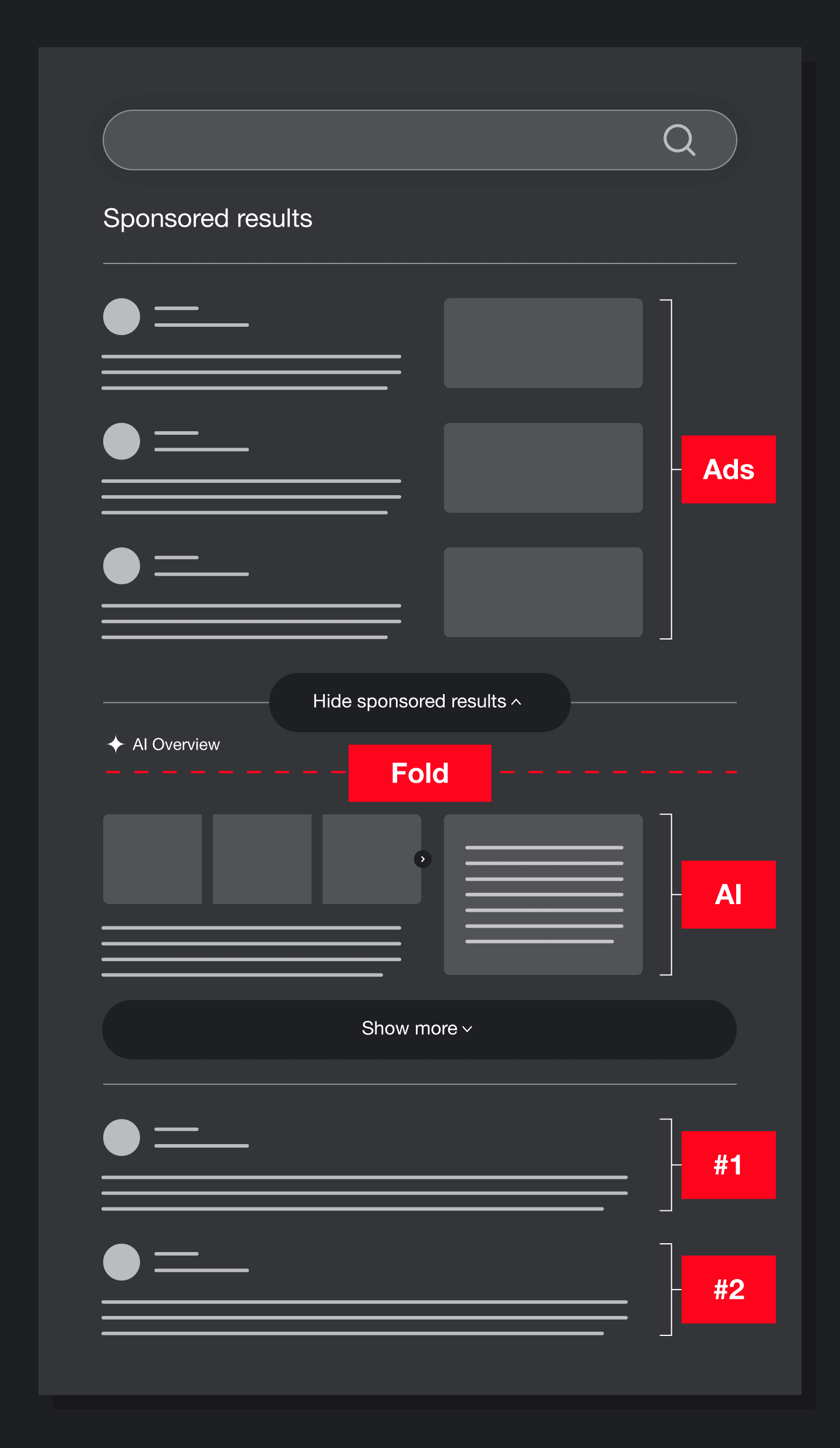
In traditional SERPs, being “above the fold” means getting included on the first screen users see before they scroll. Ads, SERP features, and the first organic results receive the most attention and traffic.
But in chatbots, there’s no fold, just the information that the AI provides over the course of the conversation. The responses are personalized depending on the user’s chat history and context. LLM chatbots can retrieve product details, summarize articles, create custom comparisons, or directly link users to product pages.
They also reference third parties and other platforms, like Reddit. Anything that appears in search results, from reviews to videos to social media comments, could be part of the narrative that an AI tool builds about your brand.
This process interrupts the dominance of sponsored results and, potentially, Page One rankings.
LLMs Can Reward SEO Activities Early
Google visibility is highly correlated with, but not necessarily required for, success in LLMs. In fact, there are gaps between Google rankings and some LLM citations.
How is that good for SEO? Well, SEO is still critical for visibility both on Google and in LLMs, but LLMs might reward you before Google does. That makes AI chatbots and agents a new high-potential channel for SEO success, not an SEO killer.
Rankings are cut and dry. Win or lose. Rank first and get the lion’s share; any lower and you get scraps. LLMs, on the other hand, don’t just serve a link; they respond to context, absorb narrative, and provide personalized recommendations.
This does come with some challenges:
- Tracking and attribution: LLMs may not directly cite the links you want them to, but your SEO efforts can influence how they understand, reference, and summarize your brand, products, or services.
- Result quality: Spam and user-unfriendly results are a problem with AI experiences and LLMs. There’s potential that low-quality sources get cited instead of you, depending on the context, and there’s not much you can do about this. The long-term impact this has on user behavior and the channels they choose remains to be seen.
Agentic Browsers vs. Google: How Much Traffic Is at Stake?
Ongoing research by Ahrefs indicates that Google’s share of referral traffic is just under 40%. This differs from other sources you’ve likely seen that put Google’s traffic dominance at around 90%.
The difference is that the 90% number measures how much traffic Google gets compared to other search engines, while the Ahrefs data measures how much traffic it sends as a referral source. Let’s focus on that data: traffic sent, not traffic owned.
By comparison, Ahrefs puts referral traffic from all AI assistants combined accounts for less than 1%.
This is why we don’t think SEO is going away anytime soon. AI growth is explosive, but Google dominates, and it’s also implementing AI experiences. The difference is that Google’s AI experiences are also informed by its decades of organic search stewardship.
How to Win in Agentic Search With SEO
No matter where user and traffic trends go, a strong SEO foundation can set you up for agentic marketing. It might require redefining SEO for AI. We’re excited because AI developments expand the breadth of what SEO can achieve.
If you want a more detailed and tactical overview, read more about everything you need to rank in LLMs.
Product-Focused SEO To Support Agent Buyers
One core use case for AI agents is product comparison and decision-making. This means that you must optimize your product pages for AI bots and users.
Nailing SEO execution can help your product pages appear in external search results. Now, with agentic SEO, you might even get your products featured while users are considering competitors.
A product-focused SEO approach is critical for e-commerce and should prioritize your key products and landing pages. When AI agents can easily match your products to the features, benefits, and customization that users search for, they can reward you with direct recommendations and links for ideal use cases.
This puts your products in front of people while they’re in the state of mind to buy.
Focus on Speed and UX To Guide Lazy Agents!
Searching, crawling, and retrieving information are time-consuming and costly processes. AI companies strive to strike a balance between thoroughness and user experience, as well as the costs associated with the actions that agents perform.
This often makes AI assistants “lazy.” They may not explore a full page, or they might abandon slow websites.
Pages need to be fast, organized, concise, and clear. Funnily enough, this is also how you make pages pleasant and helpful for users. Improving a website’s engagement and accessibility works for all visitors, whether bot or human.
Here are a few things you should audit to make sure your website is easy to access and understand:
- Speed and performance: Ensure that performance metrics, such as Core Web Vitals, remain in the green.
- Page hierarchy: Don’t bury important information deeply in your site architecture. Place important conversion pages in your top navigation and aim to minimize the number of clicks required to access each page.
- Internal links: A strong internal linking structure is critical for all types of crawlers, including Google. Use internal links to connect relevant pages together, create funnels from information to conversion pages, and distribute the value of backlinks across your website.
Integrate PPC and SEO Targeting Strategies
If you’ve been relying on ads to send traffic to pages without much attention to SEO, it’s time to talk about organic visibility. Agentic browsers could compromise the effectiveness of search ads, as users tend to skip visible search results and rely on recommendations instead.
Putting an organic strategy behind your products, supported with bottom-funnel content, can help you appear where users shop.
Create Content for Comparison and Consideration
Bottom-funnel content supports AI discoverability by providing information that agents look for to serve relevant results, including specifications, use cases, comparisons, and quality expectations.
At Siege Media, we’ve found that bottom-funnel content works for both SEO and GEO:
- Direct comparisons: “X vs. Y”
- Alternative discovery: “Alternatives to X”
- Roundups: “Best X for Y”
Direct and persuasive bottom-funnel content helps you secure conversions in traditional user journeys. It also enables you to influence the narrative about your brand inside AI ecosystems.
Make Content Readable, Concise, and Clear
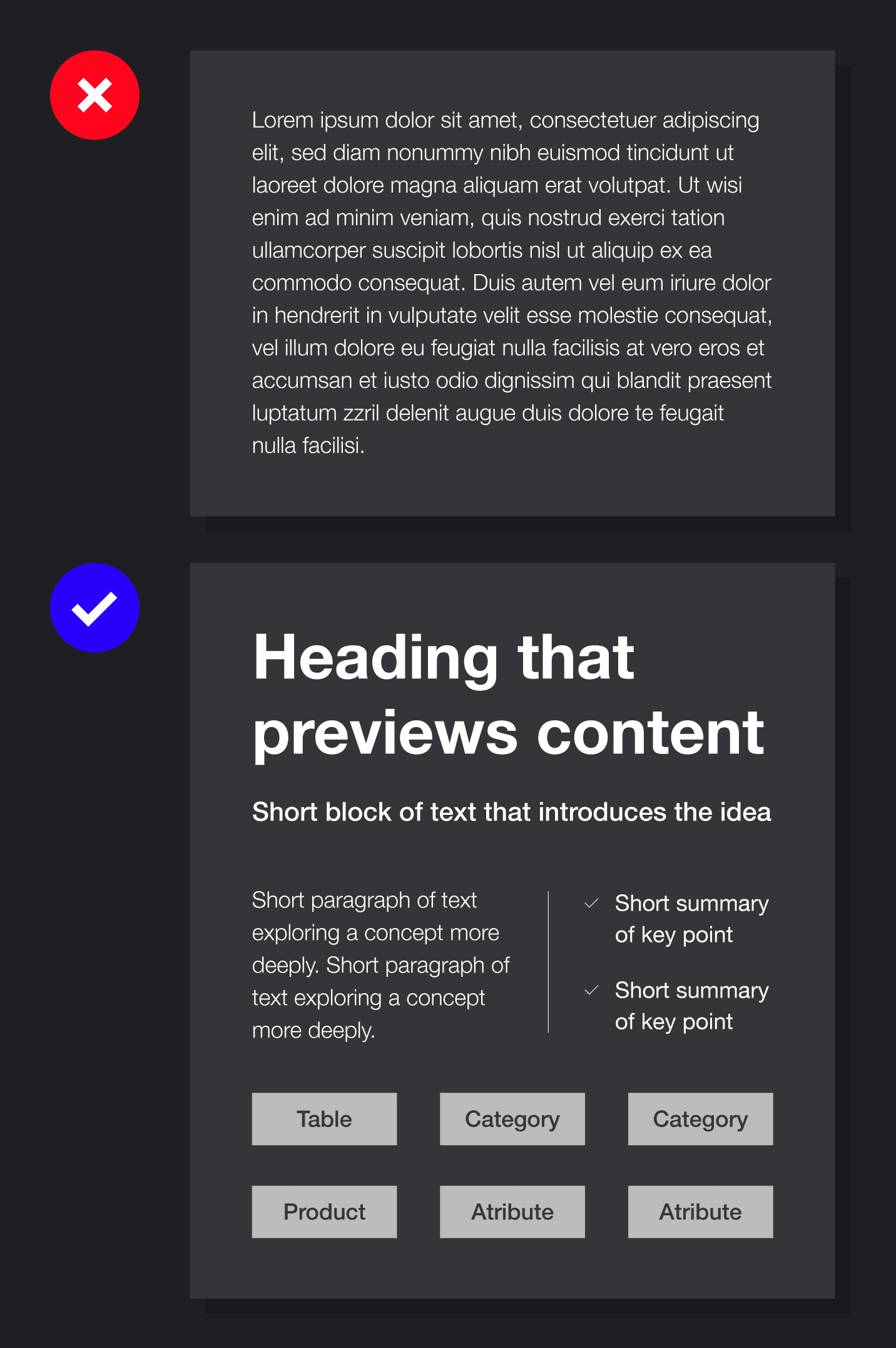
Just like users, AI crawlers can get lost in long paragraphs with unclear language. The ways they get confused and mix up information aren’t quite like humans, however, and so it can be tempting to create content specifically for AI.
You can intentionally clarify content for both humans and AI without making it overly repetitive. Human user experience remains the gold standard, and considering content structurally can help you enhance it for all use cases.
A few tips for content organization to create blog posts that rank:
- Use heading tags (H2, H3, etc.) to break content into sections.
- Ensure information flows logically from one point to the next.
- When you write about products, prioritize clear language and simple sentence structure.
- Use tables to organize complex information.
Use Digital PR To Distribute Data, Insights, and Your Message
Proprietary data is a great way to get featured in AI experiences because the bots look for new, relevant information to cite, especially when in “deep research” mode. But, in order for them to notice, you need distribution.
That’s where digital PR comes in. Journalists, too, are always on the hunt for new data and stories they can build with it. If you can get news coverage for topics that matter to your audience, you stand a better chance of showing up in other places where those people search. Visibility begets more visibility.
High-quality proprietary data that keeps your brand relevant is core to Siege Media’s proven DataFlywheel approach to GEO.
The four-stage system uses new data to update old content quickly, helping you outpace competitors with current content that LLMs love to cite. Paired with experienced in-house data journalists and outreach specialists, we create content strategies that reach the users you care most about (and convince them to buy).
Siege Media Is Reinventing SEO for the Era of AI Search
We don’t believe that SEO is dead or that it’s going away anytime soon. Despite unprecedented platform disruption, we’re helping clients grow in traditional organic search and AI chatbot discovery.
SEO is the core from which you can launch an effective GEO strategy. It’s the fertile ground that helps you grow, no matter how the winds change.
We’re proving it by fueling sales growth with digital PR and content marketing strategies that win you visibility, citations, trust, and sales.