
84% of digital PR professionals believe GEO will become as critical as SEO soon—here’s how to get ahead of them now.
SEO alone doesn’t guarantee visibility anymore.
If your brand isn’t showing up in AI-driven results, you risk losing attention to competitors who are. Digital PR is one of the most effective ways to bridge that gap.
Large Language Models (LLMs) and AI Overviews (AIOs) are changing how people find information. Instead of browsing a long list of results, users get answers built from just a handful of trusted sources like SparkNotes from the smartest kid in class.
To stay in the mix, you’ll need a strategy that boosts credibility and helps LLMs see your content as worth citing. This guide covers how to build that strategy with digital PR so your content earns its place in generative search results.
Here’s what you need to know.
- How DPR Helps SEO for Generative AI
- How To Optimize for Different LLMs
- Tips for Ranking in LLMs With DPR
- Partner With a Cutting-Edge DPR Team
- Frequently Asked Questions
How DPR Helps SEO for Generative AI
Generative Engine Optimization (GEO) for citations in LLM searches works differently from SEO and traditional search engines. Instead of returning a list of “10 blue links,” generative platforms like Gemini and Perplexity synthesize information and call out just a handful of authoritative sources.
To earn rankings in these results, digital PR needs to lift content visibility beyond just Google’s algorithm.
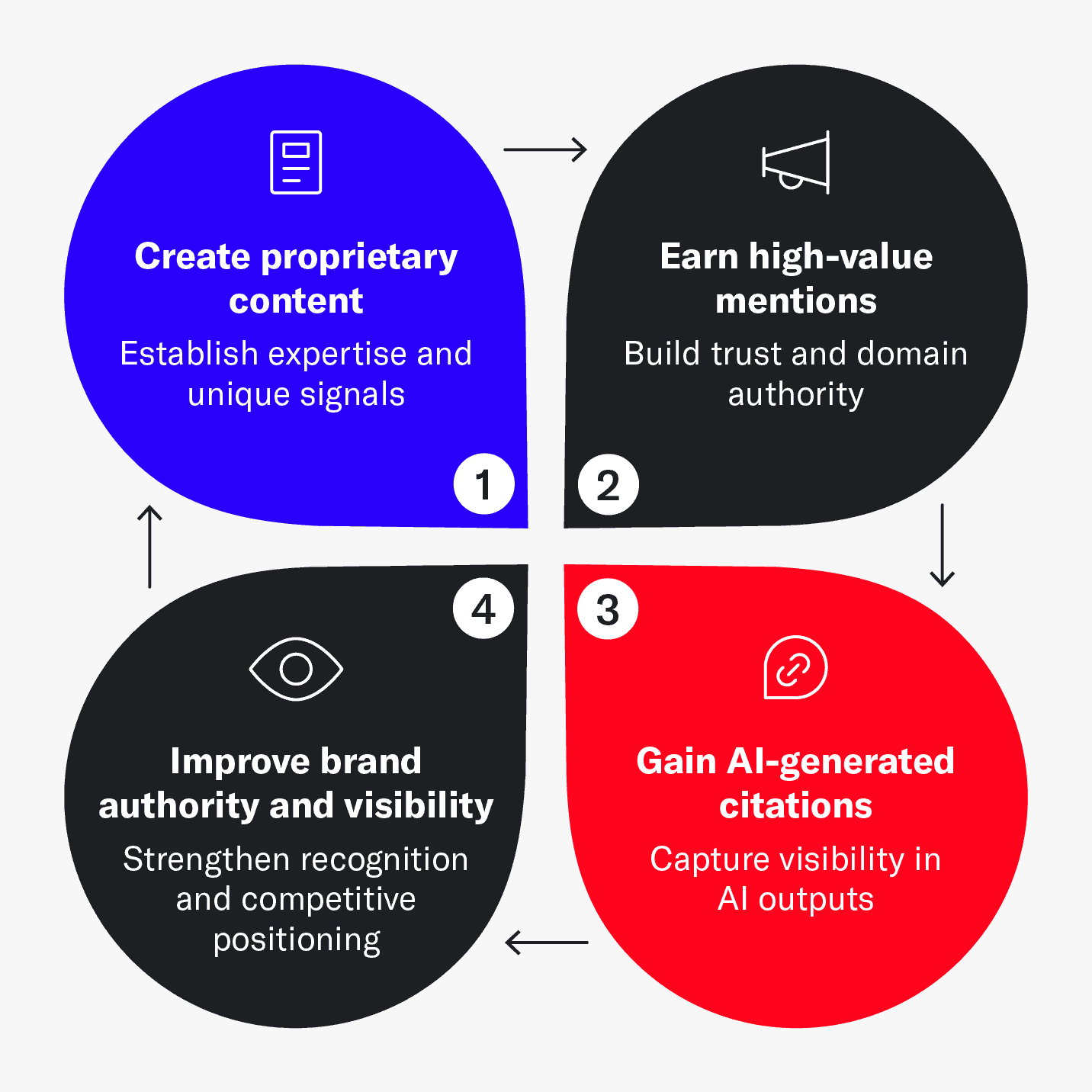
The foundation of digital PR for LLM optimization is simple: create authoritative, unique, widely cited assets with credibility signals strong enough for AI models to recognize and surface.
Let’s break this down further.
Generates Proprietary Data
LLMs favor insights they can’t easily replicate elsewhere, like original datasets, survey results, and industry benchmarks. In short, if the data is so unique that an AI can’t make it up, you’re in a great position to be cited.
Siege’s DataFlywheel automates fresh proprietary updates at scale—exactly the type of content that attracts AI citations. And that’s according to our own Siege Media research: Companies publishing new, proprietary data gain 45% more AI citations than peers working only with traditional formats.
Brands that consistently publish new, useful data trigger traditional SEO signals with digital PR link building and improve their visibility in AIO summaries for GEO.
Establishes Strong Branding
High-trust brands are the top choice when LLMs select citations. Strong brand mentions across top-tier outlets like Forbes, TechCrunch, or the Wall Street Journal increase recognition signals that models interpret as credibility.
However, strong branding isn’t limited to consumer awareness; even B2B firms benefit from appearing in trade publications and industry-specific outlets. Align your branding with your digital PR efforts to help ensure your company name appears consistently and in positive contexts.
Delivers Fresh Statistics
Any LLM query that includes recency bias (e.g., “What are the latest ESG statistics in 2025?”) rewards content updated within the past year.
That’s why staying on top of your content refresh cycles is so important. Siege’s strategy emphasizes data-backed updates, ensuring datasets and statistics always reflect current-year insights.
For one of our clients, Vena Solutions, we prioritized sharability with statistic-centric posts that quickly drove an increase in organic links. Branded search also surged by 50%, meaning Vena had established trust with its blog readers.
Provides Expert Quotes
LLMs pull and rank subject matter expert (SME) commentary when determining authoritative answers. Quotes from credible leaders, like academics, executives, and researchers, act as authority amplifiers.
Digital PR teams should weave thought leader commentary into press assets, pitches, and hosted content. But this SME thought leadership shouldn’t be the crux of your content. Instead, weave thoughtful stories that incorporate SME knowledge to give more context to your solution for your readers’ pain points.
How To Optimize for Different LLMs
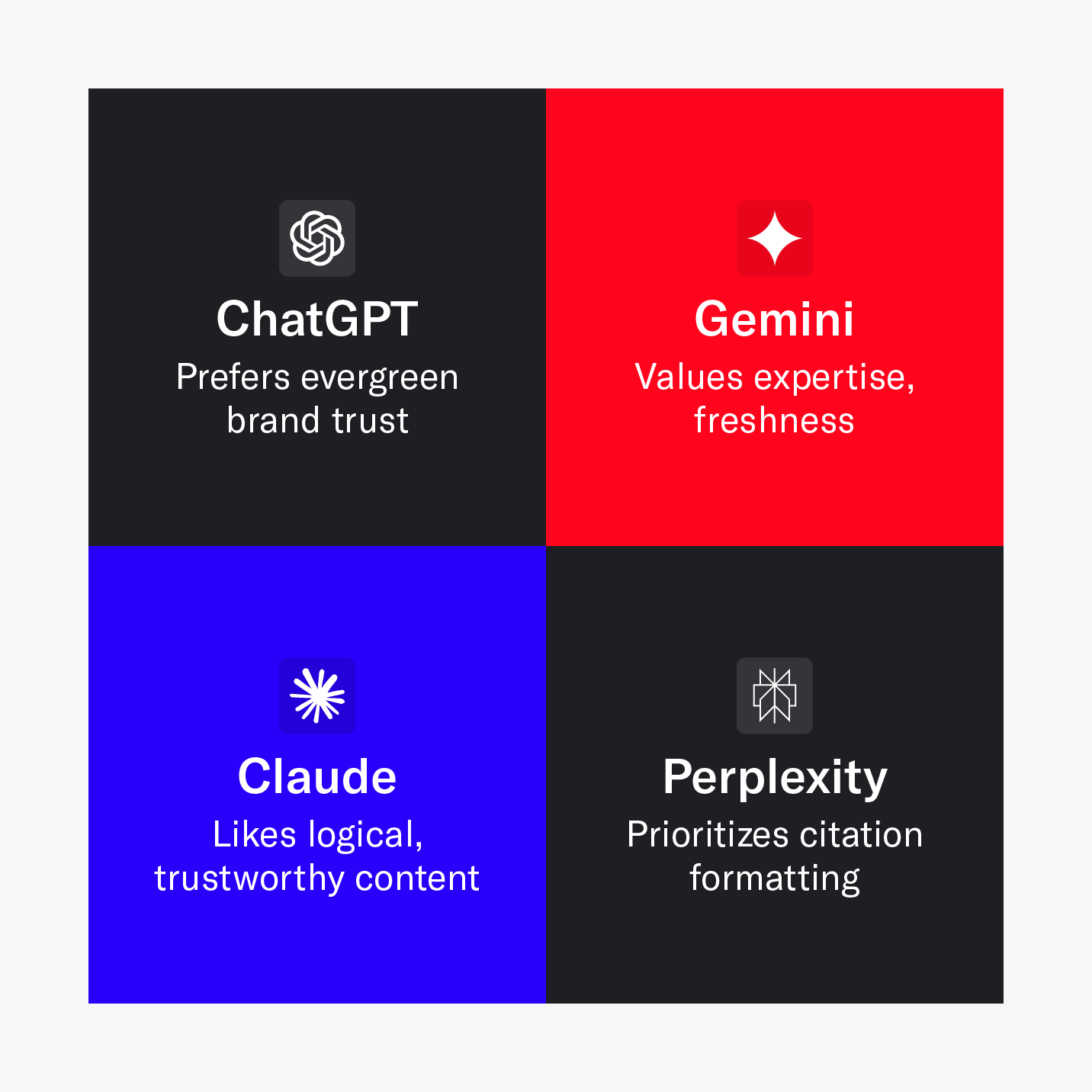
Each of the major LLMs approaches content discovery and citation a little differently, so tailoring your digital PR strategy can help maximize visibility.
Gemini
Since Gemini is Google’s own LLM, it’s no surprise that it plays by Google’s long-standing rules. It relies heavily on E-E-A-T standards to determine credibility, so make sure your content writers are qualified experts who have clear author bios and credentials.
Gemini SEO also has a strong bias toward freshness. This is your cue to create and refresh data-rich content—like surveys and industry reports—annually or even quarterly.
Pro tip: Use structured data (like schema markup) to help Gemini “read” your content and pull out the most important facts.
Perplexity
Perplexity is a super-smart research assistant. It works by providing concise, fact-based answers, so it rewards content that makes its job easy.
To get your brand cited here, focus on being a definitive source with short, punchy paragraphs and clear, scannable bullet points. It also values inline citations more than other models.
The easier you make it for Perplexity to verify your facts, the more Perplexity SEO will want to cite you.
ChatGPT
This model, powered by OpenAI, cross-checks information by validating a fact across a broad range of trusted domains. It isn’t necessarily looking for one single source; it wants to see that multiple reputable places confirm a piece of information.
That’s why a smart digital PR strategy here is all about building a broad, trusted brand presence. Aim for editorial mentions and links from various sources, from major news sites to niche industry blogs.
ChatGPT SEO also loves evergreen content, so creating foundational guides and reports will help your content be referenced over a long period.
Claude
Claude is a bit different. Tracing its thoughts would show you that it’s a conceptual, thorough research tool that takes its time.
To get your content in front of Claude, your strategy should be to go for depth, not just a quick win; Create long-form, evergreen content that provides deep analysis.
It’s also essential to prioritize a clear, logical structure with headings and a deliberate narrative progression. This step makes it easy for the model to parse your information.
Lastly, Claude’s core principles are about being helpful and harmless. It favors sources that project a professional, trustworthy, and authoritative tone. A well-researched, balanced content strategy can give you the exact kind of reputation Claude is looking for.
Best Practices for LLM Ranking With DPR
You need a clear and focused digital PR strategy to succeed in generative search. These best practices combine ingenuity, creativity, and data analysis to boost your GEO efforts.
- Create unique DPR content. Focus on developing digital PR campaigns that deliver original research, proprietary data, or exclusive insights. LLMs prioritize distinct, valuable information that AI cannot easily generate, making your content more likely to be featured and cited. You should also use structured data (like schema markup) to help Gemini “read” your content and pull out the most important facts.
- Build brand trust through E-E-A-T. Emphasize experience, expertise, authoritativeness, and trustworthiness (E-E-A-T) in every piece of content. Display clear author credentials, cite reputable sources, and maintain consistent brand mentions in top-tier media to signal reliability to AI models.
- Earn relevant, high-authority editorial mentions. Obtain high-quality editorial mentions from recognized industry publications and authoritative media outlets. These placements enhance your brand’s credibility and increase the likelihood that AI systems will consider you a trustworthy source.
- Track results, monitor success, rinse and repeat. Monitor your digital PR results regularly to identify where and how your content is cited in AI search platforms. Use these insights to optimize your campaigns for ongoing visibility, adapting to changes in the fast-evolving AI landscape.
These practices aren’t wavering like fluctuating content marketing trends. They’re the bedrock for a long-haul approach that transforms digital PR efforts into long-term competitive advantage.
Partner With a Cutting-Edge DPR Team
Generative search might’ve seemed like a trend at first, but it’s redefining how people find trusted information. Digital PR is now a core tactic for ensuring brands earn citations where it matters.
Winning here takes more than ranking on Google. With GEO principles and strong digital PR execution, you can strengthen authority, deliver unique insights, and secure your place inside LLM results.
Want to put a GEO strategy into action? Explore Siege’s AI-enhanced digital PR offerings and see how our comprehensive GEO services drive results at scale for companies with 10 or 10,000 employees.
Frequently Asked Questions
What Is Generative Engine Optimization (GEO)?
GEO is the practice of optimizing your content specifically for AI-powered search platforms like ChatGPT, Gemini, Perplexity, and Google AI Overviews.
Instead of focusing only on traditional SEO tactics like researching keywords or getting links, GEO ensures your content is structured, authoritative, and clear enough to be directly used and cited in AI-generated answers. Your content needs to be contextually relevant and easy to interpret to appear in conversational search.
What’s the Difference Between SEO and GEO?
SEO focuses on improving your website’s position on traditional search engine results pages (SERPs) by targeting keywords, building links, and optimizing for algorithms centered on ranking signals.
GEO focuses on optimizing content for generative AI. This strategy helps you build your brand’s authority by creating excellent, relevant content. A major benefit is that your information will be woven directly into AI-generated responses, rather than just showing up as a link.
Is GEO Replacing SEO?
No, GEO isn’t replacing SEO but building on it. SEO fundamentals like high-quality content that meets search intent and site optimization that boosts user experience remain critical for organic visibility.
GEO extends these efforts by adapting to the growing impact of AI-driven search, where visibility depends not just on rankings but on being a preferred source for generative models.
Brands that combine both approaches have a better chance of securing comprehensive search presence across traditional engines and AI-powered platforms.
What Types of Content are Most Likely To Be Cited by LLMs?
LLMs are most likely to cite content that contains unique, data-driven insights such as proprietary surveys, benchmarks, or studies. Well-sourced government and academic reports, frequently updated statistics, and expert commentary with verified credentials stand out as reliable and authoritative.
Essentially, these models prioritize fresh, trustworthy, and contextually relevant information that supports clear, fact-based answers.
What Role Does Proprietary Data Play in Digital PR for AI Search?
Proprietary data is a game-changer for digital PR in the AI search era. It gives AI models unique information they can’t get anywhere else, making your content highly citable.
Publishing original surveys, reports, or benchmarks draws media attention and feeds fresher, more relevant content into AI systems that prioritize recent and exclusive data. Your brand stands out in generative search by becoming a trusted source that AI engines turn to again and again.
Can Digital PR Improve a Brand’s E-E-A-T for AI-Driven Search?
Definitely. Digital PR creates a credible narrative around your brand that AI models recognize and reward with inclusion in their curated answers. It boosts your brand’s E-E-A-T by earning expert quotes, authoritative media mentions, and transparent sourcing.