AI is changing the way people search — and it’s shaking up how content gets discovered.
To stay visible in an AI-first search, brands need answer engine optimization (AEO). In short, it’s the practice of tailoring your content so AI-powered tools like ChatGPT and Perplexity can easily understand and surface it in direct answers.
While SEO focuses on ranking in Google’s top results, AEO ensures your brand shows up in the AI-driven answers people actually see.
Traffic is already declining for many content marketers — 36.4% reported a drop between 2024 and 2025 as AI Overviews and AI tools rolled out. If your content isn’t optimized for answer engines, you risk getting cut out of the conversation entirely.
Understanding how AEO works and how it differs from traditional SEO is key to keeping your content discoverable in an AI-first search world.
- Why AEO Is Important
- How Answer Engine Optimization Works
- AEO vs. SEO
- How To Optimize for AEO
- Challenges and Limitations
- The Future of AEO and Content Strategy
Why Is Answer Engine Optimization Important?
Search isn’t only about clicks anymore. Nearly 60% of U.S. Google searches were “zero-click” in 2024, meaning users found what they needed without visiting a website.
Discovery is also shifting to AI tools. Audiences are asking conversational, natural-language questions and getting instant answers synthesized from multiple sources.
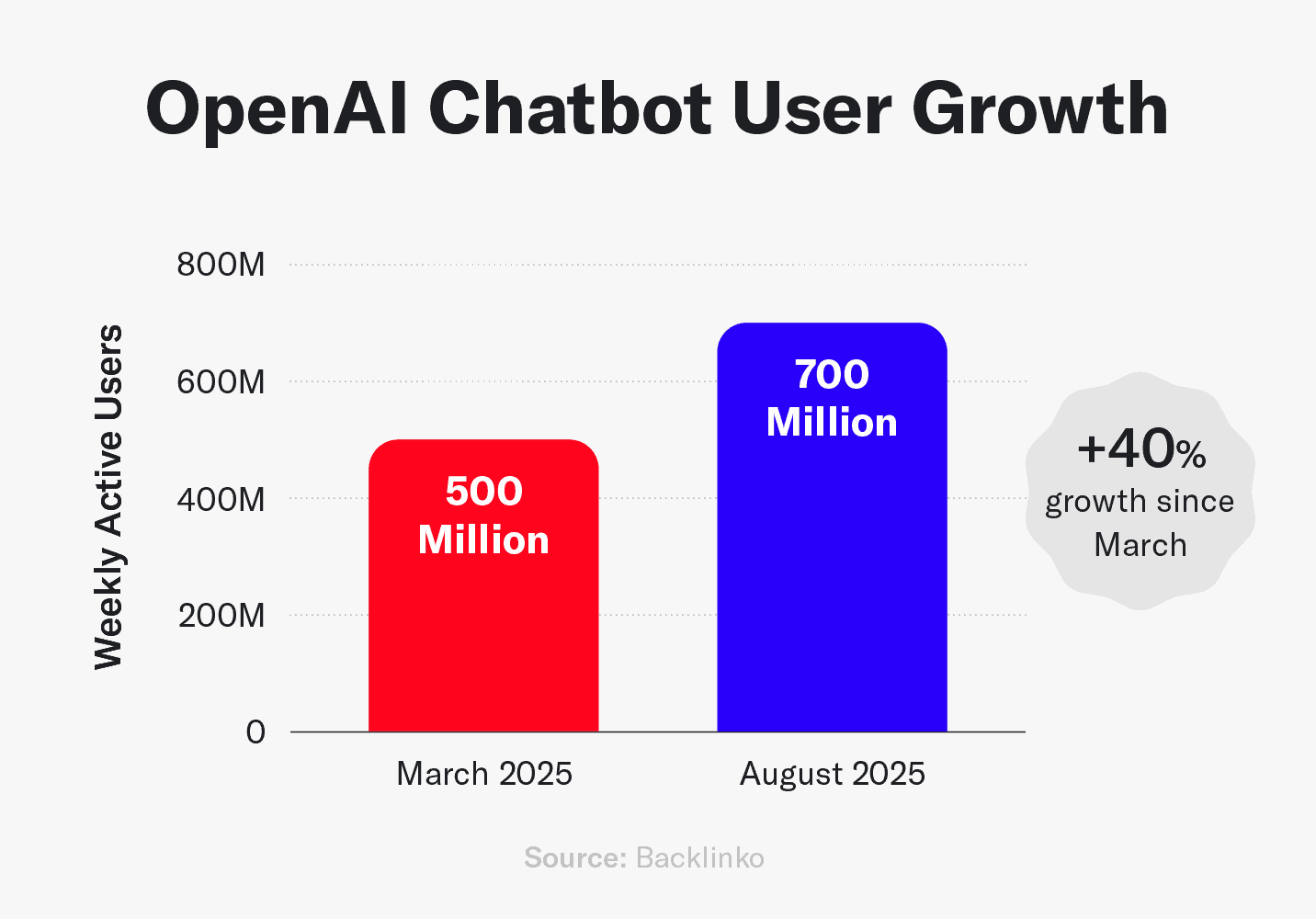
OpenAI reported over 700 million weekly active users on ChatGPT as of August 2025, showing just how mainstream AI-driven search has become.
Businesses that move early can stay visible in the answers people trust most.
How Answer Engine Optimization Works
Answer engines are trained on vast datasets of online content.
As more high-quality sites opt out of this training — often due to concerns about copyright, data usage, or loss of control of their content — the opportunity grows for businesses that produce original, authoritative content to be cited in AI-generated answers.
Here are a few key elements that make AEO work:
- Understanding user intent: Answer engines use natural language processing (NLP) to interpret queries, favoring content written as clear, direct answers with minimal ambiguity.
- Synthesizing answers from multiple sources: LLMs pull snippets from across the web, making accurate and authoritative content more likely to be included.
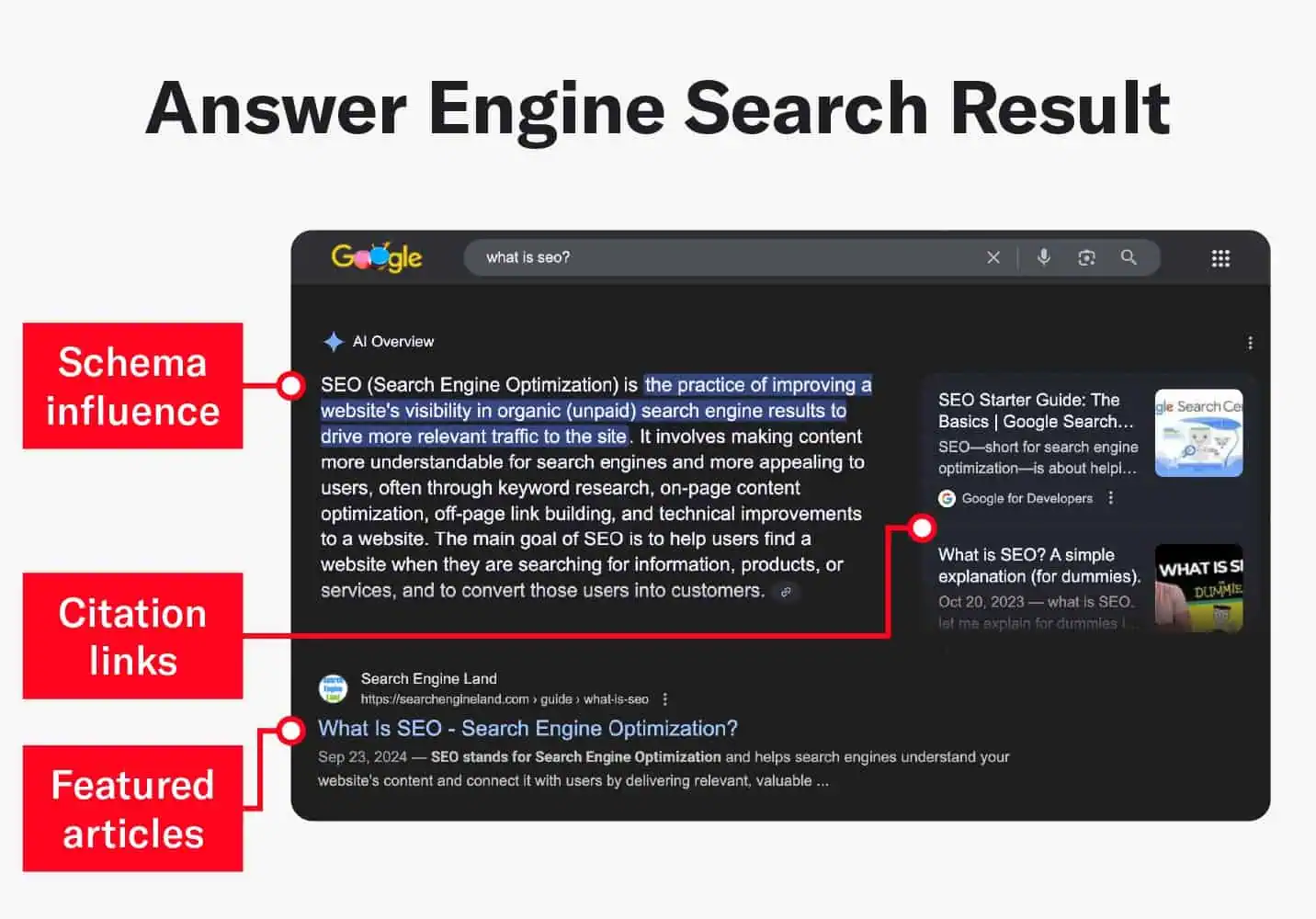
- Structured data and schema: Using schema markup (like FAQ, HowTo, or Product schema) helps engines quickly identify your content and increases the chance of being surfaced.
- Formatting for clarity: Short sections, clear headings, and bullet points make content easier to parse, which improves usability for readers and AI systems alike.
In AEO, the goal is to be precise and trustworthy enough that answer engines choose your content to feature in their responses.
AEO vs. SEO: What’s the Difference?
Traditional SEO and answer engine optimization share the same goal — helping people find your content — but they approach it in different ways.
| SEO | AEO | |
|---|---|---|
| Focus | Keywords, rankings, clicks | Context, accuracy, citations |
| Success | Page One visibility, organic traffic | Inclusion in AI answers, authority signals |
| Content style | Long-form, comprehensive | Concise, structured, scannable |
| Formats | Blog posts, guides, landing pages | FAQs, how-tos, concise explainers, structured data |
| Metrics | Rankings, organic clicks, conversions | Citations in AI answers, impressions, brand visibility |
SEO and AEO aren’t competing strategies — they complement each other. A piece of content can rank on Google while also being structured in a way that makes it more likely to rank in AI search engine results by being cited in answers.
Together, they help your brand capture both clicks and visibility in an increasingly AI-first search world.
How To Optimize for Answer Engines
Getting started with AEO doesn’t require a complete content overhaul. The key is building an AEO strategy that adapts SEO best practices and reshapes them in ways AI systems can interpret and deliver your content as the answer.
1. Understand User Intent
The first step in AEO is understanding search intent, or the real questions your audience is asking and the outcomes they expect.
Instead of guessing at keywords, dig into the natural-language queries people use when they want quick, clear answers.
You can uncover these questions by exploring:
- People Also Ask boxes in Google results
- Community-driven platforms like Reddit or Quora
- Your own site search data and analytics
Once you spot recurring themes, group them together and create content that addresses each one directly. Structuring your answers into short, clear sections makes it easier for readers to find what they need — and easier for AI systems to surface your content in generated responses.
2. Set Goals and KPIs
Clear goals make it easier to see how your AEO strategies impact your business. Instead of chasing raw traffic, think about the outcomes that show your brand is gaining visibility and trust in an AI-first search world.
Consider goals like:
- Visibility: Appearing in AI-generated answers across high-priority topics
- Authority: Being recognized or cited as a reliable source within your industry
- Engagement: Growth in branded searches, mentions, or impressions that signal stronger recognition
From there, define KPIs that map to these goals. Track featured citations, answer inclusions, or brand mentions over time to see whether your content is surfacing where audiences are asking questions.
3. Optimize On-Site Content for Answers
Building an effective AEO strategy starts with making your content easy for people and machines to scan. That means presenting information in formats that make answers clear and accessible.
A few ways to do this include:
- Use question-based headings: Phrase subheads as questions and follow with concise, to-the-point explanations.
- Build dedicated FAQs: Create hubs that cover common questions in your niche, each with short, standalone answers.
- Lead with the answer: Put the direct response near the top of each section so it’s easy to extract.
- Break content into lists or steps: Numbered instructions, bullet points, and short sections improve readability and machine parsing.
- Add internal links: Connect related pages to guide readers deeper into your site and signal topical relevance to search engines.
- Keep content accurate and current: Answer engines reward sources they can trust, so update your pages regularly.
This approach makes your content easier for readers to scan and more likely to be cited in AI-generated responses.
4. Strengthen Off-Site Authority
Off-site signals like links, brand mentions, and customer feedback all contribute to how authoritative your brand looks to search engines and AI systems.
This is where E-E-A-T comes into play.
Publishing expert insights, earning coverage on reputable industry sites, and gathering positive testimonials or reviews all reinforce these signals. They show that real people value your expertise and that your brand has credibility beyond its own platform.
The stronger your authority across the web, the more likely answer engines will view your content as a reliable source worth citing in generated responses.
5. Monitor Performance and Adapt
AEO isn’t a set-it-and-forget strategy. AI tools and user behavior evolve quickly, so your approach needs to evolve with them.
Track how often your content is cited in AI-generated answers, monitor branded visibility, and look for signals of authority across channels.
Pair these insights with traditional SEO metrics to see where your content is performing well and where it needs refinement. Staying flexible ensures your brand remains discoverable as answer engines continue to shift.
Challenges and Limitations of AEO
Answer engine optimization has clear benefits, but it also comes with trade-offs marketers need to keep in mind.
One challenge is that AEO can reduce direct website traffic. When answers are displayed in an AI tool or search feature, users often get what they need without clicking through, making it harder to drive sessions from the content it’s citing.
It also makes success harder to measure. Visibility and citations don’t always translate into traffic or conversions, and engines continue to change how they evaluate those signals. Strategies that work today may need rethinking within months.
AEO doesn’t just impact traffic. Appearing in AI answers can boost homepage and branded search activity by building awareness and trust.
Our research found that homepage clicks rose 10.7% after the rollout of AI Overviews and LLMs, showing that when brands appear in AI-generated results, users often seek them out directly later.
The Future of AEO and Content Strategy
Answer engines are still new, and no one knows exactly how they’ll evolve. But one thing is clear: AI-driven discovery is already reshaping how people find information, and that trend isn’t slowing down.
For marketers, this makes AEO a natural extension of AI content marketing.
Businesses that start experimenting with AEO today will be better prepared for whatever comes next. Testing new formats, monitoring how your content appears in AI answers, and adapting as algorithms shift all help build a foundation of visibility and authority that lasts.
AEO doesn’t replace SEO — it adds the next layer. Blending both into your strategy helps you capture value now while positioning your brand to thrive as AI-powered search continues to grow.
Make AEO Part of Your Strategy Today
Answer engines are reshaping how information is discovered, and the shift is happening faster than most businesses expect. Brands that experiment with AEO now have the chance to claim visibility and authority before competitors catch up.
At Siege Media, we help businesses create content strategies designed to thrive in this new landscape. Contact us today so we can make your brand one of the voices AI turns to first.
Frequently Asked Questions
How Long Does AEO Take?
Results vary, but most businesses can expect visibility in AI-generated answers within a few months of consistent optimization. Like SEO, AEO is an ongoing process that improves over time.
Is AEO Worth It?
Yes. In fact, Mentimeter’s content appeared in 124,000 ChatGPT sessions and led to more than 3,000 conversions, showing the real business impact AEO can deliver.
Does AEO Replace SEO?
No. AEO complements SEO by helping your content appear in AI-generated answers, while SEO ensures you still capture clicks from traditional search. The strongest strategies use both.