The difference between an ad that stops you mid-scroll and one you ignore often comes down to proven copywriting structure.
AIDA is a copywriting framework that breaks the customer journey into four stages: attention, interest, desire, and action.
Developed by advertising pioneer Elias St. Elmo Lewis in 1898, the AIDA model has endured for over a century because its stages tap into fundamental human psychology, guiding consumers from initial awareness to conversion.
Each stage plays a crucial role in guiding potential customers from awareness to conversion. By structuring marketing messages around these four stages, businesses can craft persuasive content that drives engagement and conversions.
This post outlines how each stage works and provides examples of how to apply AIDA in marketing.
The AIDA model was developed by Elmo Lewis in 1898. It’s a marketing framework that breaks down the customer purchase process into four stages: attention, interest, desire, and action.
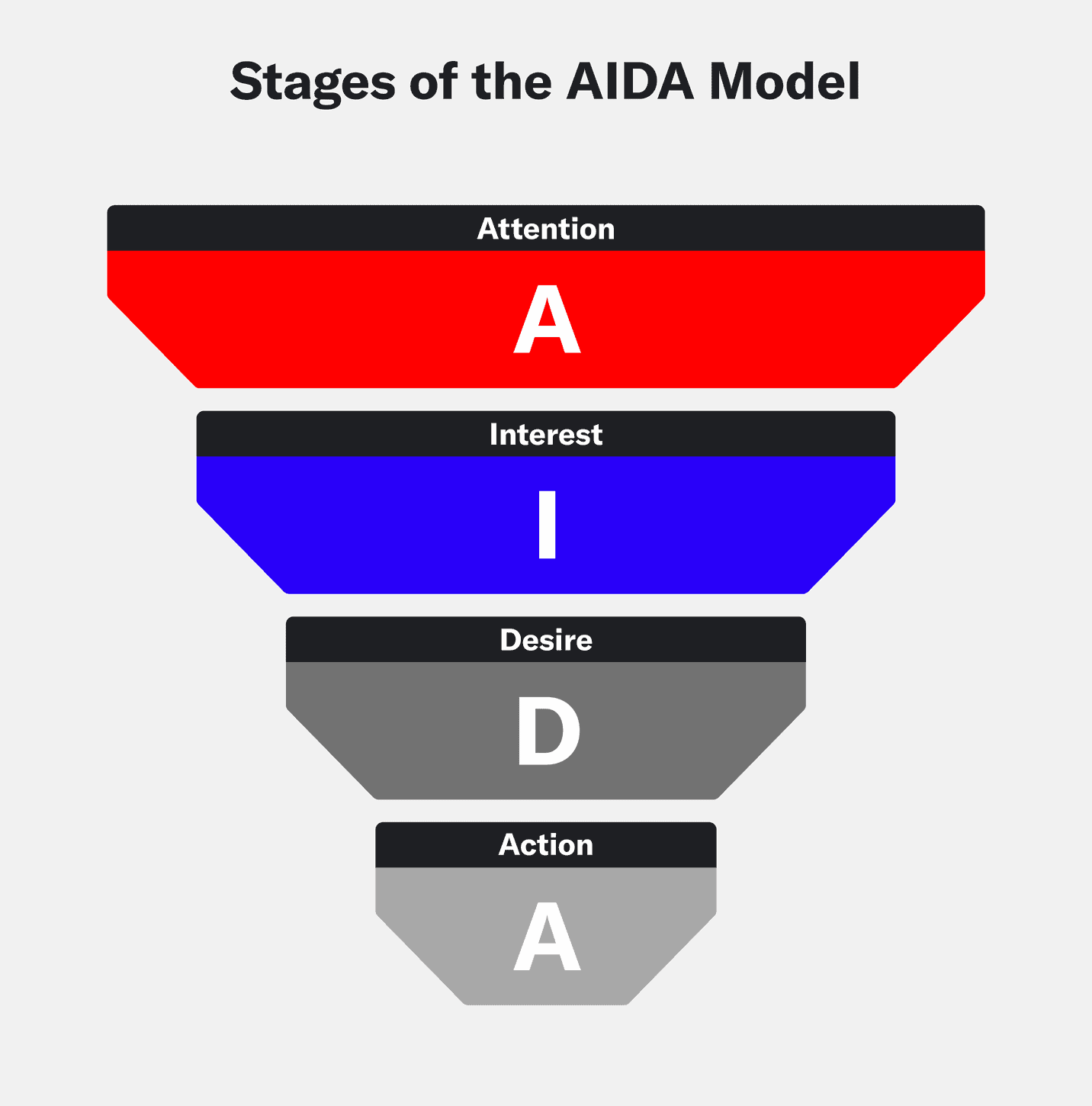
Customers move through each stage, interacting with your product or service until they convert into a customer.
The sales, marketing, and public relations industries use the AIDA model because it offers a simple copywriting formula for attracting, engaging, and converting leads.
What Are AIDA’s Four Stages?
We use AIDA most often for creating blog content and email outreach, but many mediums – from blog posts and email outreach to video scripts and social media campaigns – can replicate the formula. Follow the steps below to incorporate it into your next project.
1. Attention
Like with any good pickup line, you have to open your content with a hook. This is especially important for writing email subject lines and headlines, where you often compete with hundreds of others.
In 2025, capturing attention quickly is crucial – over 58% of Google searches now end without any click, meaning your headline or opening line must deliver immediate value to stop the scroll.
To create attention-grabbing copy, consider what your audience or customer persona cares about. Think about their background, industry, obstacles, motivations, and even seasonality to determine why they may be interested in hearing from you.
Some AIDA marketing examples for the Attention phase include:
- Social media
- Short-form video
- Press releases
- Podcasts
- Landing pages
- Marketing campaigns
2. Interest
After snagging your audience’s attention, you have to keep it. What is it about your voice that makes them continue reading your email or blog post? Captivating readers can encourage them to stay on your page longer and engage with more of your content.
Personalization is a great way to connect with readers or prospects to show them you understand their needs. Add enough information to keep them engaged, but don’t overwhelm them or pile on irrelevant talking points.
Instead, engage users with interactive content or visuals that encourage them to linger – satisfying their query quickly while offering depth keeps their interest.
For the Interest phase, look into the following examples:
- Blog posts
- Social proof
- Testimonials
- Email campaigns
- Newsletters
- Product pages
3. Desire
OK, so your audience is hooked and shows interest — what now?
Offer them a product that they actually want. Create a pitch, and back it up with concrete benefits for them to turn their interest into a desire. How will you make their life easier? To increase your credibility, showcase your past and current work, case studies, or testimonials to nudge them to the next stage.
Social proof is critical – about 95% of shoppers read online reviews before buying, so including positive customer quotes or ratings can stoke a prospect’s desire for your product.
Here’s what to include in the Desire phase:
- Case studies
- Customer quotes
- eBooks
- Templates
- Printables
- Gated assets
4. Action
Round out your pitch or content with a clear and concise CTA. Be direct about the next steps you want the prospect to take. Should they fill out a contact form or respond directly to your email? Don’t confuse them with too many options or a vague “Let me know what you think” signoff.
In fact, emails with a single call-to-action increased clicks by 371% in one study, highlighting how a straightforward, one-option CTA can dramatically boost conversions.
As a bonus, reduce friction for them by providing additional assets. This can be a link to your data for a study you’re pitching, statistics for previous customer work, or a content marketing trend report to show your potential value. They are more likely to take action if you make their life easier.
Here’s how to call your lead to action:
- Create “learn more” buttons.
- Point to more content or products at the end of blog posts.
- Encourage them to subscribe to your newsletter when downloading gated assets.
- Ensure your CTA adds value to the user experience.
How Can You Use AIDA in Marketing?
Now that we’ve walked through what AIDA is and how it works, here are some examples of how you can use it to level up your creative content marketing efforts.
Make Contract Lifecycles Fun
When you think of contract lifecycle management, “fun” might be the last word to come to mind. However, in this Siege-created post for ContractSafe, our content marketing specialist cleverly tied “lifecycle” to something as grand as the water cycle and as small as rotting Greek yogurt.
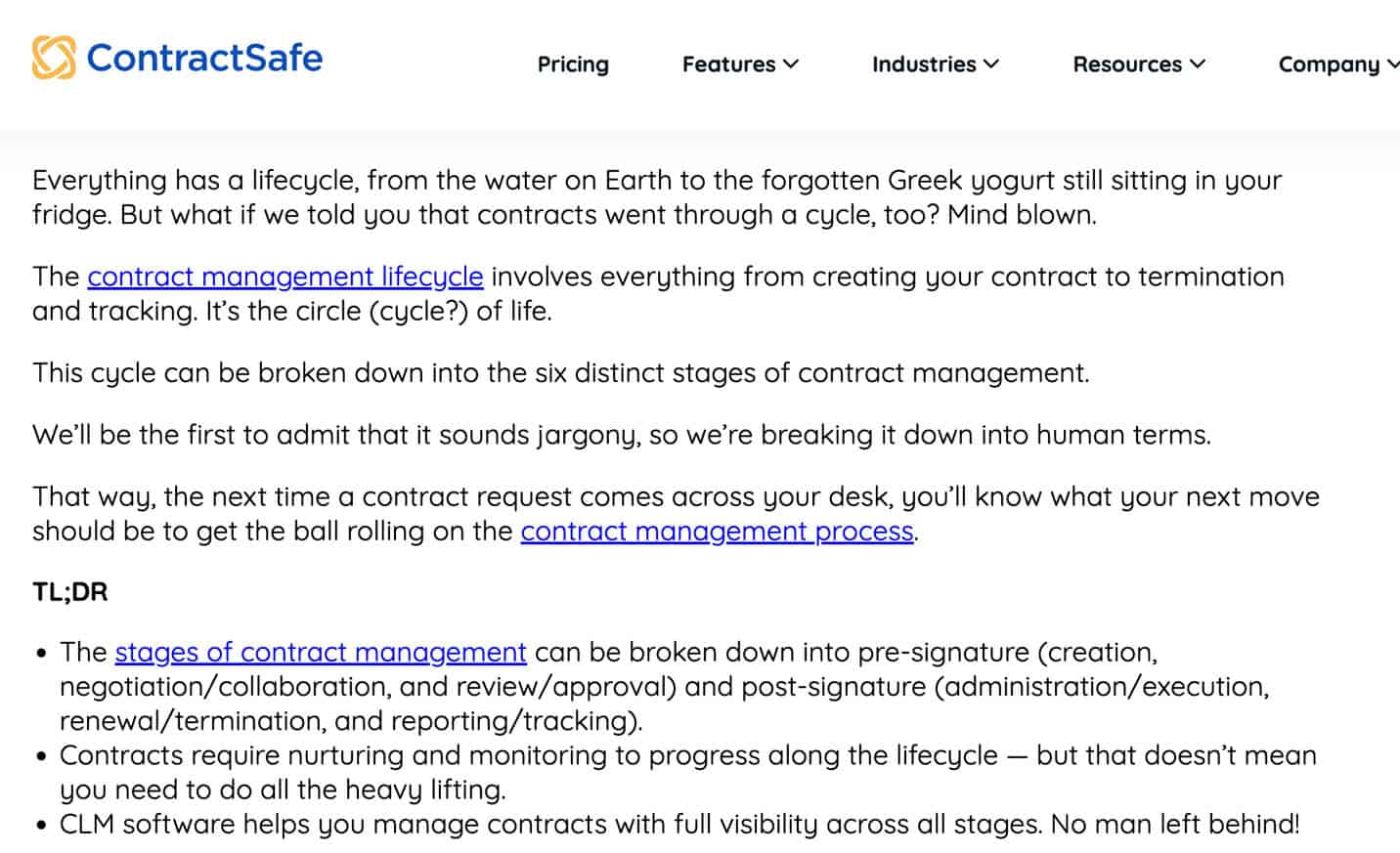
By creating a relatable analogy for a traditionally dry topic, the writer used AIDA (grabbing Attention with an unexpected comparison and holding Interest through a clever narrative) to retain the reader throughout the post.
Relate to Personal Experiences
What’s harder than creating a bottom-funnel software comparison post? One that hooks the audience in the first sentence.
In this Siege-generated post for Zapier, our content marketing specialist expertly used casual language and personal life experience to grab the audience’s attention and create interest for the reader with the following introduction:
A password manager securely stores all of your passwords in one place, so all you have to do is remember one password instead of, say, 300.
This casual, relatable opener instantly captures attention and sparks interest, exemplifying AIDA’s first two stages in action.
Outline Blog Articles Using AIDA
When it comes down to it, you want readers to spend more time on your site. Follow the outline template below to decrease bounce rates, increase engagement, and even get people to convert.
- Attention: Use punchy blog titles to create interest in your topic.
- Interest: Satisfy the reader’s search intent (answer their question directly) and impress with easy-to-read formatting and great design.
- Desire: Write benefit-focused copy and include helpful resources.
- Action: Include links to other content, sidebar CTA buttons, or lead forms to increase conversions.

Draft Outreach
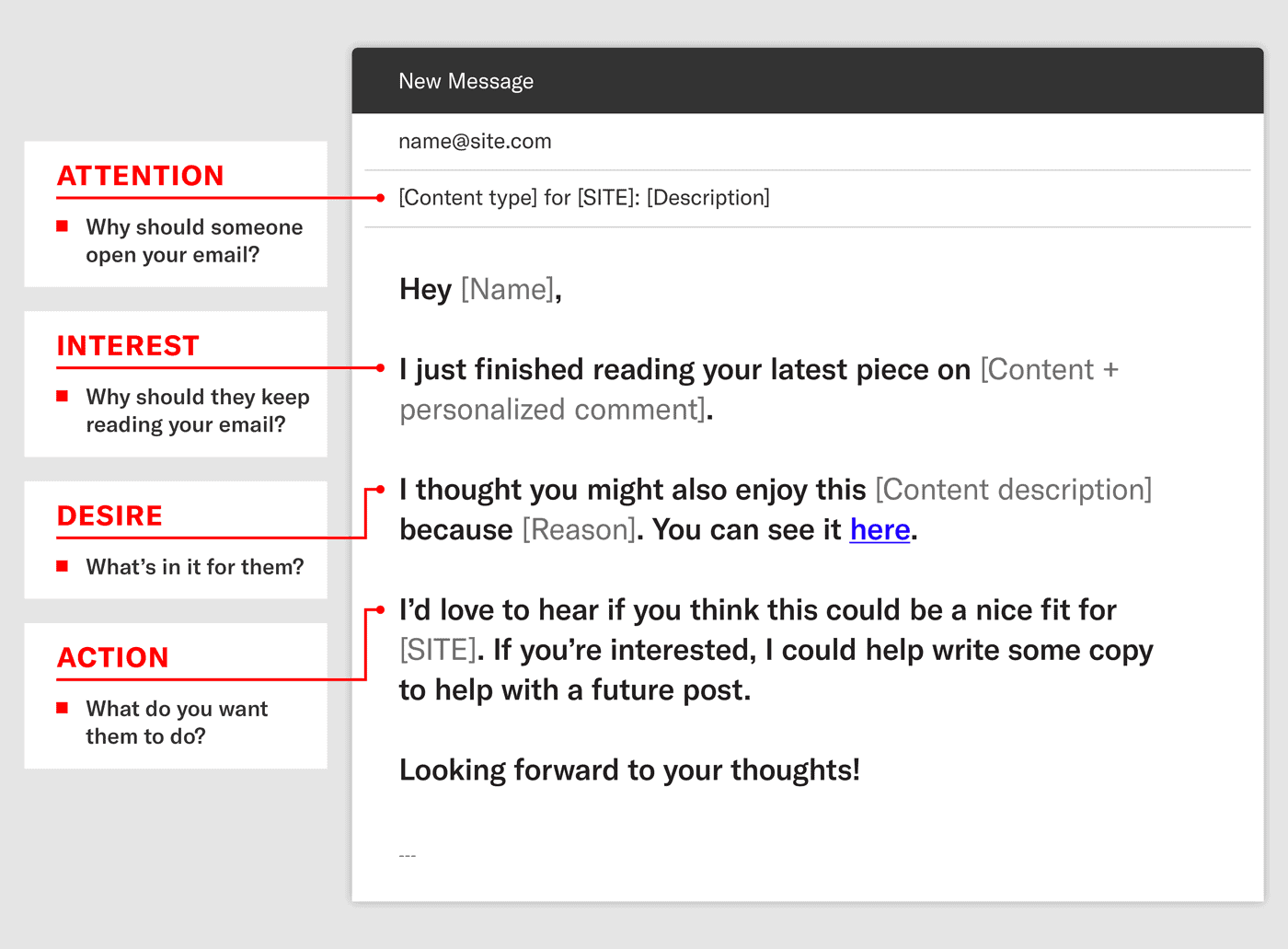
Don’t be afraid to use the AIDA model for advertising. You may worry that pitching to strangers often results in ignored emails or rejections, but it doesn’t have to be that way. Here’s how we use the AIDA model during outreach to stand out in inboxes, build relationships, and ultimately get journalists and bloggers to share our content.
- Attention: Write eye-catching subject lines to ensure your audience opens it.
- Interest: Personalize your email to show them why you’re reaching out. Use details like their recent work or interests – generic pitches won’t hold attention.
- Desire: Describe how they can benefit from your content.
- Action: Ask if they’re interested in sharing on their site.
Need help with outreach? Siege Media offers digital PR services to help you do the heavy lifting.
Turn AIDA Into Sales
Mastering the AIDA model gives you a proven framework to capture attention, build interest, create desire, and drive action.
Even in today’s digital marketing landscape, these four stages remain fundamental to guiding consumer behavior.
But success isn’t just about knowing the steps — it’s about applying them effectively. Whether you’re crafting compelling articles, refining your sales funnel, or optimizing email campaigns, the AIDA model helps you connect with your audience at every stage.
Keep in mind that AIDA covers the journey up to the initial conversion; building customer loyalty beyond that first action requires additional steps. Some marketers even add a fifth stage – ‘R’ for Retention – forming an AIDAR model to emphasize repeat engagement and advocacy.
And if you don’t have the time or resources to execute the AIDA framework in-house, partnering with a content marketing agency like Siege Media can bridge the gap.
Explore Siege Media’s content marketing services to ensure your brand’s messaging stays sharp, strategic, and results-driven — so you can focus on what you do best while maximizing conversions.