Thought leadership content should be like a gourmet meal. It takes time, resources, and dedication to serve up consistent Michelin-star dishes and authentic thought leadership.
Even though diner and dive food does the job, sometimes you want to invest in an unforgettable experience that can’t be replicated and is about more than sustenance or survival. Like refined food, thought leadership content should also be rich and memorable, leaving you wanting more (but never unsatisfied!).
A successful thought leadership content strategy also requires patience, preparation, and a powerful presentation. World-class chefs never forget the garnish, and industry thought leaders are experts at the finishing touches.
To carefully craft thought leadership content, you need to pay attention to the details and focus on the caliber of your ingredients. Read on to learn how you can invest in quality content creation to produce thought leadership content that is truly exceptional.
- What Is Thought Leadership?
- What Is Thought Leadership Content?
- The Benefits of Thought Leadership Content
- Common Sources of Thought Leadership Content
- 10 Types of Thought Leadership Content
- When To Use Thought Leadership Content
- How To Create Thought Leadership Content
- 5 Masterful Thought Leadership Content Examples
- When Thought Leadership Falls Short: Pitfalls to Avoid
What Is Thought Leadership?
Thought leadership is strategically positioning yourself or your company as the go-to authority in your industry. It’s about consistently delivering unique, forward-thinking perspectives that don’t just inform but actually shape the conversation.
So, who are these head chefs we call “thought leaders”? Well, they’re individuals who specialize in a certain industry and who others in that industry turn to for guidance. You can be a thought leader in any area, from accessibility and construction to healthcare and marketing.
Successful thought leaders across all industries share these characteristics. They’re:
- Experienced and credible
- Willing to focus
- Honest and genuine
- Provocative but purposeful
- Effective communicators and storytellers
- Innovative risk takers
- Enthusiastic and committed to their cause
Anyone can become a thought leader, but the journey requires time, dedication, and listening to other experts before joining their ranks.
What Is Thought Leadership Content?
Thought leadership content is opinion or viewpoint content created by industry leaders meant to educate or entertain readers. This type of content heavily relies on the author’s insight, expertise, and experiences, so each piece is unique and designed to encourage knowledge-building.
Thought leadership content should:
- Take a stand: These pieces should feature opinions, challenge the way readers think, and support individual values.
- Serve the audience: Thought leadership should empower your audience emotionally and use personal experiences to make genuine connections.
Perhaps the most important feature of a thought leadership content strategy is that it is not self-serving. Rarely (if ever) should this type of content pitch a product or encourage sales. Instead, it should showcase an author’s—and, by extension, a business’s—knowledge and authority on certain subjects.

Content Marketing vs. Thought Leadership: What’s the Difference?
Content marketing and thought leadership are both approaches to marketing, but they have different goals, strategies, and uses.
| Content Marketing | Thought Leadership |
|---|---|
| Uses marketers to create and distribute marketing content (like blogs and videos) to increase engagement and conversions | Uses content to position individuals or organizations as industry experts to build authority and credibility |
Content marketing usually covers higher-volume, broader keywords, while thought leadership content requires originality within specific topics. Plus thought leadership emphasizes quality over quantity at all times, while content marketing may require adjusted expectations when it comes to word count and the number of and frequency of published content.
The Benefits of Thought Leadership Content
By consistently producing valuable, insightful, and engaging content, and using digital PR strategies to promote your work, you can:
- Improve authority and credibility: Thought leadership content allows you to demonstrate a deep understanding of a specific subject and helps you shape industry discussions and trends.
- Strengthen SEO profile: High-quality, valuable content helps improve search rankings, build domain authority, and gain powerful backlinks.
- Enhance loyalty: Thought leadership content helps leaders build knowledge-based communities, which are likely to interact with and purchase from a leader’s brand.
- Increase conversions: A strong thought leadership presence can enhance a brand’s reputation, making it more desirable to potential customers.
Common Sources of Thought Leadership Content
Thought leadership content should make your audience think and reexamine their popular beliefs. It can be difficult to come up with unique thought leadership topics, so consider these sources during your ideas phase.
Counter-Narrative Opinions
These are the insights that defy conventional wisdom. Counter-narrative opinions challenge widely accepted industry ideas, long-held assumptions, or pervasive misconceptions.
Instead of echoing the status quo, thought leaders use this approach to critically evaluate existing paradigms and offer a fresh, often more effective, alternative. This type of content thrives on disruption and a willingness to provoke, forcing readers to rethink their established beliefs.
Examples:
- An article arguing why “more content is always better” is a flawed strategy, advocating instead for hyper-focused, high-converting content (like Siege Media’s own stance)
- A piece debunking a popular SEO myth that many practitioners still cling to, backed by recent algorithm changes or data
Personal Narratives
Consider using your thought leadership content strategy to focus on your own story, like when you overcame adversity or grew in your role.
These personal narratives are more than just anecdotes — they’re lessons learned, struggles overcome, and unique insights gained through lived experience, presented in a way that provides valuable takeaways for the reader.
Examples:
- A CEO sharing their candid journey of scaling a business from a startup to an industry leader, detailing the specific challenges and non-obvious solutions they discovered along the way
- A marketing director recounting a major campaign failure and the invaluable, unexpected lessons that ultimately led to future triumphs
Network Connections
No one operates in a vacuum — especially not a true thought leader. This source involves leveraging professional networks and collaborating with subject matter experts (SMEs) to develop content.
By tapping into the diverse knowledge and experiences of other recognized authorities, you can enrich your content with multifaceted perspectives, bolster credibility, and introduce new insights that a single perspective might miss.
Examples:
- A comprehensive guide on a complex topic featuring direct contributions or interviews with three to five leading experts in the field, each offering a unique perspective on a sub-topic
- A co-authored report or webinar series where different industry leaders present their findings on an emerging trend, demonstrating a collective, authoritative voice
Industry Analysis
Industry analysis involves deep dives into market dynamics, predicting future trends, developing novel strategies, and identifying disruptive technologies before they become mainstream.
This content provides a roadmap for the future, helping your audience navigate uncertainty and position themselves for success by understanding the forces at play and the implications for their own operations.
Examples:
- An annual report or forecast detailing anticipated shifts in search engine algorithms and how businesses should adapt their SEO strategies for the coming year
- A white paper analyzing the long-term impact of AI on the content creation industry, offering strategies for businesses to leverage AI rather than be disrupted by it
Data Storytelling
Numbers tell a powerful story, especially when presented with clarity and insight. Data storytelling involves conducting original data studies, analyzing industry-specific datasets, and using these findings to create engaging narratives about changing landscapes and emerging patterns or even to highlight biases and promote objectivity.
This approach provides irrefutable evidence for your claims, building immense credibility and positioning you as a trusted source for actionable, evidence-based insights.
Example:
-
- A study revealing the surprising correlation between website page speed and conversion rates, based on an analysis of hundreds of client websites
- An infographic or interactive tool that visualizes shifts in content consumption habits over the last five years, backed by proprietary user data
10 Types of Thought Leadership Content
Thought leadership content needs to educate and inspire. While regular marketing content can accomplish this, these creative content ideas can help thought leaders awe audiences.
1. White Papers
White papers are short guides that provide solutions or context about specific problems or topics. They go beyond surface-level information, offering a well-researched argument, comprehensive analysis of a topic, or detailed explanation of a solution.
They’re often used in B2B contexts to educate potential clients and establish a company’s expertise.
- Example: Microsoft’s “The Future of Digital Marketing” white paper doesn’t just explain trends — it dissects how new technologies are shaping the industry, offering a clear, forward-looking perspective for businesses strategizing their next move. You can often find these types of reports by searching for “[Company Name] white paper” or “[Industry topic] white paper.”
2. eBooks
eBooks are extensive digital publications designed for deep dives into a subject. They offer more expansive exploration than a typical blog post or white paper, often integrating rich visuals, proprietary data, and actionable frameworks.
These thought leadership assets serve as definitive resources, guiding readers through complex topics, outlining practical strategies, or delivering comprehensive insights into an industry or specific problem. They’re often gated, acting as a powerful lead magnet for your funnel.
- Example: Moz’s “The Beginner’s Guide to SEO” is the gold standard. This continuously updated eBook provides a comprehensive, actionable roadmap for marketers, directly empowering its audience and cementing Moz’s authority in the space.
3. Webinars
Webinars deliver a dynamic, interactive platform for thought leaders to share expertise in real time. These live or pre-recorded online events foster deeper engagement, allowing direct learning from an SME through presentations, live Q&A sessions, and practical demonstrations.
Webinars build essential credibility via direct interaction by showcasing expertise and providing immediate, actionable takeaways to a targeted audience. Plus, they create evergreen content ready for repurposing.
- Example: Platforms like BrightTALK are packed with webinars from industry leaders. They’re direct learning opportunities where experts demonstrate real-world solutions, delivering immediate value that directly translates into professional development and upskilling.
4. Videos
From explainer videos and interviews to concise educational clips, video content helps thought leaders convey complex ideas in an engaging, accessible format. A visual recording showcasing an expert discussing or demonstrating their unique perspective captures attention better than text alone.
Videos build a personal connection, making expertise relatable and memorable. Plus, they’re highly shareable across all digital platforms, which helps amplify your message.
- Example: Simon Sinek’s “Start With Why” TED Talk is a visual masterclass in core business philosophy. His unique take on leadership resonates because it offers a clear, actionable framework for any purpose-driven organization.
5. Blog Posts
Blog posts are a fundamental part of any thought leadership strategy, offering a flexible, consistent way to share insights regularly. Whether they’re quick observations or in-depth analyses, these posts often spring from a personal experience, introduce a bold counter-narrative, or provide robust industry analysis.
They let thought leaders react to current events, explore niche topics, and build a consistent, trustworthy voice over time, directly fostering readership connection and driving organic traffic back to your site.
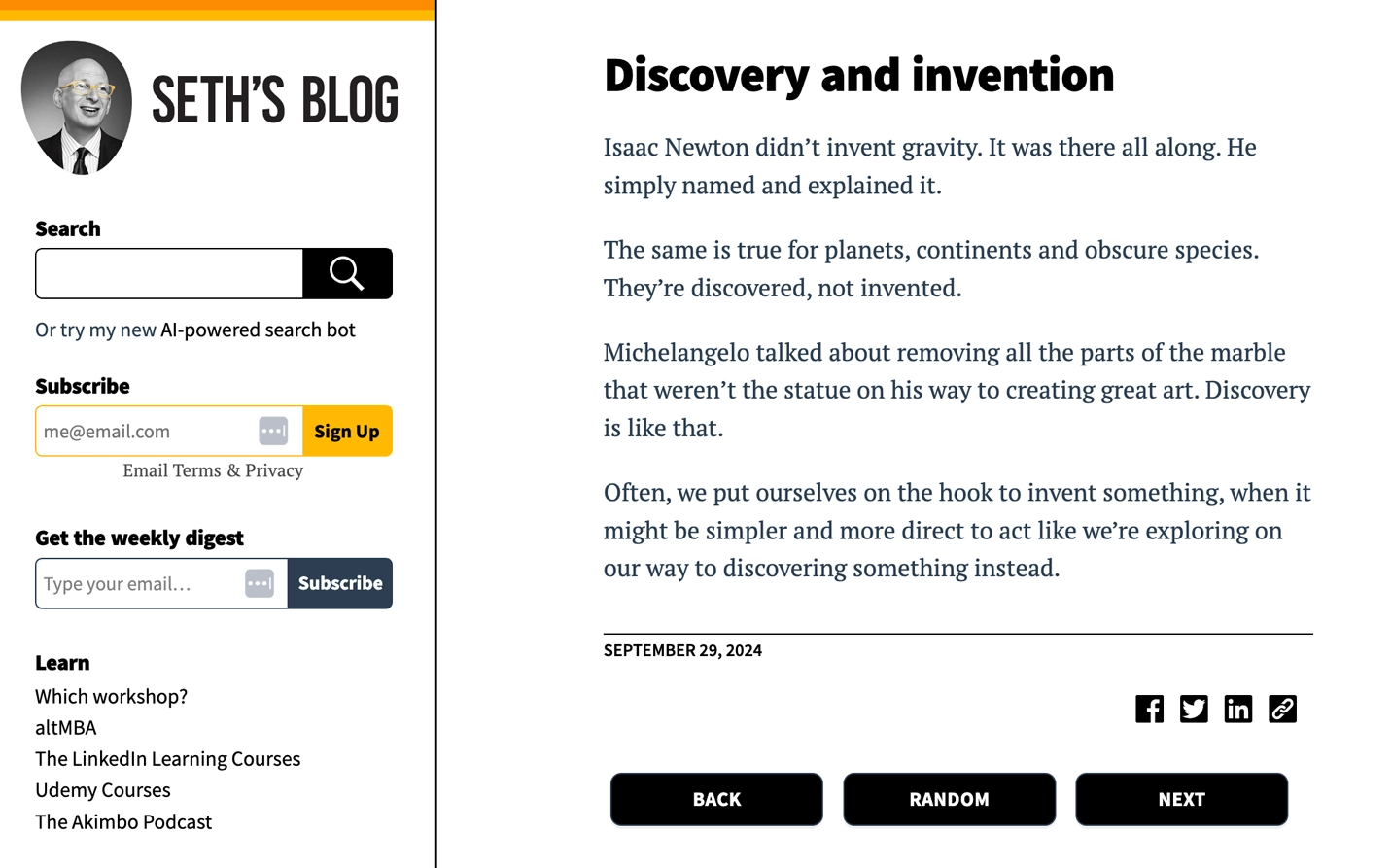
- Example: Seth Godin’s daily blog posts never offer generic advice. Instead, they consistently challenge conventional marketing and business thinking with concise yet profound insights, making him a leading voice by pushing readers to consider new, often disruptive, perspectives.
6. Q&As
Q&A sessions give your audience a direct line to a thought leader’s expertise, building community and transparency. These can be live events (like an “Ask Me Anything” on Reddit) or asynchronous interactions (like answering questions in a video or written format).
This content format allows thought leaders to tackle specific challenges, clarify nuanced concepts, and demonstrate their deep understanding by directly engaging with their audience’s most pressing inquiries.
- Example: Gary Vaynerchuk’s “DailyVee” series on YouTube is more than just content; it’s a direct channel for unfiltered business and marketing advice. He builds a fiercely engaged following by tackling real-world questions head-on, proving his practical expertise every single day.
7. Speaking Engagements
Speaking engagements — whether at industry conferences, corporate events, or virtual summits — are powerful platforms for thought leaders to command attention and share their insights. These are typically live presentations or other forms of speaking focused on a specific topic, problem, or solution.
The live format allows for dynamic delivery, direct audience interaction, and the chance to convey passion and presence, solidifying the speaker’s authority and directly influencing a captive audience beyond digital screens.
- Example: Brené Brown’s TED Talks on vulnerability aren’t just talks; they’re transformative experiences. Her incredible ability to connect deeply and share groundbreaking insights has cemented her as a global thought leader, fundamentally shifting conversations around human connection and leadership.
8. Guest Posting
Guest posts are blog posts by experienced experts, written for and published on non-competing or partner brand websites. Guest posting lets thought leaders extend their reach and influence new audiences.
By sharing their unique perspectives and insights on established, high-authority platforms, thought leaders leverage the host site’s credibility to introduce their ideas to a wider readership, build their personal brand, and secure valuable links.
- Example: Leading SEO platforms like Ahrefs or Semrush frequently feature guest posts to top marketing publications. By sharing proprietary research and expertise with a broader industry audience, they’re directly reinforcing their authority and market presence.
9. Digital Content
Digital content covers a huge range of visually engaging and highly shareable formats. This includes infographics, social media posts, interactive tools, and other innovative assets designed to quickly show off your topic expertise.
This type of content is optimized for rapid consumption and virality, making complex ideas easy to digest and encouraging broad distribution across online platforms. Its shareability lets thought leaders rapidly expand their reach and impact.
- Example: Statista expertly translates complex statistics into easily digestible infographics and charts. This approach has made them a go-to source for quick, authoritative insights across countless industries, proving the immense power of visual data storytelling.
10. Podcasts
Podcasts provide an intimate, super accessible way for thought leaders to engage with their audience. These audio programs often drill down on a specific niche topic and typically feature expert guests or are hosted directly by a subject matter expert.
Podcasts build rapport through conversational tones, allow for in-depth discussions, and offer convenience for listeners on the go.
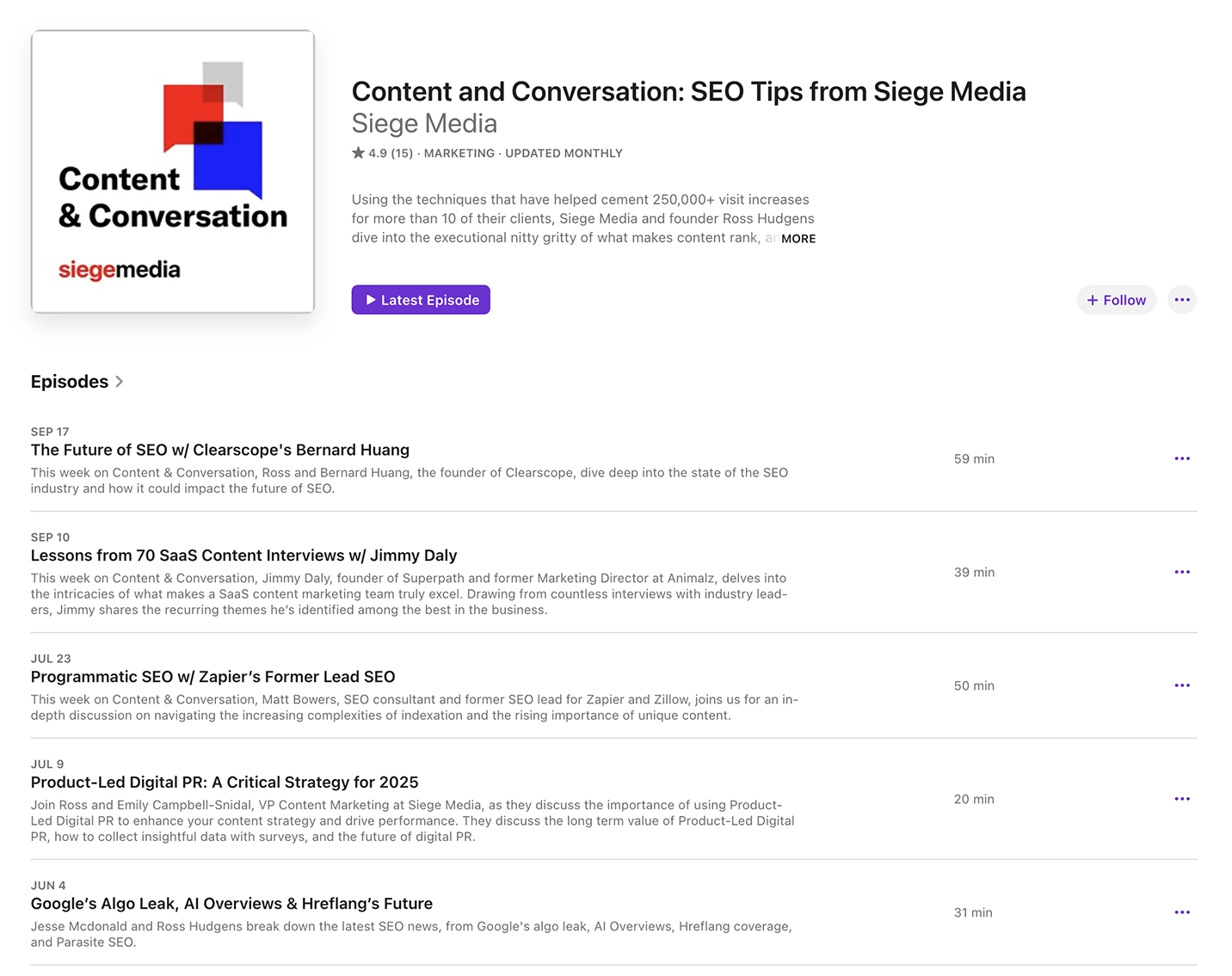
- Example: The Content and Conversation podcast hosted by Siege’s own Ross Hudgens delivers a direct line to actionable content marketing and SEO strategies, often featuring industry-leading experts. It’s a consistent stream of expert-led insights, perfect for professionals seeking immediate advice to help boost their content strategy.

When To Use Thought Leadership Content
Thought leadership content doesn’t work in every situation — just like how cilantro doesn’t improve every dish. However, you should invest in thought leadership when attempting to reach these three goals.
Connecting With Your Audience
Readers want to know the “who” behind the writing. With thought leadership content, an author’s opinions, experiences, values, and beliefs are on display, allowing human-to-human connections to form.
Creating in-house content from esteemed team members also helps your audience feel as though they know your brand. They’ll view the expertise of your leadership team as that of your company and assume your team members are the brains behind the operation — more specifically, they’ll see them as the solution to their problems.
Building Credibility
High-quality thought leadership content that offers valuable industry insight or addresses challenges (and doesn’t include a thinly veiled sales pitch) demonstrates expertise and establishes thought leaders as knowledgeable authorities. By consistently developing thought leadership, businesses deliver recognizable and respected opinions while building authority in a sea of content.
Plus, sharing unique perspectives can position thought leaders as innovators, indicating they are ahead of the curve, open to change, and driving the charge.
Diving Into Low Search Volume Keywords and Topics
Zero volume keywords, or those with negligible search volume, can still be valuable topics to cover. These keywords are typically searched by individuals who:
- Need in-depth information on a particular topic.
- Seek solutions to specific problems.
- Want to develop new ideas.
- Look for ways to innovate.
These individuals are often ready to make a decision or trust an expert, so creating thought leadership content focused on these topics can lead to high-value relationships with invested audience members.
How To Create Thought Leadership Content
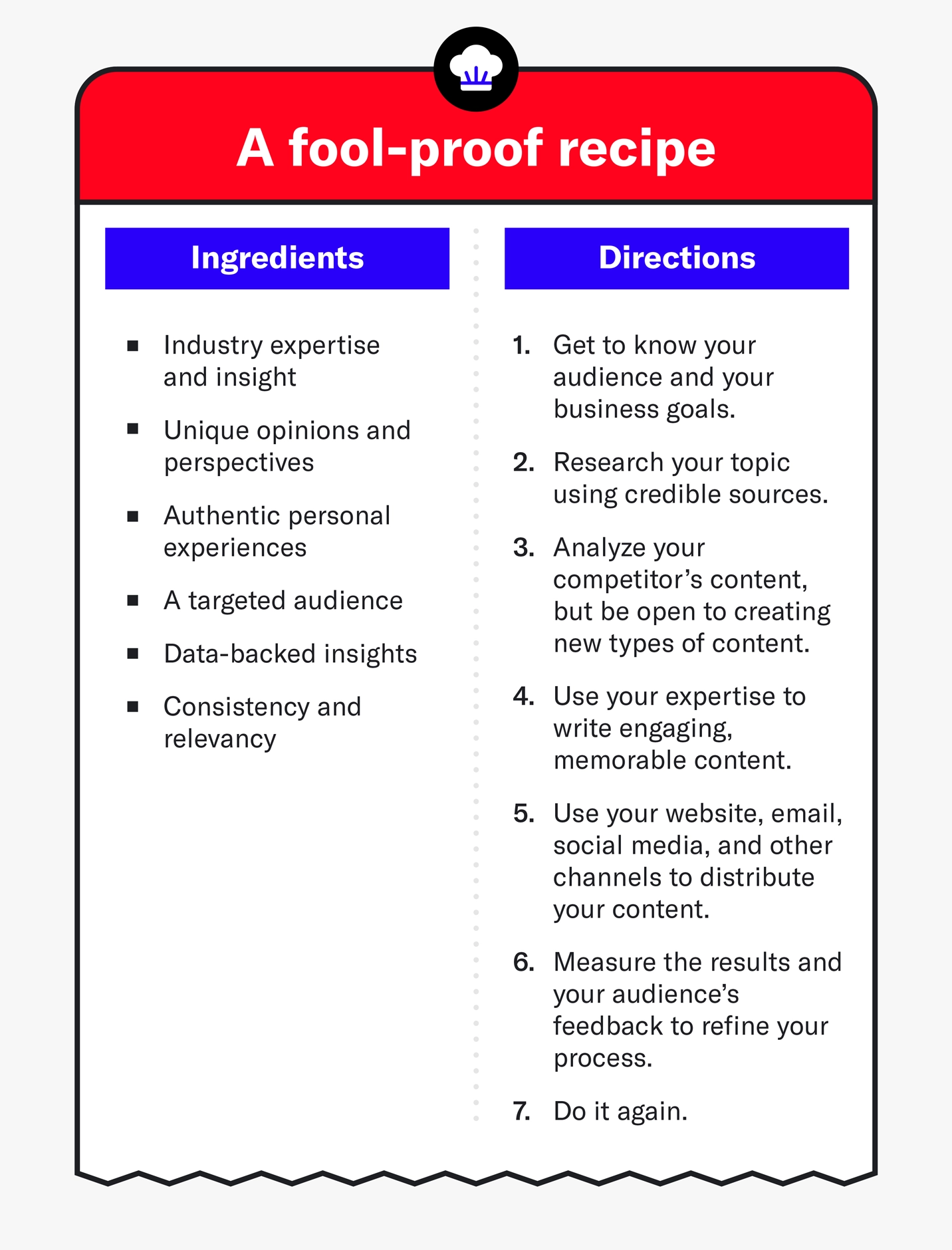
Just like any recipe, there’s no one way to create thought leadership content. However, we’ve listed a few steps, tips, and best practices below to help set you up for success.

Know Your Audience
Knowing your audience is the foundation of your thought leadership content. While you don’t need to know their name or date of birth, you should know:
- What motivates them
- What inspires them
- What questions they have
- Who they turn to when they need help
Don’t be afraid to use social media or surveys to learn more about your audience. You should also reevaluate and check in on your buyer personas to ensure you know who your audience is as they change and grow, too.
Best practice tip #1: Solve your audience’s problems.
Solving your audience’s problems isn’t simply a strategic way to gain a following — it’s necessary for building trust and inspiring action. Plus, offering solutions to both simple and complex problems empowers your audience to seek support and helps you understand them more deeply.
Identify Your Goals
A gourmet meal should provide diners with a memorable culinary experience, but what are the goals of your thought leadership content? Knowing what you hope to accomplish before creating any type of content is essential for targeting the right audience, choosing the right topics, and writing the right material.
Look at your existing business or marketing objectives and determine if thought leadership can help you achieve these goals. If so, consider adopting these as your content goals. If not, it’s time to do some soul-searching.
Best practice tip #2: Align with your company’s goals.
The most successful thought leaders know how to create thought leadership content that aligns with their company’s goals. This content shouldn’t be self-serving, so create content with a larger vision in mind.
Analyze Your Competitor’s Content
It’s almost guaranteed that someone somewhere has created thought leadership in your vertical. Embrace this existing content as learning opportunities to see what your audience has engaged with and what fell flat.
To find this content, explore channels like:
- Personal and professional social media channels, including LinkedIn
- Online forums or communities
- News outlets
- Magazines and journals
- Company blogs
- Webinars, seminars, and conferences
You can also use your competitor’s content to gauge current trends, topics, and content types. Plus, this is the best way to learn about the stances your competitors take, including their personal beliefs and values.
Best practice tip #3: Embrace variety.
Don’t be afraid to go outside the norm! Consider creating vlogs, TikTok videos, and other less conventional types of thought leadership content to engage with your audience. You should also create traditional types of thought leadership content like blog posts and videos to give your audience a variety of options.
Determine Your Topic and Leader
Don’t do all the research just to choose a boring, uninteresting topic for your content. Make sure your thought leadership content is useful and engaging by asking yourself:
- Does my audience care about this topic?
- What unique angle or idea will I use?
- Is this trending? If so, what can I add to the conversation?
- Does it align with my values?
- Do I have the necessary resources to research this topic?
Consider asking your audience directly about what they’re interested in, or track their behaviors and use social listening to choose a topic they love.
If you’re a business assigning topics to team members, be sure to choose a thought leader with expertise. Otherwise, don’t choose a topic simply because it’s interesting or trending — you need to have knowledge, experience, and opinions that will add to the conversation rather than being another drop in the bucket.
Best practice tip #4: Share industry news.
You know your industry, so comment on news or other trending topics. Industry news can be challenging for an audience to digest, so they’ll trust your expertise and may come to you with questions.
For example, Bernard Huang, founder of Clearscope, dove into the future of SEO in a podcast to discuss how the state of the industry and recent innovations could affect the landscape going forward.
Write Like a Subject Matter Expert
When you’re writing thought leadership content, it’s crucial to think of yourself as and write like a subject matter expert. To do this:
- Grow your understanding through hands-on experiences, networking events, and continuously researching your field.
- Establish your authority by citing your sources and sharing personal stories that relate to your topic.
- Offer insights into situations by predicting future trends and addressing industry pain points.
- Engage with your audience by asking them questions, offering practical advice, and making useful recommendations.
- Polish your writing by proofreading carefully and seeking feedback from other thought leaders.
Becoming an SME takes time and effort, but your thought leadership content will thank you. Not all Michelin-star chefs are made in a day, but they consistently practice their skills, refine their knowledge, and learn from other experts.
Best practice tip #5: Stay flexible.
You may be the expert in your field or topic, but there’s always room for flexibility. Be open to feedback and be willing to change to show your audience you care about growth. Plus, flexibility is essential for adapting to changing landscapes, especially in fields where innovation regularly paves the way for new processes and trends.
Distribute and Promote
Creating thought-provoking, helpful content is only useful if your audience can find it — you also need to distribute and promote it.
Consider these tactics for distribution and promotion:
- Reach out to your personal network of contacts
- Useinternal and external company channels
- Pitch your content to journalists, news outlets, influencers, and publications
- Work with non-competing brands
- Team up with other industry leaders
- Consider paid promotion and sponsorship opportunities
You can also reuse and repurpose thought leadership content for other distribution opportunities, including guest postings, webinars and seminars, and video content.
Best practice tip #6: Be active on social media.
Leveraging social media is a growing marketing strategy, especially for posting industry insights and establishing thought leadership. These channels are also one of the best places to build connections with audience members.
Measure the Results
Learning about content performance is key to creating future content that offers value and performs well. Measurable results also help you gauge how reachable your goals are, the strength of your strategy, and whether or not you need to invest more in promotion.
When measuring the results of your content, track:
- Organic traffic
- Social media growth and engagement
- Backlinks
- Email or newsletter subscribers
- Media mentions
- Thought leadership invitations
- Potential leads or sales
Not all of these metrics have a hard-and-fast way to be measured, so you may need to go directly to the source: Your audience. Plus, consider which metrics matter most to your goals and consider developing creative ways to track these benchmarks.
Best practice tip #7: Be consistent.
Maintain brand consistency as you refine your content. Don’t throw away your values for more views, and stand firm in your beliefs — even if others don’t.
5 Masterful Thought Leadership Content Examples
Even if you have the recipe, it can be helpful to see the finished product before diving into your own process. Below we’ve listed five of the best thought leaders in the business and their masterful thought leadership content examples.
1. Ross Hudgens

Ross Hudgens, founder and CEO of Siege Media, has made a name for himself with his thought leadership content in the SEO and digital marketing industries. Using a mix of media from blogs and videos to podcasts and LinkedIn posts, Hudgens uses personal experiences and network connections to create engaging, industry-defining content.
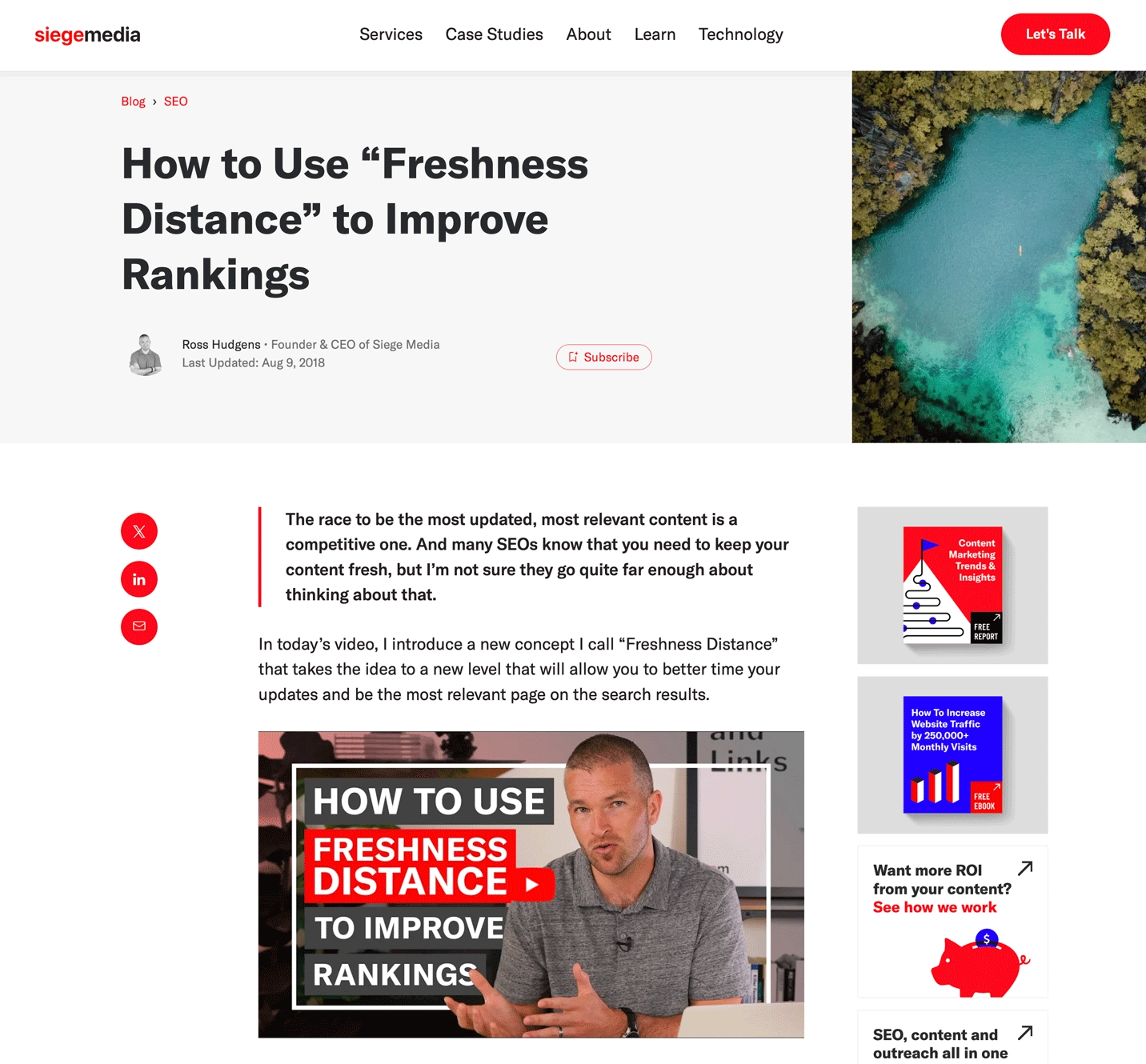
For example, Hudgens created a video and blog post titled “How to Use ‘Freshness Distance’ to Improve Rankings” in 2018. This thought leadership content introduced a brand new industry term — freshness distance — that has since redefined how marketers discuss content and data updates and has been used by other thought leaders like Darren Shaw of Whitespark.
2. Brené Brown

Holding the Huffington Foundation Endowed Chair at the University of Texas, Brené Brown is a researcher and storyteller who has spent more than 20 years studying and speaking about shame, vulnerability, courage, and empathy. Brown has authored six bestselling books and is the host of two podcasts focused on the inner workings of the self.
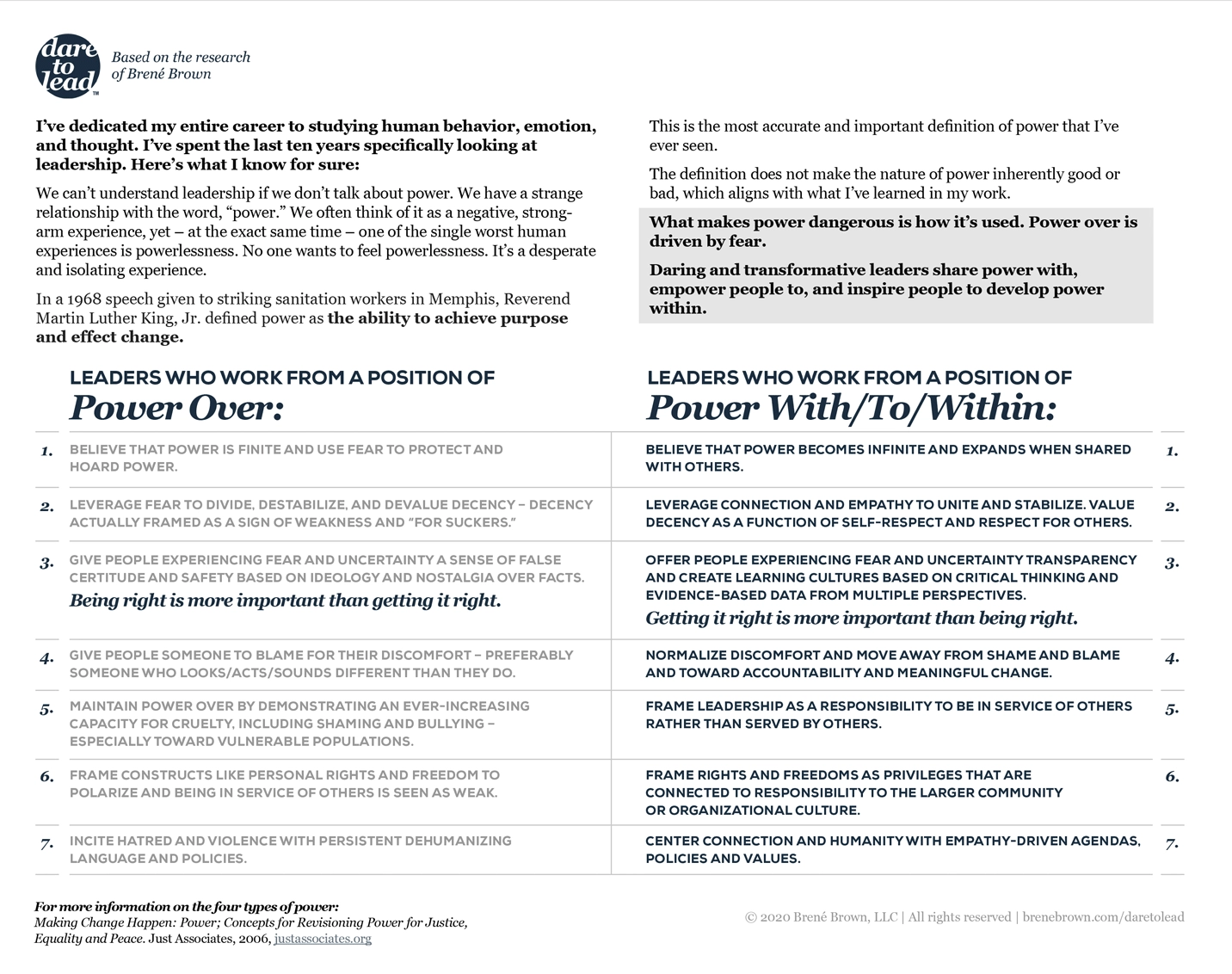
Within the last two decades, Brown has created thousands of pieces of thought leadership content, including whitepapers, e-books, blog posts, podcasts, videos, and more. She has also created reading companions, worksheets, and other guides to help readers learn more about themselves and their abilities. For example, Brown’s “Brené Brown on Power and Leadership” guide is designed to show the strengths of daring and transformative leaders, encouraging action through empowerment.
3. Seth Godin

Seth Godin is an author, teacher, and former business executive whose thought leadership content has made waves for more than three decades. With projects like The Song of Significance and The Carbon Almanac, along with his leadership in projects like Akimbo, Godin strives to inspire people and teach them how to level up.
Godin’s most well-known form of thought leadership content is his daily blog, which features short posts about a variety of topics. From innovation and strategy meetups to industry advice and AI conversations, his blog is a treasure trove of thought leadership content — and it doesn’t look to be slowing down any time soon.
4. Neil Patel

Neil Patel, owner of NP Digital, is a business executive and marketer who has been recognized as a top entrepreneur in the United States. His expertise lies in marketing, keyword research, software applications, and marketing strategy, and he aims to help others increase their online presence through his thought leadership content.
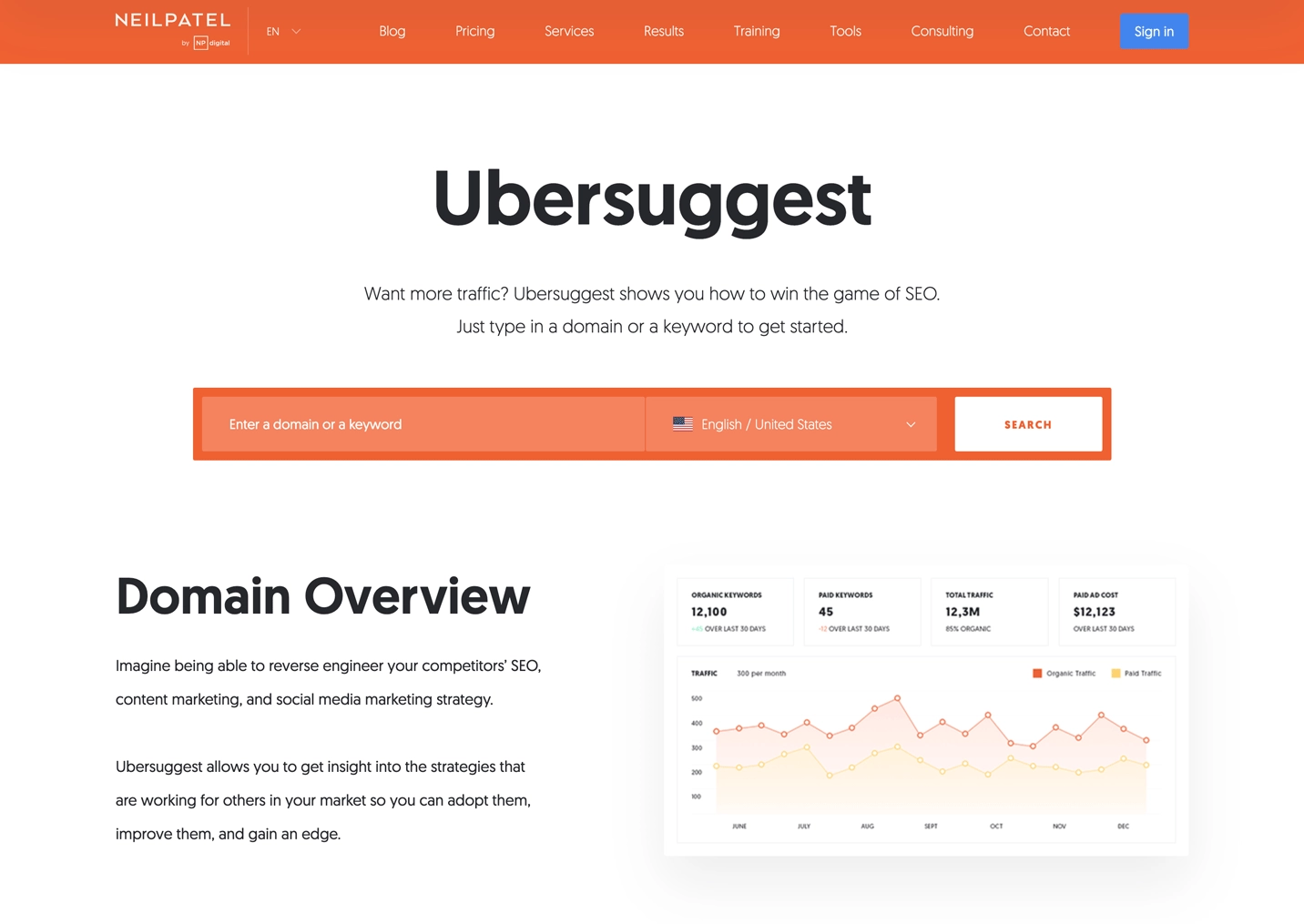
From blog posts to videos and so much more, Patel doesn’t hide his expertise. Instead, he provides free thought leadership content and tools to users to build trust and authority. For example, Patel’s Ubersuggest is a free SEO tool designed to help users conduct keyword research, competitor analyses, and site audits. His algorithms and marketing strategy are embedded in this tool, allowing users to learn and grow from his expertise.
5. Debra Ruh

Dubbed a digital activist fighting for the standardization of inclusive technology, Debra Ruh is a Global Disability Inclusion Strategist and a one-of-a-kind market influencer. Ruh founded and runs Ruh Global Impact, a firm focused on global inclusion, digital transformation, and branding.
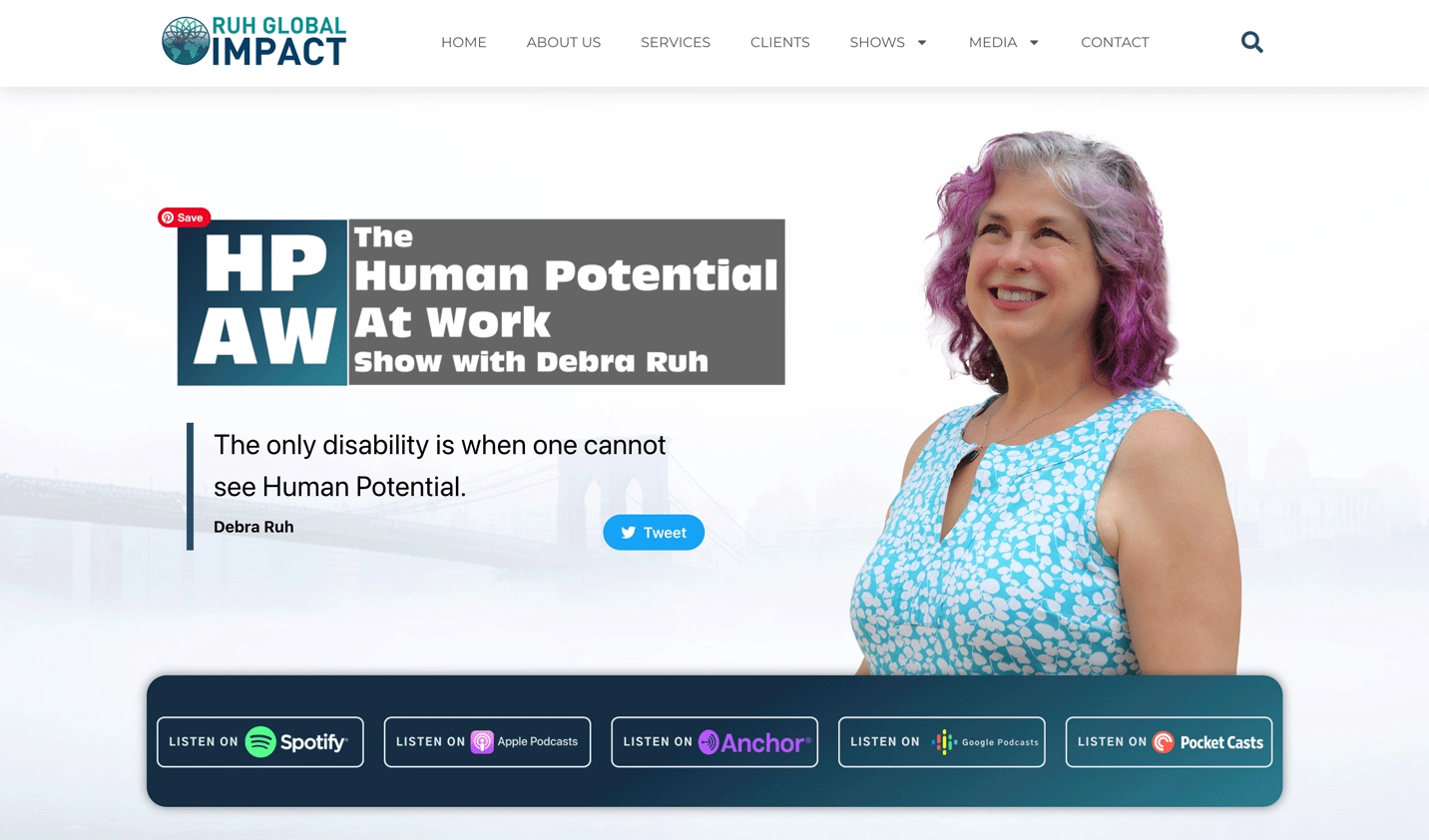
Ruh creates a variety of thought leadership content, but her most popular example is her social impact, inclusion, and empowerment podcast, “The Human Potential at Work.” While hosting guest speakers and discussing personal experiences, this podcast focuses specifically on Ruh’s counter-narrative opinion that is reshaping accessibility and inclusivity across the globe.
When Thought Leadership Falls Short: Pitfalls to Avoid
The advantages of thought leadership vastly outweigh the potential pitfalls, but they still exist. Here are the most common tips for how to avoid them.
A Lack of Clarity
If you’re unsure about your topic (or haven’t researched it enough), you could create confusing content that causes misconceptions and misunderstandings in your audience. A lack of clarity can also cause you to lose credibility and engagement, making it difficult to create thought-provoking, valuable content in the future.
Tip: Know your stance on a topic before you write about it. Ask for feedback from trusted colleagues if you’re unsure if your writing is clear and concise.
Inauthenticity
Being too promotional in thought leadership content can be detrimental. Forgoing authenticity for the minuscule possibility of making a sale can cause your audience to lose interest in your content — and you.
It’s also dangerous to throw credibility to the wayside. Refusing to cite sources, writing jargon-heavy copy, and doing minimal research can paint you and your content in a bad light. Stay authentic to your subject (and your research) or risk losing your audience altogether.
Tip: Be vulnerable. Share anecdotes about your mistakes and successes, and give credit where it’s due.
Casting a Broad Net
If you try to cast your net too broadly, it’s possible your thought leadership content might fall flat. This can include:
- Not having a clear target audience
- Being too sales-forward
- Not differentiating content from competitors
- Keeping content too general
While you may need to generalize at times, this decision should support the clarity of your content rather than its reach.
Tip: Stay true to you and your audience. Create content that will speak directly to them instead of generalizing your topics and writing.
Push the Status Quo With Thought Leadership Content
Whether you’re still cooking at home or have a state-of-the-art industrial kitchen, what you make will only be as good as the training you receive and the effort you put into each dish. For thought leadership content, this may require investing in
blog writing services to help you develop a brand voice, create stellar content, and build industry authority.To push the boundaries of your thought leadership, partner with Siege Media and invest in the content strategy services great brands trust. We’ll be the sous chef to your head chef — and we won’t hold back our tricks of the trade.