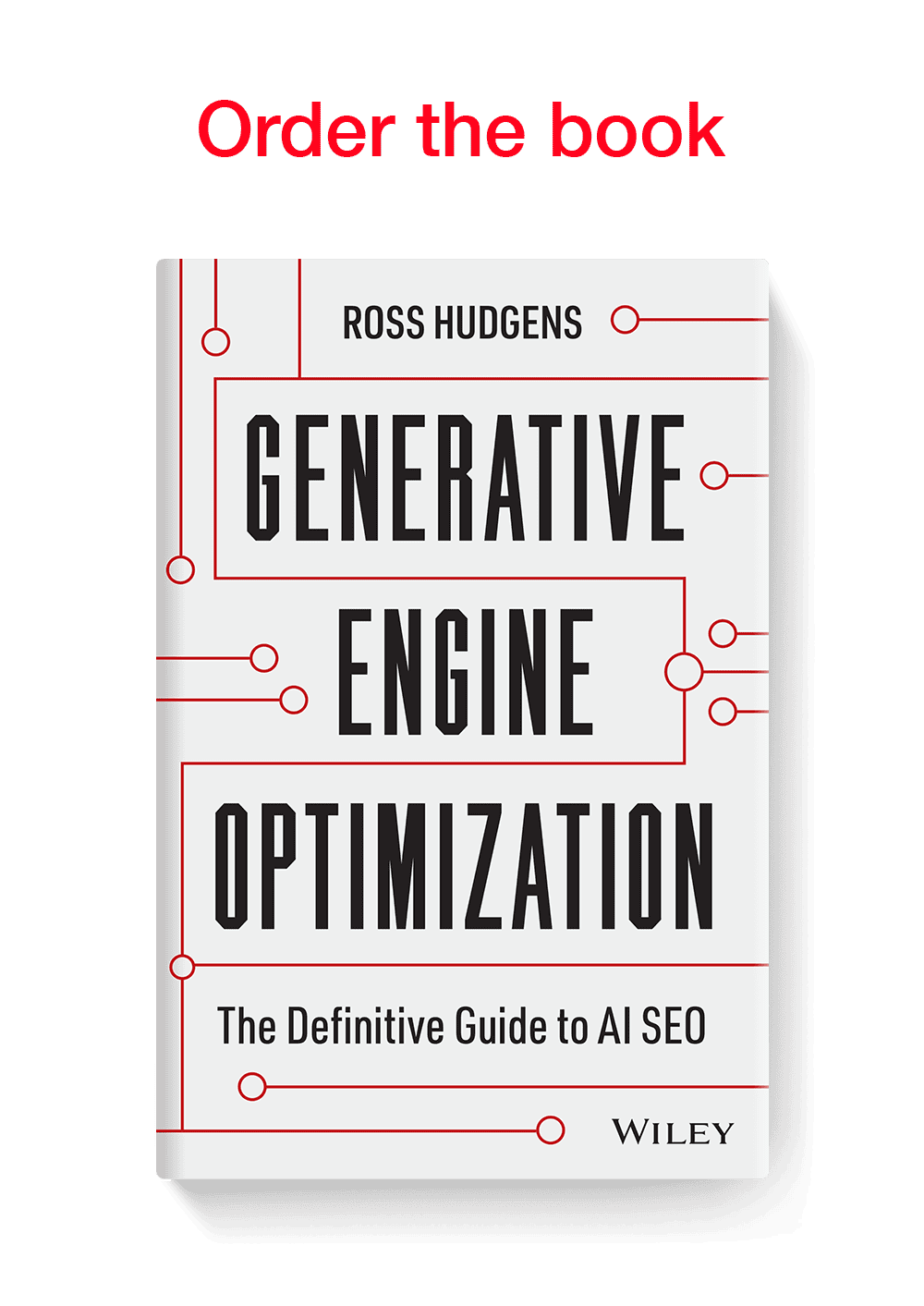
The average cost of a content marketing campaign can vary, anywhere between $6,000 a month to as high as $60,000+ a month for an enterprise business.
Content marketing budgets have surged in recent years – the number of companies spending $15,000 or more a month has increased significantly, and the share of big spenders (>$45K/mo) nearly tripled from 2024 to 2026.
What matters, though, is not the cost as much as the potential ROI that’s possible for each campaign.
If you are entering a conversation about content marketing wondering how much it costs, you might not be thinking ROI-first. Cost is only instructive in comparison to the overall opportunity that’s available to you.
Siege Media is a 90-person organic growth agency that has over 13 years of experience quoting campaign costs and delivering ROI for our clients. Of course, you don’t have to go with an agency with your content marketing work but the directional cost of an agency should connect to the overall costs of creating a comparable department within your company.
In this post, we’ll break down the market rates for blog design, blog posts, interactives, photography, infographics and more. And we’ll tie it all back to overall campaign success and how to think about generating ROI through your content marketing work.
Do You Want a Blog Post, or Do You Want Results?
A lot of clients come to us and ask how much we charge for a blog post.
In isolation, the cost of an agency like Siege may seem expensive, but the difference in what an agency like us provides and what you get from an average freelance writer or AI content is results.
Even as AI tools become ubiquitous (only 3% report not using AI at all in 2026), without expert strategy and human oversight you’ll just get blog posts, not outcomes.
You don’t want to pay for a blog post, you want to pay for results.
This difference matters because the act of getting writing done for your website is commoditized, and can be done relatively easily and at low price. But the act of getting your site ranking #1 isn’t, and often takes 8+ roles working in tandem to create truly high quality content, and then promoting it, to actually get the results you want.
It’s those bad businesses that do content marketing that’s often communicated as part of a package, such as “Hey, we’ll do four posts a month for you for $400 per post.”, that leave your website traffic looking something like this:
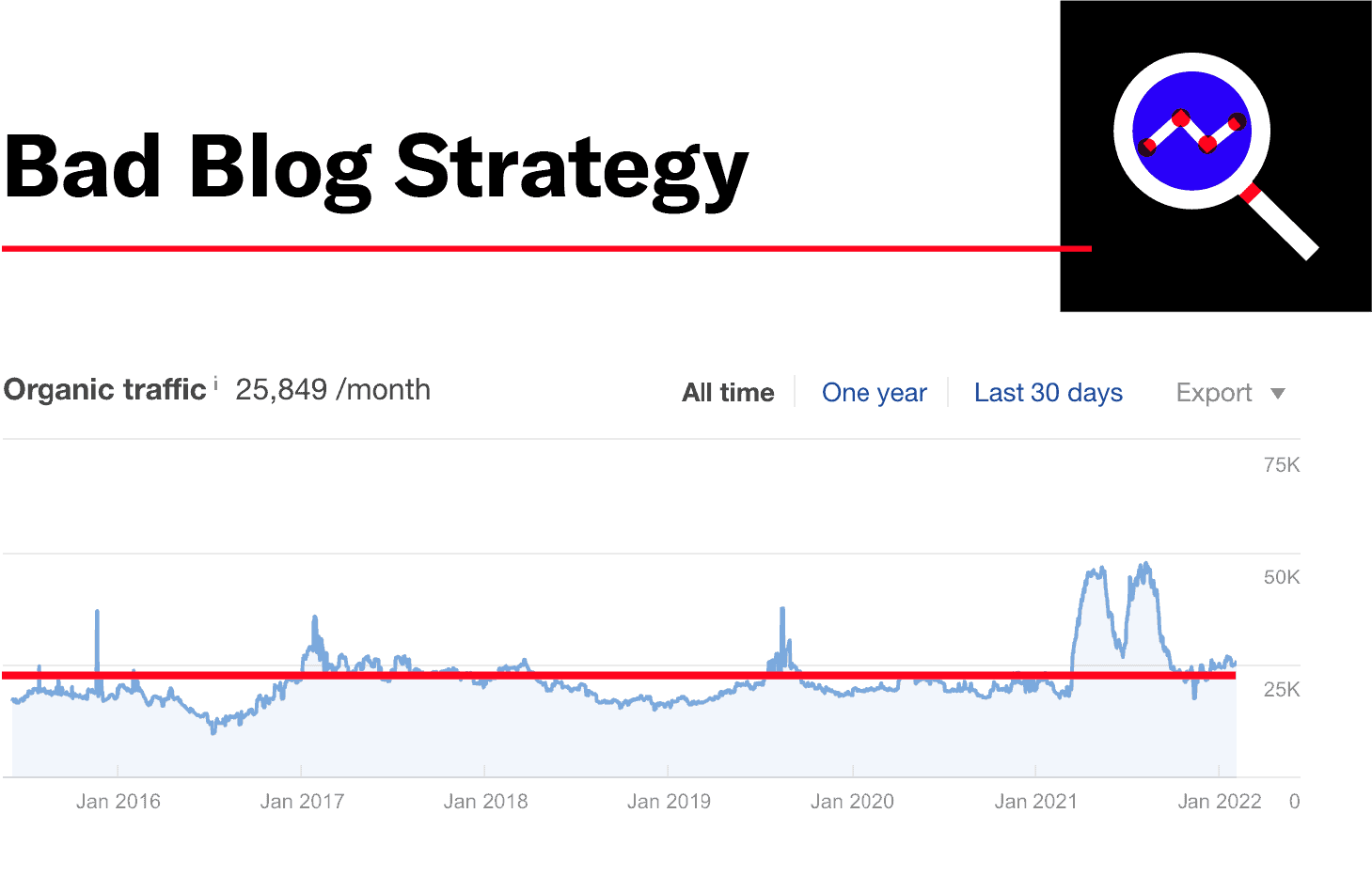
These kinds of efforts often result in nothing because they’re not deliberate or strategic, as opposed to people that do content marketing well think of every post is its own effort with an end-to-end distribution strategy around it.
Given that, you should be thinking about each piece of content individually and using an ROI equation (we weigh potential traffic value) against the cost to produce to decide if it’s worth it to you.
With that philosophy in mind, it’s still reasonable to think about individual costs. But before you think of the cost of individual posts, you should think about the impact of blog design on that ROI.
Blog Design Cost
If you have an amazing blog post but host it on a poor looking blog, your outcomes can impacted by as much as 50%. In 2025, readers expect visually engaging experiences and will only read if you give them a pleasurable design (and content) that commands that attention.
This includes ensuring your blog is mobile-friendly and fast – over 60% of web traffic now comes from mobile devices, so a responsive, quick-loading design is crucial.
For this reason, it makes sense to invest in a custom blog design early in the process.
If you think about the fact that a post may generate $2,000+/mo in outcomes, if you generate four of those per month and can increase the outcomes by 50% with a better design, the sunk cost of that design pays itself back very, very quickly.
Here are the common ranges for blog design in 2025:
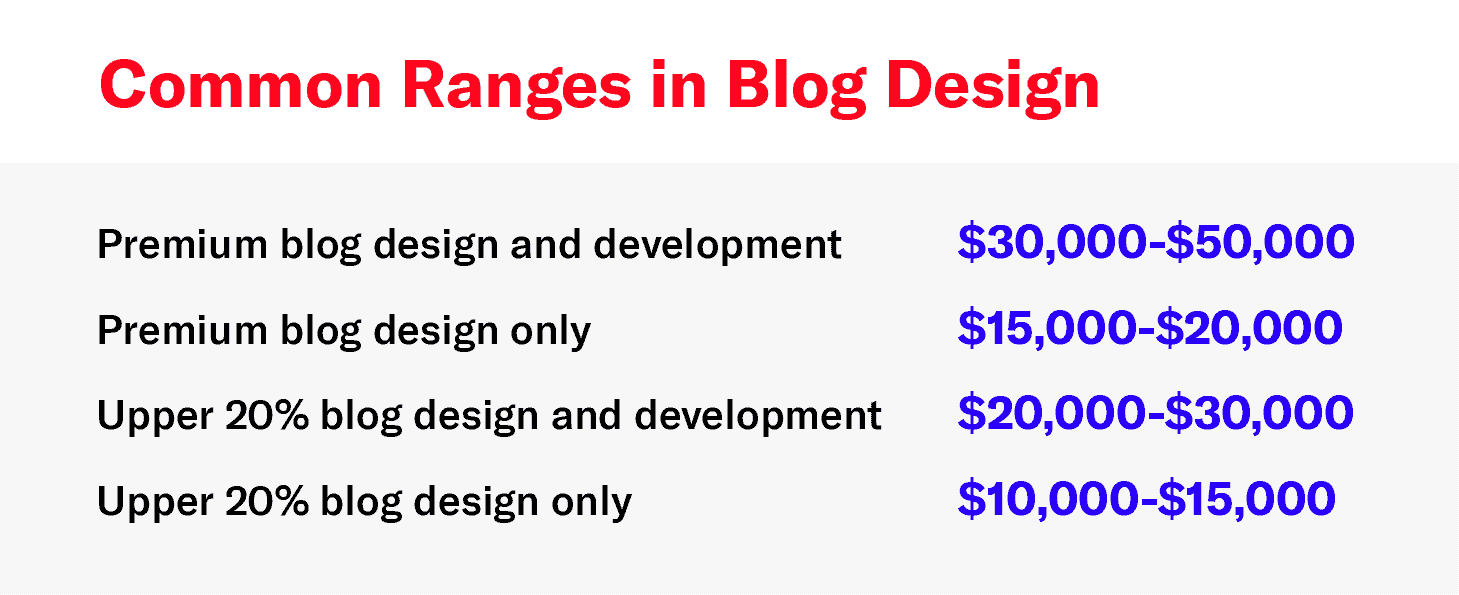
Yes, you can get some out of the box blog designs for less than that, but the marginal benefit of creating a differentiated experience is everything as it comes to an effective content strategy.

So if you’re not ready to invest that sum cost in the design of your website, you should probably stop and make sure you have the budget and the money to do that or otherwise, it’s likely not worth trying to compete.
And with that next step, with content creation, is the single element that you would then put around your great design. The first piece is a basic blog post.
What Should a Blog Post Cost?
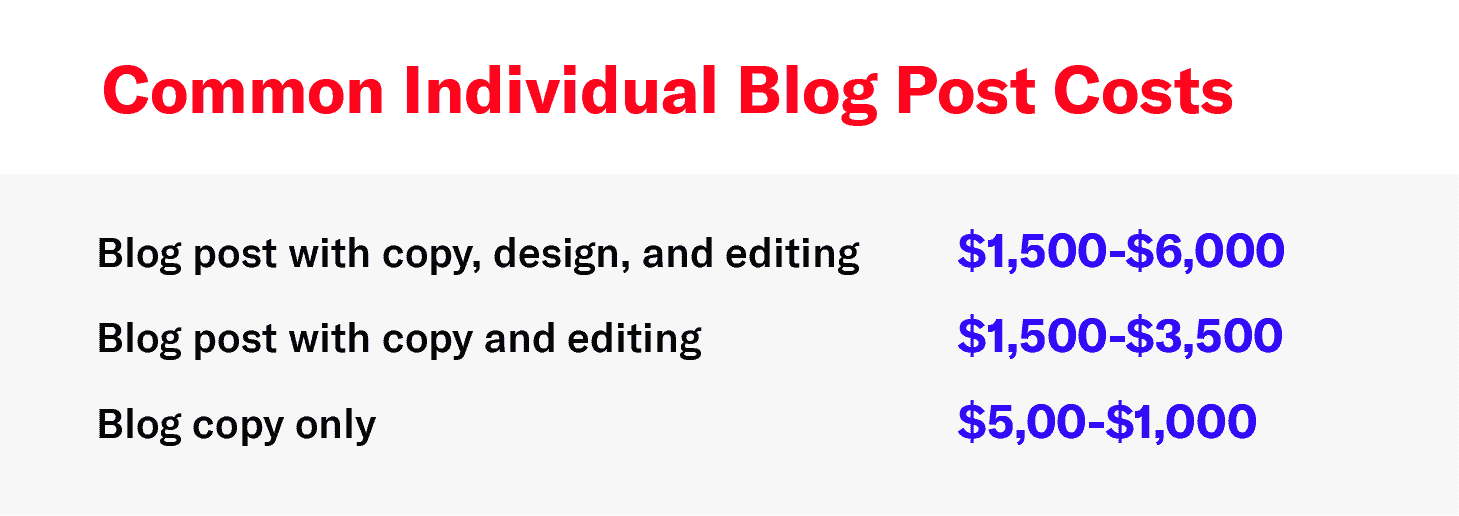
A truly high-impact blog post today isn’t just text – it often includes research, original visuals, and expert editing, which is why it may cost $1,500–$6,000 to create.
We say “drive outcomes” because many people may believe that blog posts are just text written by a freelancer, or potentially even generated by AI.
Yes, AI can generate a draft cheaply, and 74% of content marketers now use AI for outlining or brainstorming. But rarely is content that’s just text (even AI text) high-performing – users crave rich visuals and insight, which require investment.
As shown above, rarely is content that’s just text high performing, as users want rich visuals with their content more and more.
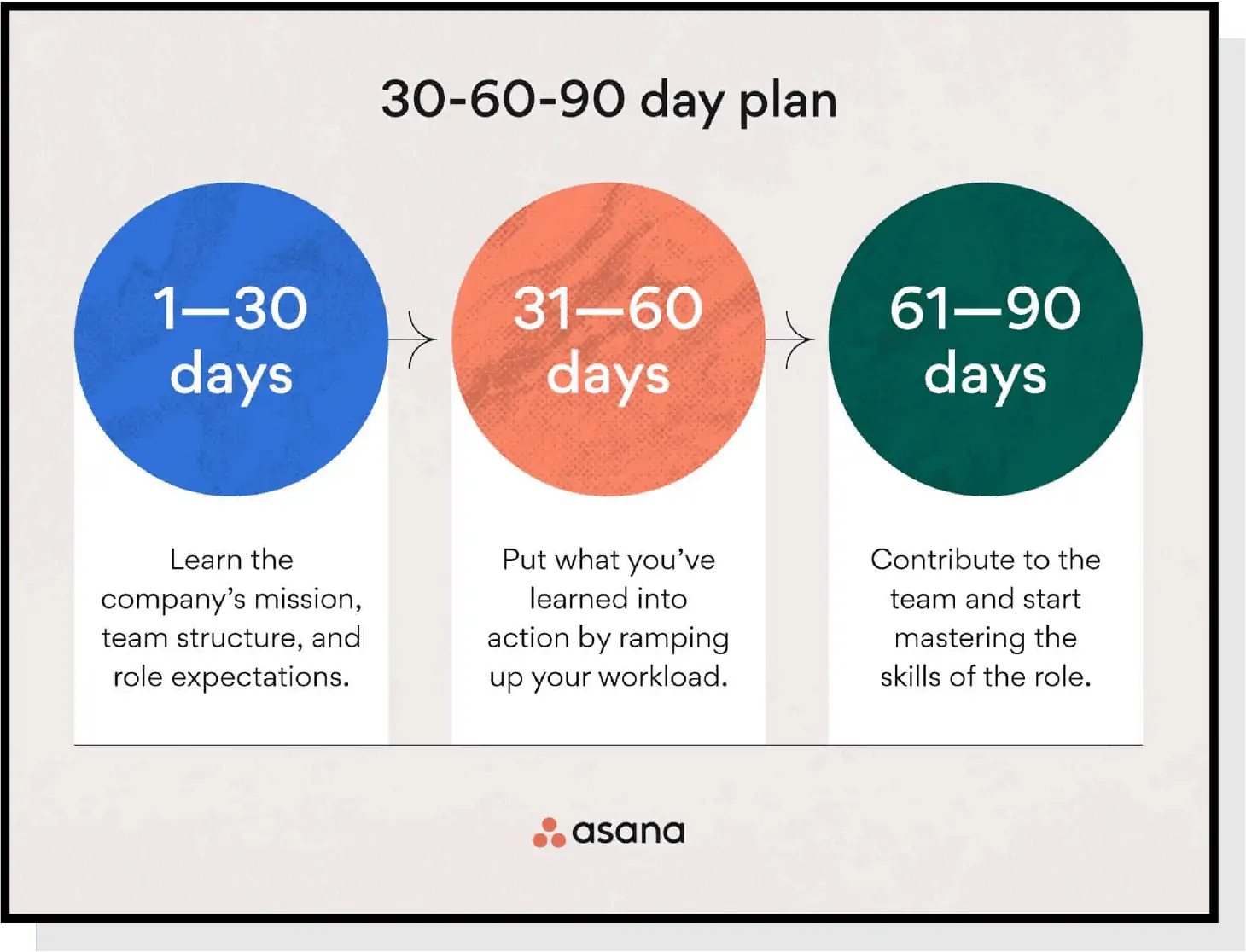
This sample image for Asana is an example of a high-quality visual common in high-ranking content.
This is why we’ve invested so much in a design team — we see content as more than design. A great blog post is written by a subject matter expert, edited by a copyeditor for consistency, has visuals added by a designer, and then has an Art Director edit that work.
Finally, a Content Marketing Manager should add a layer of editing for marketing best practice to achieve an optimal distribution outcome and bake in SEO-best practice using their experience.
All this said, it’s possible to make content that performs with just writing. However, it increasingly requires a world-class UX design in order to make the content feel visual enough to perform without unique images each time.
But for those that are curious, we’ll break down the common costs of that option as well as the others below:
What Should Videos Cost?
Videos are similar, and to do high-quality videos well, I’d say around $3,500 per minute is a general framework for a basic-ish video.
And obviously the more complex that shoot gets, the more expensive it can become on a per video basis. So maybe a two-minute video can be in the $7,000 range and be done really well, depending on what kind of efficiencies you bring and if you do it over and over again, it can be easier.
Notably, short-form videos are booming – 56% of business videos are now under 2 minutes, which can help keep production costs manageable.
For example, we’re doing these video series, it’s not as hard to do it the second time because we were doing these over and over again, but if you’re doing a one-off shoot that’s completely unique and on its own standing, it’s probably going to be in the $6,000-$8,000 range to just do that video well in terms of casting, videography, script, and all of those things that you need to consider.
Thankfully, new tools are helping lower video costs – 41% of marketers are now using AI for video creation in some capacity.
For simpler projects, AI video generators can produce content more affordably, though high-quality storytelling still requires a professional team (and budget).
What Should Content With Original Photography Cost?
Other content types to consider are photography posts as well, that can also add some complexity. Do you want to do original photography in addition to the blog post that I kind detailed on the first point?

That might go in the $4,000 to $6,000 range rather than a $1,500 to $3,000 post for a high-quality post because you’re having to do an exclusive photoshoot that’s unique to it. This requires a photo studio, shoot prep, and a talented photographer to make it stand out.
Many brands rely on stock photos or AI-generated images to save money, but those often lack uniqueness. That’s why only 14.7% of content teams use AI for design/imagery tasks – most still invest in professional photography when brand authenticity and quality are paramount.
What Do Interactives Cost?
Finally, interactives (think interactive calculators, quizzes, or data visualizations that engage users) are definitely a differentiated factor, and they take even more time to be done really well and are hard to paint a broad brush around.
You can use some interactive frameworks that developers can leverage, but as most know, UX designers and developers are highly regarded and therefore hard to get a hold of. Because of that, supply and demand economic reality makes development work more expensive.
On average, I would expect unique interactives that perform and rank to cost $5,000+ in 2026. This cost has come down considerably with the advent of AI coding tools like Claude Code and ChatGPT’s Codex.
Interactive content is still relatively uncommon – only about one in four content marketers reported investing in interactives in 2025 – but those who do see a performance lift. 44.4% of marketers leveraging interactive content report a successful strategy, compared to 39.9% of those who don’t according to our ’25 study.
A big reason that in 2026 is that these are one of the few defendable content types in 2026, such that AI summaries of a complex calculator are quite difficult to pull off and the traffic still tends to hold up.
How Much Does a Full Campaign Cost?
Bringing this all together in terms of the creation, design, editing, interactivity, and blog design, you can hopefully start to see that great execution does not come cheap.
A good content marketing campaign for a medium-sized business ($4MM+ annual revenues), should be in the $10,000 to $20,000 a month range as a starting block to be competitive.
When you get into more complex, more high competition verticals where you’re going against big players with big budgets, that can get into the $30,000 to $50,000 to $60,000 a month range for a well-done content marketing campaign. That’s because it’s pulling from so many different angles to differentiate and out-link competitors.
At the end of the day, content marketing is not expensive. Bad content marketing is expensive, but you do it well it’ll be, in our opinion, the best investment you can make.
Why is Spending This Much Worth it?
After reading these numbers, you might be wondering “why should I spend this?”. The numbers might sound expensive to some on the surface, but they aren’t if you are properly allocating against a strategy, the total addressable market and you’re actually driving outcomes.
To do this when talking with clients, we use our internal framework of increasing website traffic to validate the cost.
The premise of this is to look at the traffic cost of the content ranking using Ahrefs/SEMRush. If we see topic X is worth $30,000/mo if we can rank well and also has additional LLM visibility benefits, it’s easy justification to create a $3,000 blog post.
Similarly, if we see the total landscape is worth $500,000 more in monthly traffic, and there are fifty of those $3,000 topics, we know that there is a larger argument for a big engagement to make a dent and drive significant returns. It all comes down to the strategy, and what the holistic cost is to create content that converts.
Thinking about making the leap, but don’t want to hire a team of eight content marketers to make it happen? Check out our content marketing services to get a custom quote today, or otherwise check out our content marketing ROI calculator to test the opportunity for yourself.