

Basic copy won’t cut it in fintech. Merging unique content and strategic digital PR can help you earn high-authority links, build consumer trust, and drive meaningful organic growth.
Fintech brands face a unique challenge: standing out in a crowded, high-stakes market. Every piece of content you create lets investors, journalists, and customers know whether your brand is worthy of their trust and their finances.
Our 2025 Content Marketing Report captured this tension. It revealed that 66.5% of marketers describe their industries as “very” or “hyper-competitive” — up from 54.7% just a year earlier. At the same time, 36.4% saw a decline in traffic between 2024 and 2025 as AI tools reshaped search behavior.
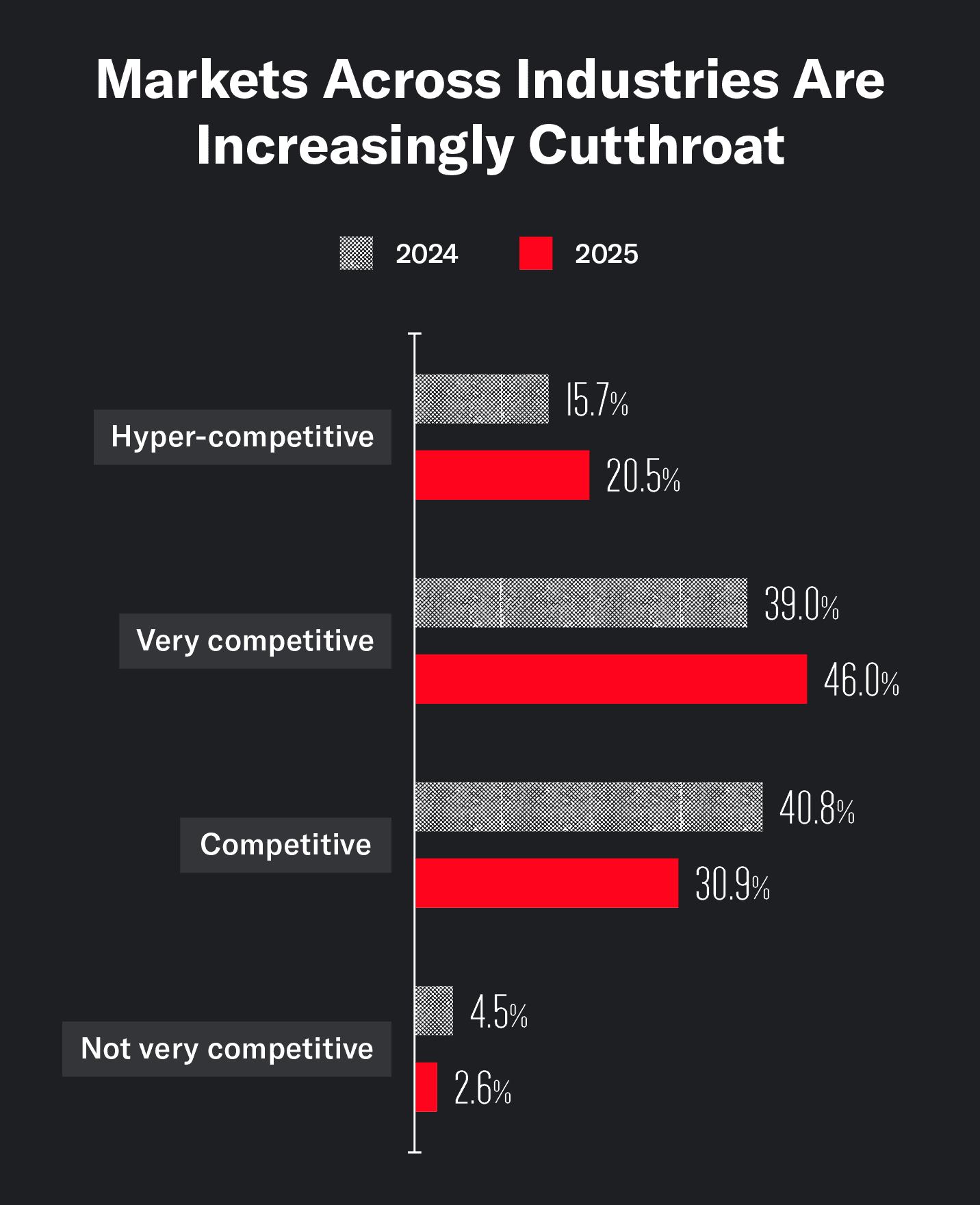
These trends are pushing brands to move beyond the status quo to build genuine authority and trust.
That’s where strategic digital PR can help, driving high-authority links that strengthen E-E-A-T signals, build lasting credibility, and compound organic visibility over time.
Below, you’ll find proven strategies we use to help our fintech clients separate their digital PR campaigns from the rest and build measurable, lasting results.
- Why Fintech Brands Need Digital PR
- How Fintech Digital PR Is Unique
- Turn Fintech Data Into Compelling Stories
- Examples of Fintech Digital PR
- Unlock Organic Growth with a Proven Partner
Why Fintech Brands Need Digital PR
Because financial products fall under Google’s “Your Money or Your Life” category, content faces stricter standards than most industries. Demonstrating E-E-A-T (experience, expertise, authoritativeness, and trustworthiness) is essential for ranking and building customer confidence.
Fortunately, strategic digital PR strengthens these signals, establishing thought leadership that enhances the credibility and expertise of content in search rankings. By anchoring PR efforts to core products or services, fintech companies can create resources with lasting value.
Our link-building cost analysis highlights just how lucrative this strategy can be. We found that acquiring a quality link in competitive industries like fintech can equal $5,000–$15,000 in value. This positions digital PR as a lever for authority and visibility that compounds over time.
How Fintech Digital PR Is Unique
Digital PR is valuable for many industries, but fintech operates under unique constraints that demand a fundamentally different approach.
Financial services companies must:
- Navigate strict regulatory requirements
- Build trust around sensitive financial data
- Establish authority in a space where credibility directly impacts consumer financial decisions
Journalists, customers, and regulators scrutinize every claim, meaning campaigns need to be both credible and tightly aligned with a brand’s expertise.
Frequency: Quality Over Quantity
Since fintech operates in a highly specialized market, the journalist pool is relatively small. Sending constant, low-value pitches can quickly create fatigue for reporters, which strains media relationships and limits coverage opportunities.
A more effective approach is to concentrate resources on fewer, more substantial campaigns. Publishing one or two comprehensive studies per year can yield stronger, longer-lasting results.
Market Relevance Beats Mass Appeal
Landing coverage in The New York Times or Forbes is always exciting, but for fintech companies, the real impact comes from industry-specific placements.
A crypto blog, for example, gains more authority from being featured in CoinDesk or The Block than in a broad business outlet. That’s because links from niche publications send stronger topical signals to search engines while also reaching an audience already primed for your product.
This targeted strategy secures higher-value links and strengthens authority where it matters most — within the fintech ecosystem.
However, getting featured on these sites usually requires having the right connections, which is why many brands look for the best link building services with established ties to finance and tech editors.
Product-Relevant Data Focus
The strongest PR campaigns are product-led, meaning the research connects directly to a brand’s core offering. Just as Zoom’s hybrid work report tied naturally back to its product, fintech brands can win by anchoring their studies to the financial challenges they help solve.
For instance, a company offering accounting software could commission a survey on how small businesses manage cash flow. Similarly, a business banking platform could explore the impact of payment delays on growth.
Pro tip: Align digital PR campaigns with real customer challenges to earn links that reinforce brand authority and show product relevance at the same time.
Turn Fintech Data Into Compelling Stories
Digital PR is only as strong as the stories you’re willing to tell. In fintech, basic stories don’t break through.
Success demands going beyond conventional case studies to create genuinely newsworthy content that challenges industry assumptions and delivers groundbreaking insights. Easy, right?
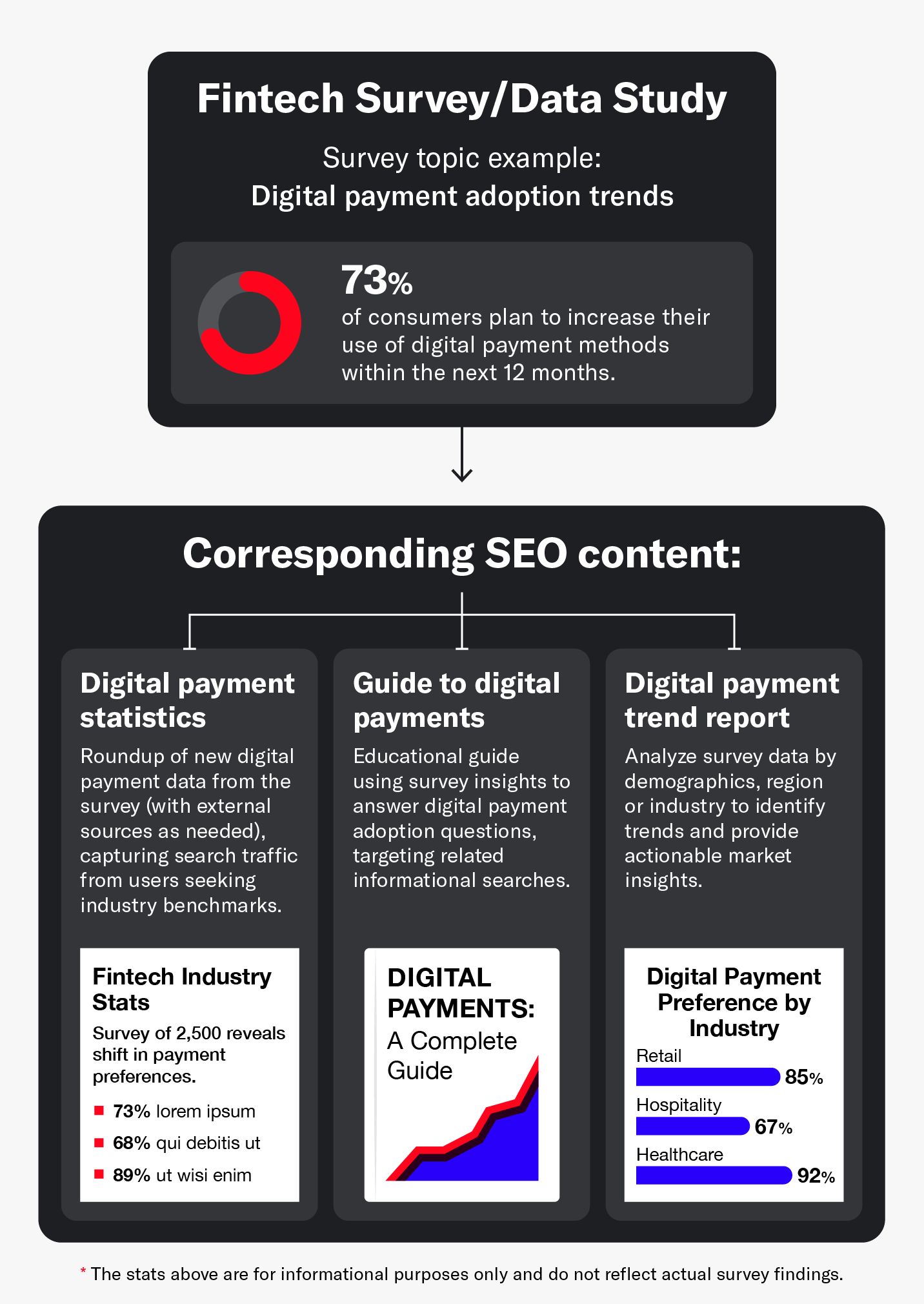
Fortunately, fintech companies often sit on a wealth of information, but that alone won’t earn coverage or links. To unlock its full value, your data needs to be transformed into narratives that journalists and audiences actually care about.
Here’s how we approach building a central “Data Story” hub for our clients.
1. Collect and Consolidate Data
The first step in building a compelling story is auditing the data you already have. This typically includes four main types of data to draw from:
- Internal data: Leverage your own proprietary information like customer transaction records, product usage analytics, or operational trends. These sources reveal patterns unique to your business that can form the basis of original insights.
- Third-party data: Use publicly available datasets from authoritative sources, like the Federal Reserve or major consulting firms. Your value comes from analyzing these datasets in a way that highlights trends or narratives others haven’t covered.
- Collaborative data: Partner with non-competitive companies that have access to relevant datasets. This approach allows both parties to gain exposure, create mutually beneficial content, and earn valuable links while expanding your research scope.
- Original research: Conduct your own surveys or polls using platforms like YouGov to generate citable, unique data directly tied to your industry or product. This ensures insights are both fresh and directly relevant to your audience.
2. Ensure Credibility and Uniqueness
For fintech stories to resonate, they must offer insights that competitors cannot easily replicate. Take a look at a few of our best practices to help guide the process:
- Verify every data point: Double-check sources, methodology, and calculations before using any statistic.
- Highlight original insights: Focus on patterns, correlations, or trends that haven’t been published elsewhere.
- Use authoritative sources: Whenever possible, anchor your analysis in credible datasets or industry benchmarks.
- Provide clear methodology: Explain how the data was collected and analyzed to increase transparency.
- Add expert commentary: Internal or external experts can contextualize the data, boosting authority.
- Avoid generic conclusions: Ensure your story offers a unique takeaway, not just a repetition of common knowledge.
Even in a crowded market, a genuinely novel angle can turn a data asset into a must-cover story. The quality of your data and storytelling determines whether content earns media attention and authoritative links.
3. Create Narratives Customers Care About
More often than not, customers don’t care about a factsheet filled with raw data. Make it clear how your findings impact their daily life.
Providing context is what makes the significance of your findings stick. For instance, a report on small business cash flow challenges becomes more meaningful when it links directly to how your product or service solves those pain points.
Framing data around customer challenges, emerging trends, or industry opportunities ensures that your stories are both newsworthy and relevant to your ideal audience.
4. Remember To Optimize for SEO
Strategically integrating high-value keywords into data stories amplifies their long-term impact. Focus on terms with strong search volume and “link intent” — queries that signal a reader is likely to share or reference the content.
Building digital PR assets around these keywords lays the groundwork for organic search performance that builds even after the initial media buzz is gone.
5. Incorporate Specific, Relevant Expertise
Add a human touch to your findings. Fintech stories shine when in-house experts, customers, or partners provide critical context. For example:
- One of your lead analysts provides their take on why payment fraud spiked XX% in Q3, leading to media coverage and positioning your fraud prevention solutions as the go-to expert resource.
- An experienced product manager is quoted on how declining mobile app engagement rates are tied to common UX friction points. They then provide solutions that result in industry interviews and increased traffic from customers facing related challenges.
- Your VP of finance comments on how regulatory changes could impact broader market shifts, earning speaking opportunities at industry conferences and strengthening relationships with key trade publications.
Incorporating similar SME insights into your reports positions your company as a reputable industry voice. One that shapes conversations rather than simply participating in them.
6. Build Your Pitch, Secure Niche Placements
Even the most compelling data story won’t gain traction without a strong, targeted pitch. That’s because relevance matters more than volume. Journalists are more likely to cover content that speaks directly to their beat and audience.
To make outreach effective, consider these actionable strategies:
- Research the journalist: Understand their coverage areas, recent stories, and preferred formats. Highlight how your data aligns with their interests.
- Pitch data before the content is live: Offering journalists early access to data or exclusive quotes gives top-tier publications a reason to cover the story first, increasing the likelihood of premium placements. Just make sure to provide a URL they can link to your source when it’s live.
- Lead with your most newsworthy insight: Start the pitch with a specific, surprising, or actionable statistic from your study to grab attention immediately.
- Offer visual assets: Charts, infographics, and interactive datasets can make the story easier to cover and more likely to get picked up.
- Follow up strategically: Give journalists time to review your pitch, then follow up with new angles or additional insights rather than a generic reminder.
7. Incorporate Impactful Data Site-Wide
Many teams fall short on keeping content wins alive. Articles that earn coverage often get left untouched after the first wave of outreach, losing relevance as data goes stale.
A stronger approach is to treat PR-driven assets as living resources that evolve with your business. This means refreshing statistics regularly, adding expert commentary on new market developments, and incorporating emerging product features or regulatory changes.
Fresh content signals authority to both journalists seeking current sources and search engines rewarding updated information. This turns a one-time PR win into ongoing competitive advantages that outperform static competitor content.
To easily manage this at scale, we use our DateFlywheel’s structured approach:
- Repurpose insights intelligently: Integrate data, visuals, and expert quotes into relevant content or landing pages.
- Leverage AI-powered analysis: Streamline updates, spot errors, and suggest improvements quickly.
- Maintain human oversight: Ensure every refresh aligns with quality standards and brand voice.
By treating PR-driven assets as living content, you can get more bang for your budget and amplify the reach of your original campaign.
8. Measure ROI and Repeat
When measuring the success of your digital PR campaigns, focus on metrics that tie directly to business outcomes. Pay less attention to high-level metrics like total press mentions and evaluate performance across these key areas:
- Links and domain authority: Track how many high-quality links each campaign generates and the authority of the referring domains.
- Organic traffic growth: Monitor increases in visits to the content pages themselves, as well as related product pages.
- Lead generation: Identify new leads that originate from the content, including newsletter sign-ups, gated downloads, or demo requests.
- Content longevity: Evaluate how well PR-driven content earns links and traffic over time, particularly after updates or repurposing.
Once these content marketing metrics are in place, use them to refine future campaigns:
- Identify which data stories resonated most with journalists and audiences.
- Optimize future outreach by prioritizing publications and journalists that drove the highest impact.
- Repeat the process with fresh insights, continually building authority, visibility, and credibility in your market.
Examples of Fintech Digital PR
At Siege Media, we’ve helped fintech, SaaS, healthcare, and e-commerce clients turn data into compelling stories that drive measurable results.
By creating content grounded in proprietary insights, we’ve helped brands earn high-quality links that increase organic traffic and establish authority in their competitive or niche markets.

The Zebra: Driving $7.7M+ in traffic value
We partnered with The Zebra, a leading insurance comparison platform, to help them stand out in a saturated market full of repetitive content. Our goal was to develop a content strategy that attracted high-quality links while engaging a broader audience.
We conducted in-depth research to identify underserved niches within the insurance sector, including car enthusiasts, tech-savvy consumers, and frequent travelers.
Using these insights, we created data-driven content tailored to each audience segment, producing unique, sharable stories that resonated with both media outlets and consumers.
Siege has come to redefine the way we think about our link-building process. Their well-equipped team has given us the flexibility to experiment with, as well as refine, both our infallible strategies and some theoretical ideas. — Taylor Covington, SEO Outreach Strategist, The Zebra
The results were significant: 1,580+ high-quality links, a 354% increase in organic traffic, and coverage from relevant media publications. Altogether, these efforts generated a $7.7M+ increase in traffic value and further established The Zebra as a trusted authority in the insurance comparison space.
Hippo: Original Surveys, 100+ Annual Pickups
Hippo, a modern home insurance services company, partnered with Siege to enhance its brand visibility and establish itself as a thought leader in the industry.
Our team approached this challenge by pitching data-driven content that would resonate with both media outlets and their target audience. This includes shareable surveys and informational resources that positioned Hippo as an authority on topics relevant to homeowners.
One notable piece from our partnership, the annual Housepower Report, garners significant attention each year. This includes high-value links and brand mentions from publication powerhouses like Yahoo Finance, Benzinga, and GoBankingRates, as well as more niche industry publications like Realtor.com.
Unlock Organic Growth with a Proven Partner
Don’t let valuable data gather dust. At Siege, we can help your brand leverage digital PR to strengthen credibility, attract high-value links, and create sustainable growth. Learn more about our digital PR services, or chat with one of our experts for specific strategy recommendations for your team.